

Dashain (दशैं) Celebration in Bhaktapur: Traditions, Rituals, Culture and Significance
The most popular Hindu holiday in Nepal, Dashain, is a time for blessings, religious devotion, family reunions, and the triumph of good over evil. This magnificent celebration in Bhaktapur blends the living cultural legacy of the Newar community, the worship of Goddess Durga, visits to family homes and temples, and generation-to-generation practices with the broader Hindu traditions of Nepal.
Dashain is celebrated in a unique cultural setting at Bhaktapur, which is well-known for its historic temples, medieval courtyards, and robust community customs. In addition to being a religious event, the festival is a significant occasion for maintaining regional traditions, honoring ancestors and gods, and fostering stronger family bonds.
1. What is Dashain?
Dashain commemorates the victory of heavenly power over evil and is also known in the Newar cultural setting as Bada Dashain (बडादशैं) or Mohani Nakha (मोहनी नखः). The celebration is linked to Goddess Durga and her triumph over demonic powers, signifying the return of prosperity, safety, and righteousness.
Many Newar families in Bhaktapur refer to the event as Mohani Nakha: and follow unique customs in addition to the more general Dashain customs followed across Nepal.

The celebration usually takes place in September or October and is based on the lunar calendar. Ghatasthapana is the first of several days of its major celebrations, which culminate in Maha Ashtami, Maha Navami, Vijaya Dashami, and Kojagrat Purnima.
2. Why Dashain is special in Bhaktapur
Dashain is important in Bhaktapur for a number of reasons:
- Religious devotion: The celebration revolves upon the worship of Goddess Durga and other protecting deities.
- Newar cultural identity: Mohani Nakha maintains customs and rituals related to the Newar people.
- Family reunions: Family members get together to exchange food, get blessings, and strengthen ties.
- Traditional worship: Ceremonies are held in homes, courtyards, and temples by families and communities.
- Cultural continuity: Younger generations inherit religious knowledge, ritual obligations, and customs from their elders.
Although specific practices vary among families, communities, and religious traditions, Bhaktapur’s ancient neighborhoods and temple squares provide a crucial setting for these celebrations.
Dashain’s significant days in Bhaktapur
Day 1: Ghatasthapana— घटस्थापना
The festival’s start
Barley seeds are planted at the start of the celebration in order to grow the sacred shoots known as “Jamara,” which are used in the festival’s blessings. Every day, families light oil lamps, set up a place of worship, and offer prayers. Nalāswane is another name for this planting ceremony among Newar homes.

Day 7: Fulpati— फूलपाती
Worship and sacred offerings
Fulpati is connected to the ceremonial introduction and adoration of Goddess Durga-related offerings and auspicious plants. Families keep up their prayers and get ready for the big ceremonial days. Communities and households have different rituals.
Day 8: Maha Ashtami— महाअष्टमी
Strong devotion to the Goddess
In Bhaktapur, this is one of the most significant Mohani days. While Kuchhi Bhoye unites family members for a traditional Newar feast, families engage in particular worship of their tutelary deities. Animal offerings are also made to the Goddess in certain religious traditions.
Day 9: Maha Navami— महानवमी
Worship of Taleju and Khame Jatra
In Bhaktapur, Maha Navami is particularly important. On this day, the Taleju Temple in Bhaktapur Durbar Square welcomes devotees who come to obtain the blessings of the Goddess. Khame Jatra, which is connected to a buffalo and the worship of Goddess Durga at Brahmayani, is another unique celebration. Families may also worship vehicles, tools, and other work-related items.
Day 10: Vijaya Dashami— विजयादशमी
Jamara, Tika, and blessings
The main day for getting blessings from elders is Vijaya Dashami. Families share wishes for health, peace, advancement, and prosperity by applying red or orange Tika and placing Jamara on the head. According to family tradition, Newar families in Bhaktapur may also follow regional Mohani traditions, such as using Mohani Sinha and tying Kwakha, a sacred protection thread.
Day 15: Kojagrat Purnima is the last stage— कोजाग्रत पूर्णिमा
Ending the extended festival period
In certain Newar customs, Mohani celebrations go beyond Dashami. Kojagrat Purnima, which is connected to Goddess Lakshmi, wealth, and the custom of remaining up late at nite, signifies the full-moon finale of the prolonged celebration period.
Note: In the larger Dashain sequence, these are the main days. The names and customs of certain Mohani rites might vary among Bhaktapur’s neighbourhoods and families, and the precise dates vary annually based on the lunar calendar.
4. Bhaktapur’s distinctive Mohani and Dashain customs
A. Adoration of mother deities and the Nava Durga
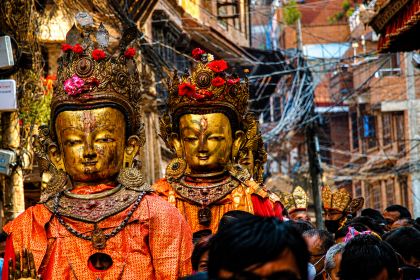
The worship of the Nava Durga deities at their corresponding shrines during Mohani is one of Bhaktapur’s unique customs. On Dashami, devotees return to Brahmayani after visiting a series of holy locations, including Maheshwari, Kumari, Bhadrakali, Barahi, Indrayani, Mahakali, Mahalaxmi, and Tripurasundari. The long-standing customs of goddess worship and protection in the city are reflected in the sequence.
B. Khame Jatra—खमे जात्रा
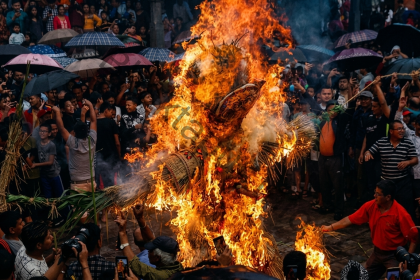
One of the most well-known local celebrations connected to Maha Navami in Bhaktapur is Khame Jatra. From the Nava Durga region, a buffalo called Khame is transported to the Brahmayani Temple, the site of Goddess Durga rites. In the ancient religious story, the buffalo stands for the demonic force vanquished by the Goddess. It should not be confused with regular family Dashain festivities because the rite is unique to the local festival tradition.
C. Worship at the Taleju Bhawani Temple
In the religious and regal history of Bhaktapur, Taleju Bhawani is an important figure. The temple inside the old royal complex is open to the public on Maha Navami, when devotees can worship and ask for blessings. One of the most significant religious events connected to Dashain in the ancient city is the yearly opening.
D. Kuchhi Bhoye—कूछि भ्वय्
A customary Newar family feast connected to Maha Ashtami is called Kuchhi Bhoye. Senior family members are customarily assigned places of honour while the rest of the family sits in an orderly row. The feast includes traditional dishes like beaten rice. Beyond the food itself, the get-together promotes sharing inside the home, respect for elders, and kinship.
E. Kwakha and Mohani Sinha
Some Newar households use a dark ceremonial mark called Mohani Sinha in addition to the conventional red Tika and Jamara as part of the Dashami blessing. It is also possible to tie a Kwakha thread as a sign of protection and blessing. Ritual and home traditions determine the specifics and materials employed. These traditions set various Newar celebrations apart from the more well-known Dashain Tika ritual. familiar red Tika and Jamara with local Newar customs, including the worship of family deities.
5. Jamara, Tika, and family blessings
- Among the most well-known Dashain emblems are Jamara and Tika.
- Barley seeds sowed at the start of the festival are used to grow the sacred yellow-green branches known as “Jamara (जमरा)” They stand for blessings, rebirth, and good fortune.
- Applying a mixture of coloured rice paste to the forehead as a blessing is known as Tika (टिका).
- Elders’ blessings: When younger family members visit parents, grandparents, and older relatives, they are bestowed with blessings for prosperity, good health, and success.
- Reunions: Family members go back to their ancestral houses, eat together, and spend time together.
- Kwakha: As part of the Mohani blessing custom, certain Newar families tie a red-and-white sacred thread around the neck.
- The Dashami ritual in Bhaktapur can incorporate indigenous Newar traditions, such as the worship of family deities, with the well-known crimson Tika and Jamara.
6. Traditional food during Dashain in Bhaktapur
Food is an important part of the festival, bringing families together around the dining area or traditional floor seating.
| Traditional food | Description |
|---|---|
| Samay Baji (समय् बजी) | A traditional Newar platter featuring beaten rice and a selection of accompanying foods. |
| Chiura (चिउरा) | Beaten rice, often served with vegetables, meat, pickles, or other side dishes. |
| Bara (बारा) | Savory lentil patties, sometimes prepared with egg or meat. |
| Chhoila (छोइला) | A traditional Newar dish of grilled or cooked, seasoned meat. |
| Achar (अचार) | Pickles and spicy accompaniments served with festive meals. |
| Kuchhi Bhoye | A traditional Ashtami feast in which family members share a generous serving of beaten rice and other foods. |
Not every household prepares the same dishes, and specific foods depend on family customs, religious observances, and personal preferences.
7.Festive entertainment, bamboo swings, and kite flying
In addition, Dashain is a time for outdoor activities and recollections of childhood.
Flying kites: During the Dashain season, vibrant kites flood the sky. Autumnal weather, friendly competition, and quality time with loved ones are all connected to the popular celebratory activity of kite flying.
Bamboo swings (Ping): During Dashain, traditional bamboo swings are built throughout Nepal. Swinging is a popular activity during the holiday season and is enjoyed by both adults and children.
Music and get-togethers: Traditional music, chat, games, and celebratory meals are enjoyed by families and friends. These events provide religious celebrations a joyous social component.
Although their availability varies by neighbourhood and year, these customs are enjoyed throughout Nepal, particularly in and around Bhaktapur.
8.Important temples in Bhaktapur to see during Dashain
The following locations provide helpful information about Bhaktapur’s history for tourists interested in the religious and cultural aspects of the celebration.
- Temple of Brahmayani
a significant shrine connected to goddess worship and the Mohani festival’s final day celebrations in Bhaktapur. Here, devotees congregate for customary rites and prayers.
- Temple of Taleju Bhawani
This temple, which is part of the old palace complex, is particularly important on Maha Navami, when it is customarily accessible to the public for yearly prayer.
- Nava Durga Dyo Chhen
The Nava Durga tradition and the disguised goddesses that are central to Bhaktapur’s ritual life are linked to this hallowed location. It is especially important for comprehending the city’s events that revolve around goddesses.
- Shrines connected to Nava Durga
There is a network of shrines honouring the mother goddesses in Bhaktapur. The religious geography of the ancient city can be better understood by touring the temples dedicated to Brahmayani, Maheshwari, Kumari, Barahi, and other deities.
- Durbar Square in Bhaktapur
A great spot to take in the city’s traditional architecture and joyous spirit is the old palace square. Restricted ceremonial areas and specific temples may not be easily accessible.
Note for visitors: The timing of some rites, entry regulations, and temple opening hours are subject to change. Before making travel plans, do some local research, particularly on Maha Navami and Dashami.
9.Cultural and religious relevance
In Bhaktapur, Dashain has multiple interrelated meanings.
The celebration honours Goddess Durga’s triumph over demonic powers and the reestablishment of cosmic equilibrium.
Prosperity and protection: Devotees offer prayers for the welfare of their homes and communities.
Respect for elders: Getting blessings and Tika strengthens ties within the family and fosters intergenerational respect.
Community identity: Bhaktapur’s Newar history is preserved through goddess worship, Mohani rites, and regional feasts.
Tradition continuity: By taking part in household and community observances, seniors transmit ritual knowledge to new generations.
Both public festivities and revered family customs are part of Bhaktapur’s living legacy. While some ceremonies are exclusive to specific homes, priests, or community members, others are open to guests.
10.Travel advice for Bhaktapur’s Dashain
Consider these recommendations if you intend to travel to Bhaktapur during Dashain.
Make plans for the main days of the festival. Different viewpoints on the celebration are provided by Maha Ashtami, Maha Navami, and Vijaya Dashami.
For important temple observances, arrive early. Important shrines may see an upsurge in crowds, especially on Maha Navami.
Observe regional traditions. Before taking images of individuals during worship or in ritual areas, get permission.
Observe the limitations of the temple. Certain regions can have certain access restrictions or be off-limits to non-participants.
Take a stroll around the historic city. Bhaktapur’s cultural essence is revealed through its historic squares, brick streets, shrines, and traditional courtyards.
Before recording private rituals, get permission. Certain Mohani customs are esoteric or unique to a family.
Give your itinerary some leeway. Local ritual timetables may affect processions, ceremonies, and temple access.
11.Bhaktapur’s Dashain: A living cultural legacy
In Bhaktapur, Dashain is much more than just a holiday. Religious devotion, traditional cuisine, family get-togethers, temple worship, and Newar cultural identity all come together during this time of year.
The festival symbolises the ongoing bond between people, deities, and communal life, from the planting of Jamara at Ghatasthapana to the solemn observances of Maha Ashtami and Maha Navami and the benefits of Vijaya Dashami. Bhaktapur is a very significant venue to learn about the cultural diversity of Dashain in Nepal because of its local customs, which include Nava Durga worship, Khame Jatra, Kuchhi Bhoye, and Mohani blessings.