


Gathamug: Cha:hre (गथांमुगः चःह्रे), also known as Ghantakarna Chaturdashi, Gathemangal, or Gathamuga Charhe, is one of Bhaktapur’s most distinctive Newar festivals. Celebrated on Krishna Chaturdashi of the month of Shrawan (Dillaga Chaturdashi in Nepal Sambat), the festival symbolizes the destruction of evil, purification of homes and communities, and the beginning of a new cycle of religious and cultural activities. In Bhaktapur, the celebration has unique rituals that differ significantly from those of Kathmandu and Patan.
Historical Background
The origins of Gathamug: Cha:hre are believed to date back to the Licchavi period, making it one of the oldest continuously observed festivals in the Kathmandu Valley. Traditionally, it is celebrated immediately after the completion of the intensive rice planting season (Sina Jya:), when people finally have time to clean their homes and villages and resume religious festivities.
Meaning of Gathamug
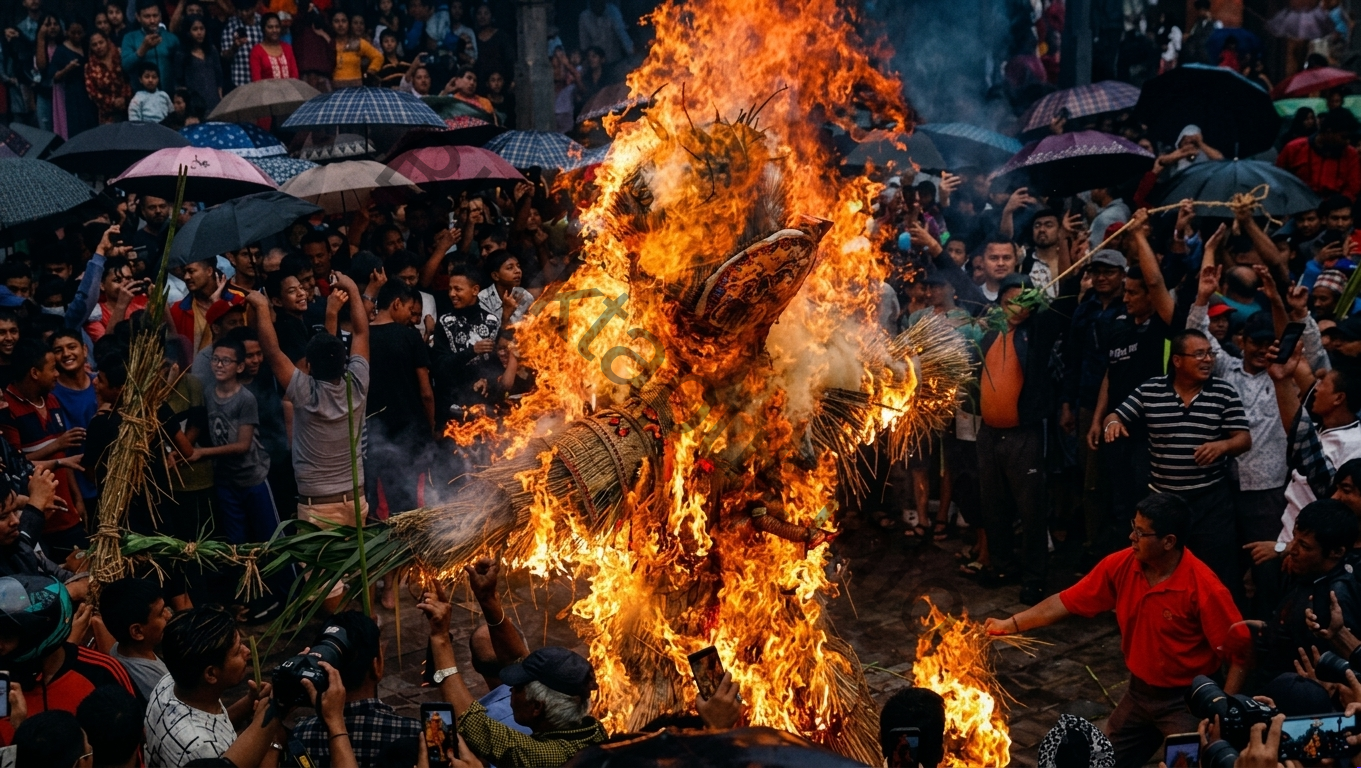
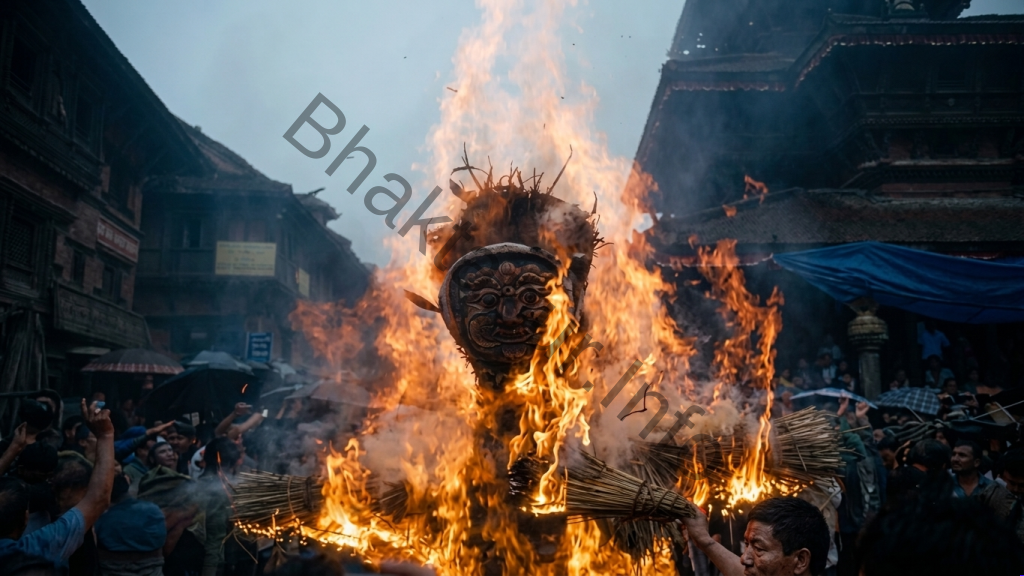
The festival is associated with the legendary demon Ghantakarna, a terrifying giant believed to frighten people and spread fear and misfortune. According to Newar folklore, the demon is represented by a large straw figure, which is paraded through the neighborhood before being burned outside the settlement. The burning signifies the victory of good over evil and the cleansing of negative energies from society.

Actives done on this day
People wear metal rings in honor of the Gathamug: Chahre on this day. The Gathamug: Chahre ring is thought to offer protection from all evil forces and bad luck. Placing three forts at the main entrance to keep off ghosts is another notable Gathamug custom known as Chahre. The long-standing Gathamug: Chahre forts have left several holes in old doors. Additionally, kids use bamboo and leaves to create effigies of Ghantakarna and solicit gifts from onlookers. It is equally unexpected and funny when someone declines to donate in this manner by yelling that he is a demon’s grandchild.
Unique Celebrations in Bhaktapur
Unlike other cities in the Kathmandu Valley, Bhaktapur has its own distinctive traditions:
Construction of the Gathamug Effigy
Each neighborhood (Tole) constructs a giant effigy using:
- Straw
- Bamboo
- Reeds
- Chawali (rice straw)
- Earthen pot (Gyampo/Poka-Tepa) as the head
- Clay to create a frightening face
- Pomelos or other fruits as symbolic ornaments
Some localities even create male and female effigies, while others build exceptionally tall figures to attract spectators.
Procession Through the Streets
In the evening, local youths carry the effigy through the streets while:

- Ringing bells
- Beating metal objects and drums
- Singing humorous songs
- Shouting playful insults
- Driving away evil spirits
The lively procession reflects the communal effort to expel negativity from the city.
Burning the Effigy
The procession ends at a Chwaasa, Dobato or Chaubato (road junction) outside the neighborhood, where the Gathamug effigy is burned. Fire symbolizes purification, marking the end of evil influences and the beginning of a fresh, prosperous season.
Connection with Navadurga
For Bhaktapur, Gathamug: Cha:hre is especially important because it marks the rebirth of the Navadurga tradition after the Bhagasti rituals.
Important rituals include:
- Cleaning the Navadurga temple.
- Collecting sacred black clay from traditional potters.
- Worshipping Mahadev before creating the new masks.
- Beginning the annual preparation of Navadurga masks (Mukundo).
- Resuming traditional musical performances that had been suspended during the rice-planting season.
This day is therefore regarded as the symbolic beginning of another annual cycle of the famous Navadurga dances.
Traditional Beliefs
Many Newar families observe additional customs, including:
- Thoroughly cleaning their homes.
- Wearing an iron ring as protection against evil spirits.
- Placing protective objects around the house.
- Burning old waste and unwanted materials as a symbolic removal of misfortune.
These practices reflect the festival’s central theme of purification and protection.
Community Celebrations
Different neighborhoods of Bhaktapur celebrate Gathamug: Cha:hre in their own unique ways, including:
- Dattatraya
- Suryamadhi
- Chicharan Byasi (Sano Byasi)
- Tekhacho Tole
- Barahisthan
- Shalla Ganesh area
Each locality preserves distinctive styles of building and burning the effigy, making every celebration slightly different while maintaining the same symbolic meaning.
Cultural Importance
Gathamug: Cha:hre represents:
- The triumph of good over evil.
- Cleansing of homes and society.
- Community cooperation.
- Protection from disease and misfortune.
- The beginning of Bhaktapur’s festive and musical season.
- The rebirth of the sacred Navadurga tradition.
For the people of Bhaktapur, the festival is not merely the burning of a straw figure—it is a deeply symbolic event linking agriculture, religion, folklore, and community identity that has been preserved for centuries.