

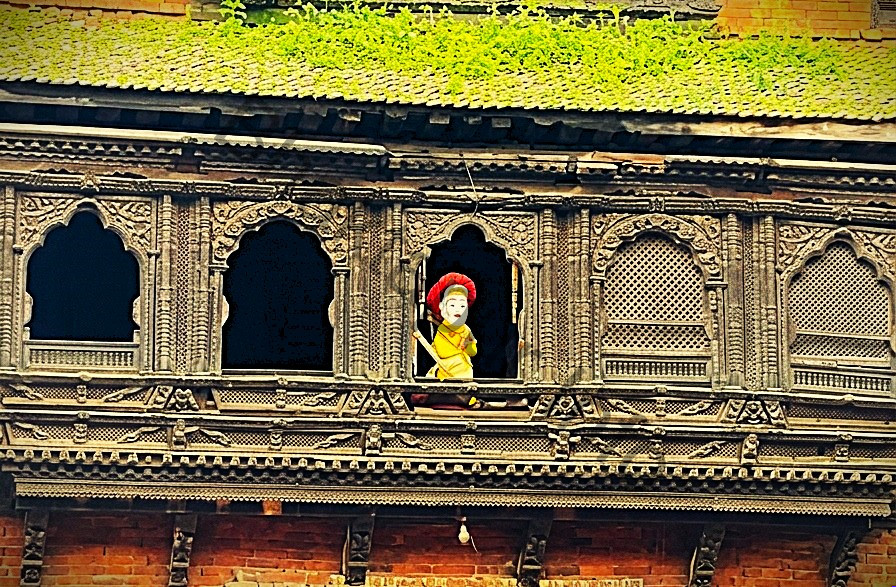

Look closely on the second floor of Pujari Math in the historic Dattatreya Square of Bhaktapur and you will find a remarkable wooden figure standing next to one of its windows. This figure that can easily be missed by visitors marks an important personality in the history of Pujari Math – Gosain Gurubaksha Giri, traditionally considered the founder and the first Mahanta (religious head) of the Math.
He was a wealthy merchant from Mahuragarh, India. This is derived from historical narratives and local lore. It is believed that he maintained trade relations with Tibet before returning to Nepal. Historical accounts suggest that he is said to have established the Pujari Math and is reported to have spent a significant portion of his wealth on its construction.
Pujari Math was built as the residence and administrative center of the Mahanta who was responsible for the religious affairs and the activities of Dattatreya Temple and the temples around it. The institution was instrumental in safeguarding the religious practices and daily life of this historic temple complex.
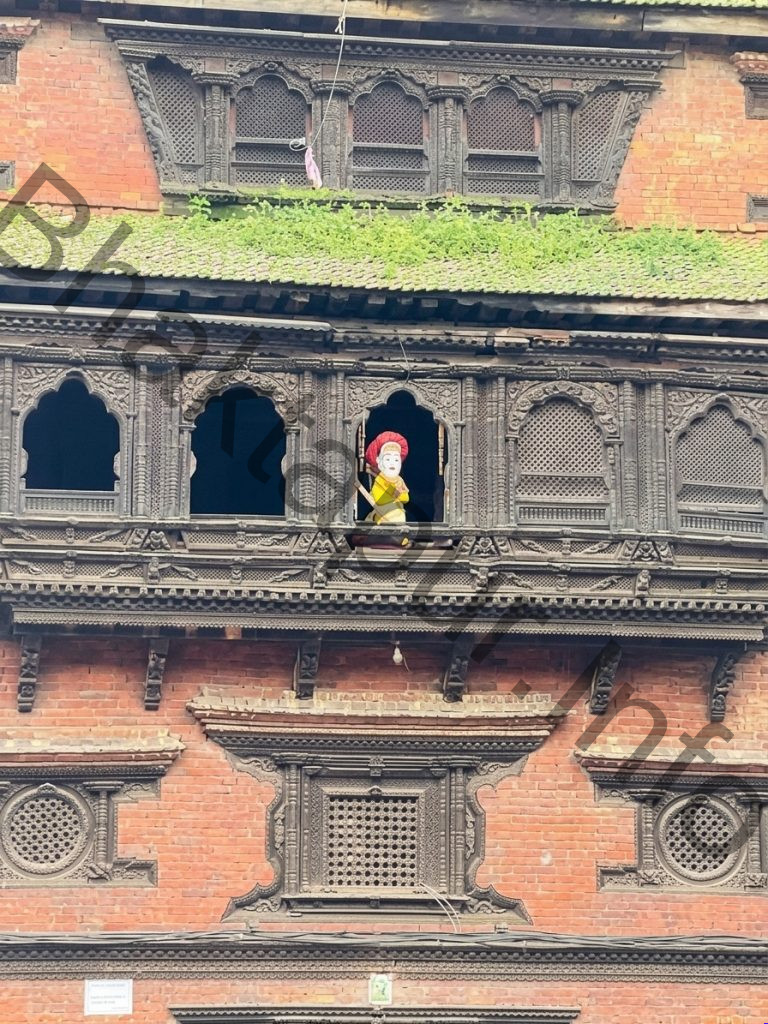
Gosain Gurubaksha Giri: The Bhaktalpore Pujari Math Pioneer
The wooden figure on display next to the second floor window is a permanent tribute to Gurubaksha Giri, and his role in founding Pujari Math. His legacy can also be seen in the preservation of his traditional throne and other items related to him within the Math.

Today, Pujari Math is admired for its unique Newari architecture, its intricate wood carvings, and also for the stories of the people who have helped shape its history. The wooden representation of Gosain Gurubaksha Giri provides visitors with an interesting glimpse into the religious leadership, institutional heritage, and historical connections that are an important part of the cultural identity of Bhaktapur.
Add a concise visitor-focused ending. Distinguish tradition from history