

Bhaktapur celebrates Indra Jatra in a different way than the more well-known Kathmandu version, which is known in Nepal Bhasa as Yenya Punhi (येँया पुन्हि) Instead of the massive Kumari chariot procession seen in Kathmandu, Bhaktapur‘s festival focuses specifically on Yamadyo, Indrayani, Yamata, Mupatra, and Pulukisi.
- Yama Dya is brought up : In several Bhaktapur localities, the event starts with the raising of Yamadyo (यमद्यः) Locals create tall wooden poles that symbolize the deity, which they worship throughout the celebration. The celebration is traditionally associated with Yama, the god of death and is said to offer protection against death.
- The Akash Deep Yamata: One of the unique customs of Bhaktapur is the use of a traditional Akash Deep, or sky lantern, called Ya mata (याँ मता).As part of the parade, the bamboo lamp is transported across the city. A three-day Yamata tradition is described in recent records. The procession is linked to several ponds, such as Kamal Pokhari, Mugathau Pukhu, and ultimately Siddha Pokhari (Ta Pukhu).
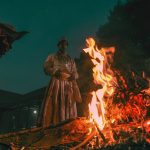
- Indrayani Jatra: In Bhaktapur‘s tradition, Indrayani is worshiped and carried in procession as the consort of Indra.Eventually, the procession arrives at Siddha Pokhari , which is traditionally connected to the name Indra Daha. One of the iconic sights of Bhaktapur’s Indra Jatra is created when the deity is kept overnight at a phalcha and the pond is lit with oil lamps.
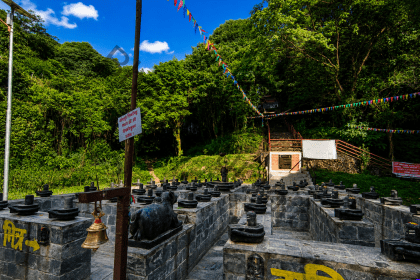
- Siddha Pokhari Mela: Yenya Punhi / You Dya Punhi is the day that follows. Siddha Pokhari is the site of traditional worship and bathing rites, where devotees congregate. After then, Indrayani’s image is brought back to her divine home.
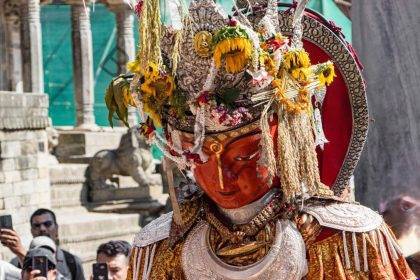
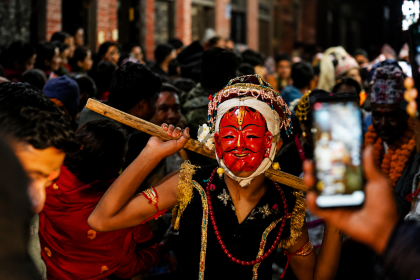
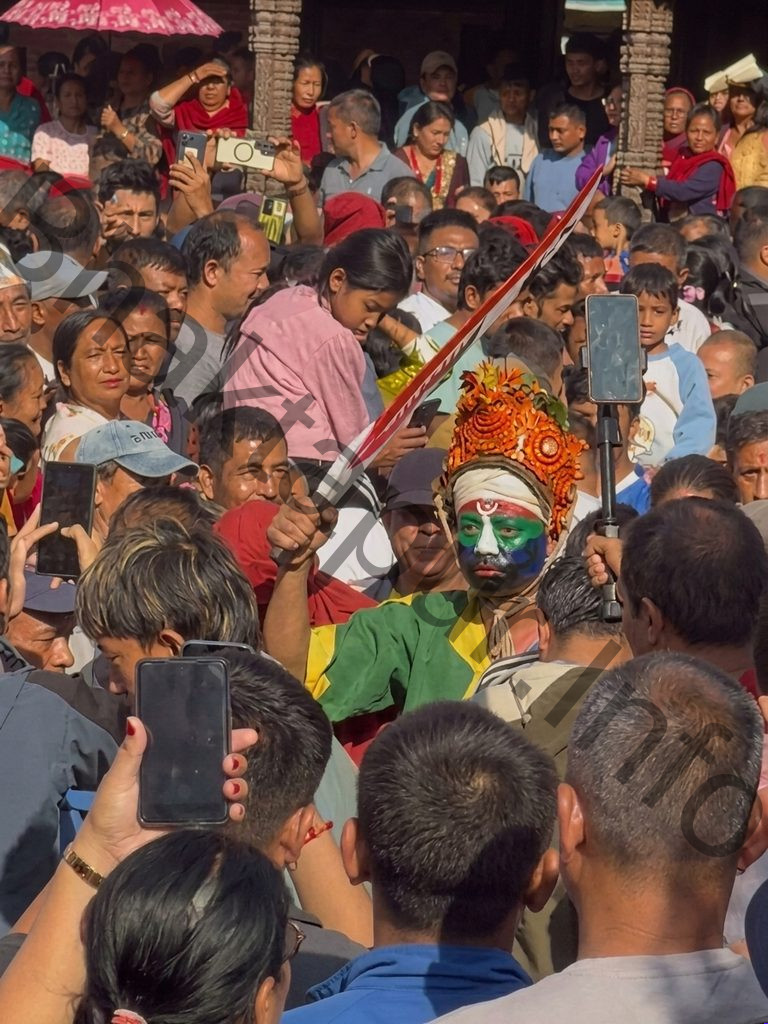
- Mupatra Jatra|:One of the most spectacular customs of Bhaktapur’s Indra Jatra is Mupatra (मूपात्र). Mupatra is shown as a formidable demon who is supported by two helpers known as Dhi:Cha (धिःचा).. As they march through the ancient city, the three performers hold swords, paint their faces, and don ornate demon costumes. Nowadays, during the Indra Jatra period, three days of Mupatra-related ceremonies are observed.
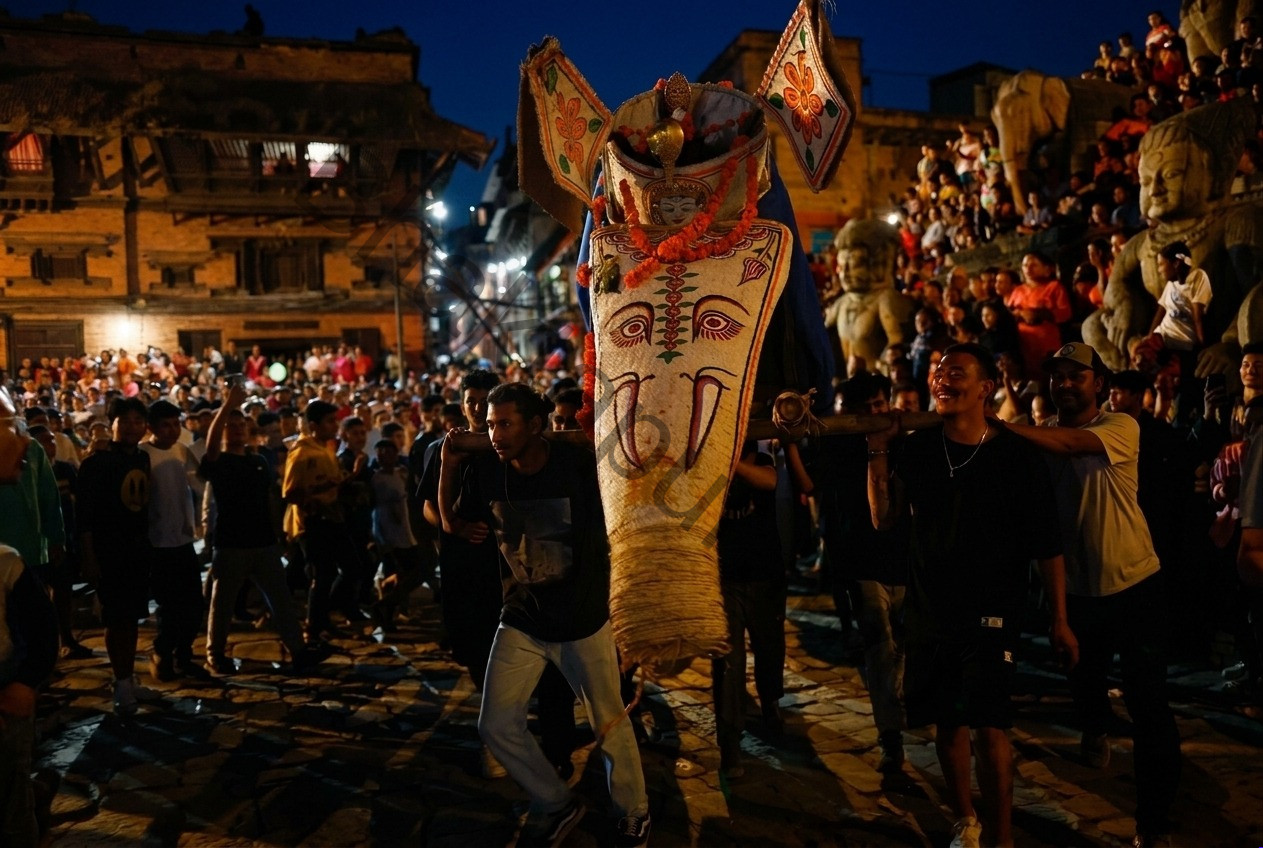
- Pulukisi Jatra: Indra’s elephant is symbolized by Pulukisi (पुलुकिसी) Traditionally, the quest for Indra is symbolized by the big elephant statue being carried through the streets in a colorful parade. Because the procession is one of the festival’s main public displays, Pulukisi is especially significant in Bhaktapur. The procession starts at Lakulachhen and moves in the direction of Dattatreya Square.
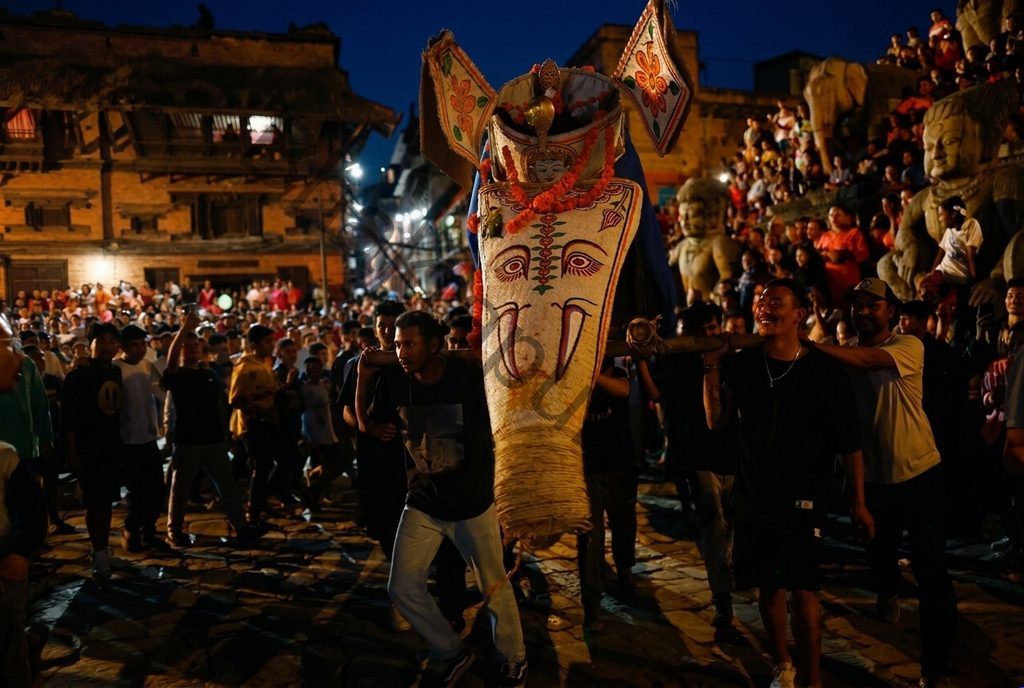
- Pulukisi and Mupatra: An intriguing custom relates to Mupatra and Pulukisi. During the procession, they are customarily prevented from coming into direct contact. According to the tale, Pulukisi stands for Indra’s elephant, while Mupatra is connected to the forces that oppose Indra. As a result, local custom views their interaction as something to be avoided.