
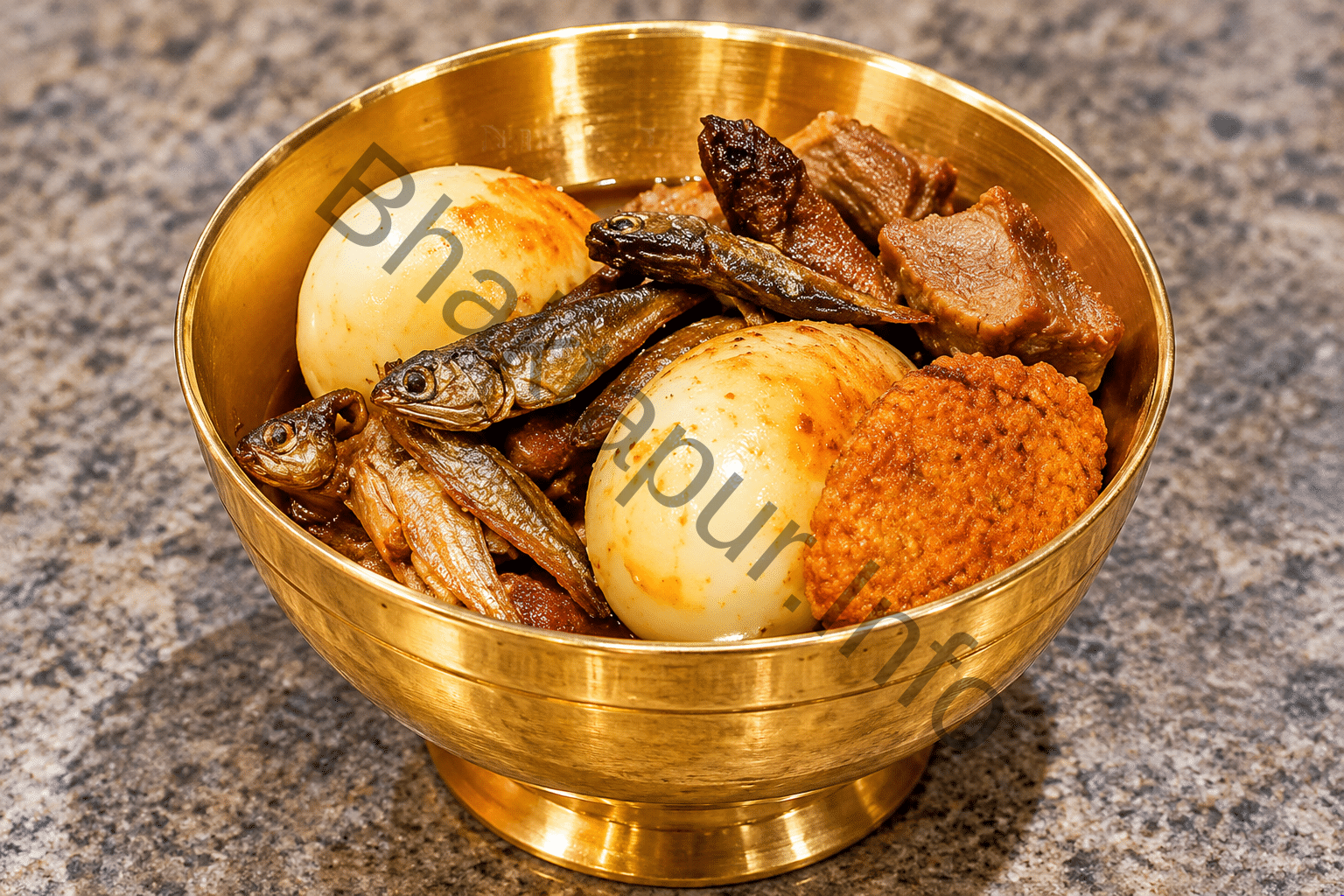

The physical body is necessary for meaning in human life. Thus, the tradition of offering ‘Sagun’ (ceremonial auspicious offering) must have started with the objective of ensuring physical strength, good health and protection against untimely death. It is an old custom to eat things that represent the Pancha Mahabhuta (the five great elements) which also make up the human body, to protect oneself from any disaster or inauspicious happenings.
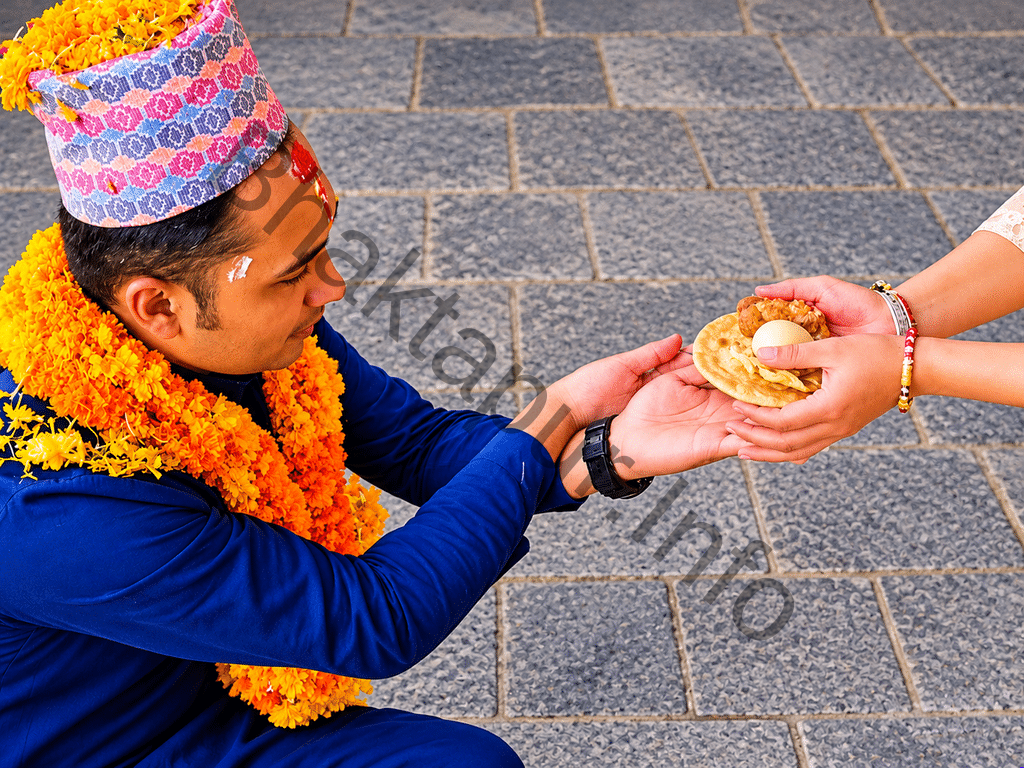
The word ‘Sagun’ is intrinsically connected with auspiciousness (shubha) . The elements of a ‘Sagun’ are symbols of the Pancha Mahabhuta. It is a culture of respect, of refinement, of courtesy, of distinction. Its chief purpose is to acknowledge auspicious deeds and to exchange heartfelt blessings, good wishes and congratulations through established ritualistic procedures. Many communities have the tradition of giving and receiving ‘Sagun’ but it is most prevalent among the Newars. For the Newar people, every auspicious undertaking or occasion begins with the offering of ‘Sagun’. This helps to bring the flow of positive energy in one’s life and gives the inspiration to move forward on a path to good fortune.
The fact that we have to die is built into the human condition from the moment we are born. Without the physical body, human life is meaningless.
Thus, the tradition of offering ‘Sagun’ probably came into existence with the intention to ensure physical strength and good health and to protect against untimely death. It is a traditional belief that by consuming articles that represent the Pancha Mahabhuta – which also constitute the human body – one is protected from any calamity or ill omen. With happiness, devotion and sincerity we have continued accepting ‘Sagun’ – a tradition set by our forefathers through thousands of year of penance and a covenant with the Divine. Yoghurt (dhau) and eggs (khen) are the main and most common sagun (auspicious offerings) in Newar society. It is thought that when these sagun are given or accepted, the people concerned must be oriented along an east–west axis; they should not be facing north or south.
Dahi Sagun (Dhau Sagn)
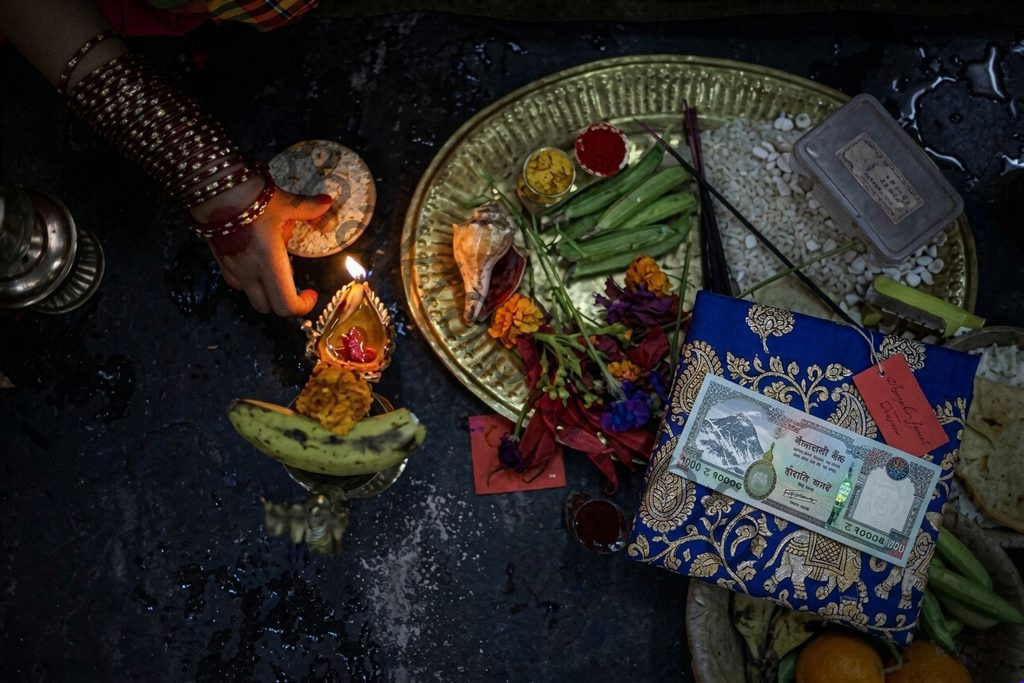
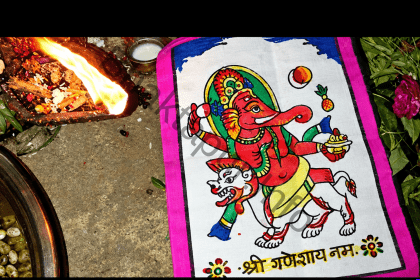
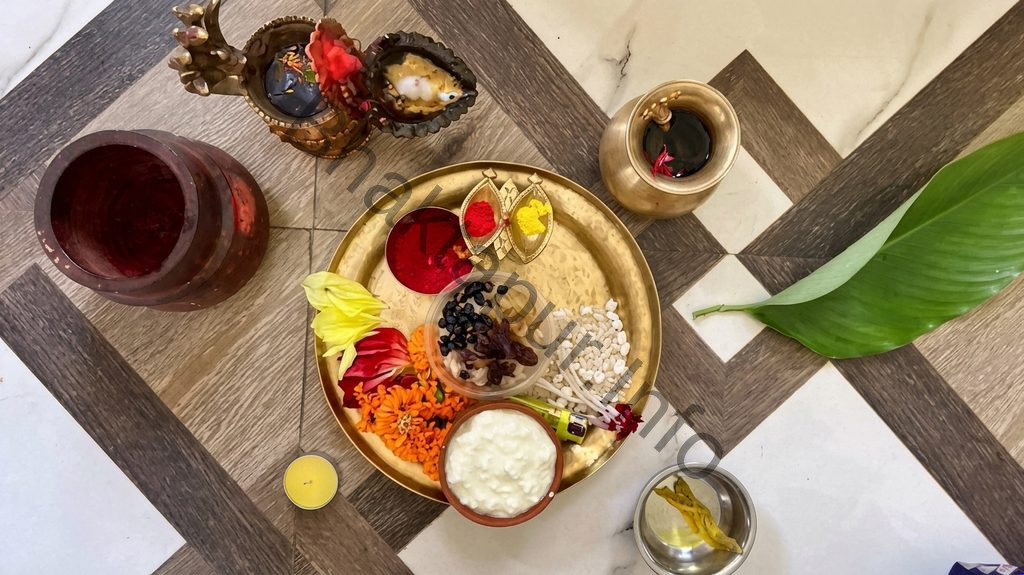
‘Dahi Sagun’ is a ritual offering of various ritual items and yogurt made before or after an auspicious occasion depending on the nature of the occasion. This offering is made by placing items like akshata (sacred rice grains), laba (parched rice), abir (vermilion powder), tika, flowers, incense and yoghurt on to a ritual tray (puja thali). A sukunda, the traditional ceremonial oil lamp, is lit and Lord Ganesha is worshipped. The offering is made on a sal (shorea robusta) leaf representing the human body, comprising the panchatattva (five fundamental elements: Earth, Ether/Space, Fire, Air, and Water). In this process the deities of the Panchayana are invoked and worshipped, namely Ganesha, Mahadeva (Shiva), Bhagavati (the Goddess), Surya (the Sun God) and Lord Vishnu. A griha puja (house ritual) is also performed with the hope that Grihalakshmi (the presiding deity of domestic prosperity) remains steadfast within the home.
After worshipping the deities with incense and lamps, the recipient of the Sagun is also asked to worship the divine. Then the receiver is decorated with tika (with yoghurt), flowers and other auspicious items. Then the Sagun is offered: new cloth, flowers, a mala of flowers, a paan (whole betel nut), money, fruits and sweets are given to the recipient. If the receiver is a male he has to wear a topi (a traditional cap) on his head while receiving the Sagun. When Saguna is offered to more than one person it has to be offered in seniority.

Egg Sagun (Khen Sagn)
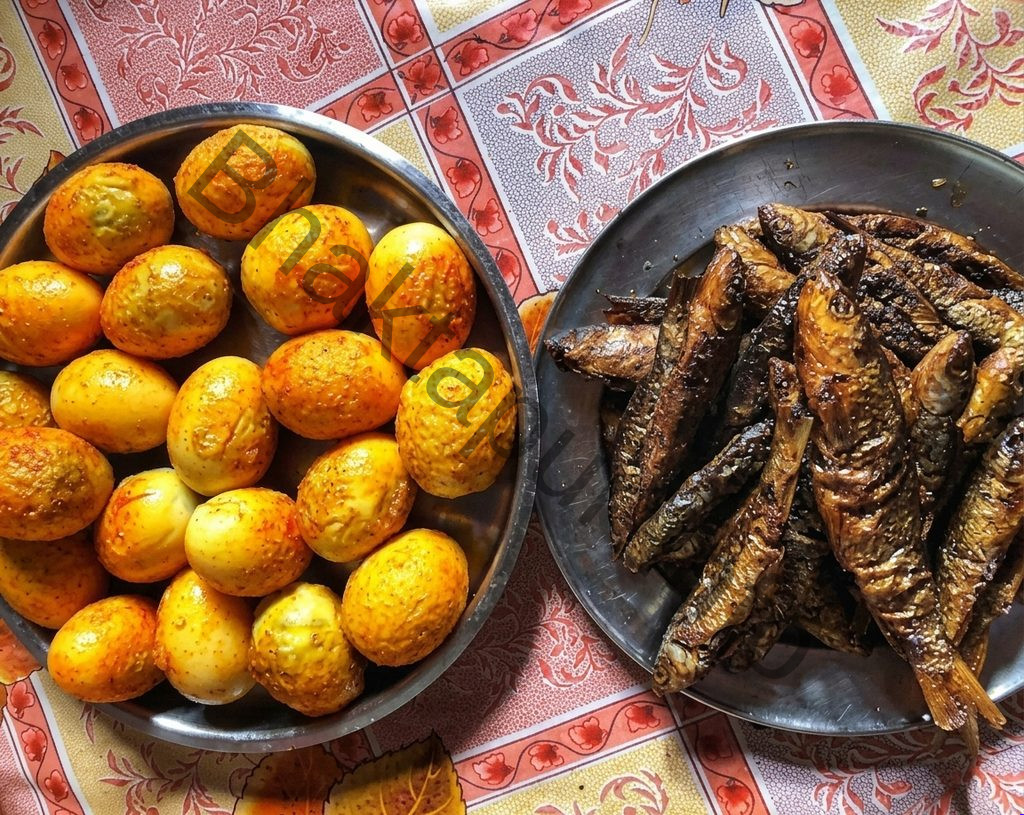
In Newari, the egg based Sagun (auspicious offering) is called Khen Sagn. It is a true form of Sagun and is considered a symbol for various deities and the Panchatattva (five elemental aspects). Depending on the occasion, the full ritual procedure for a Dahi Sagun (yogurt-based offering) has to be completed before presenting the egg-based Sagun. Essentially, this offering is to foster physical protection, advancement, and progress; it is a mystical gift from Tantric tradition. There is a custom of offering Dahi Sagun or sometimes only the egg-based Sagun depending on the occasion.
Name 5 items of the * Sagun * based on egg Egg Fish Meat * Bara * ( a lentil patty ) * Somarasa * ( a ritual beverage ) As a whole they are called the * Panchamakar * . Of these the egg is Brahma. Brahma is believed to have been born out of an egg in the dawn of creation. Fish signifies Vishnu; in ancient times, Lord Vishnu took the Matsya (fish) avatara to save the Earth, and so fish is regarded as a manifestation of Lord Vishnu. Meat is taken as a symbol of Mahadeva (Shiva) It is believed that Lord Mahadeva once took the form of a buffalo in ancient times. Hence, meat is taken as a symbol of Lord Mahadeva. Bara is said to be the representation of all gods, the 33 Koti (a lot) of gods. Somarasa is identified with the Goddess Bhagavati (Shakti) as she appeared holding a vessel of Somarasa during the Samudra Manthan (the churning of the cosmic ocean). So this *Sagun * has become a custom with the motive that by taking these deities, symbolized by these five things, in your own body you may become divine. Another view is that the egg stands for the element of earth, the fish for the element of water, the meat for the element of air, bara (a lentil patty) for the element of ether (sky) and somarasa (a ritual drink) for the element of power, i.e. the element of fire. Based on this belief it is wished that the person receiving the sagun (auspicious offering) remains safe wherever they go, much like animals are safe in the forest, fish in the water, and birds in the sky. Thus, to accept sagun is to integrate the human body with nature; it also reinforces the idea that whoever masters these five elements in his own life conquers the world. In this sense it also means to bring the five senses under one’s control, that is to practice self-discipline. In the offering of sagun, the egg, fish, meat and bara are not repeated, but the somarasa is added twice.
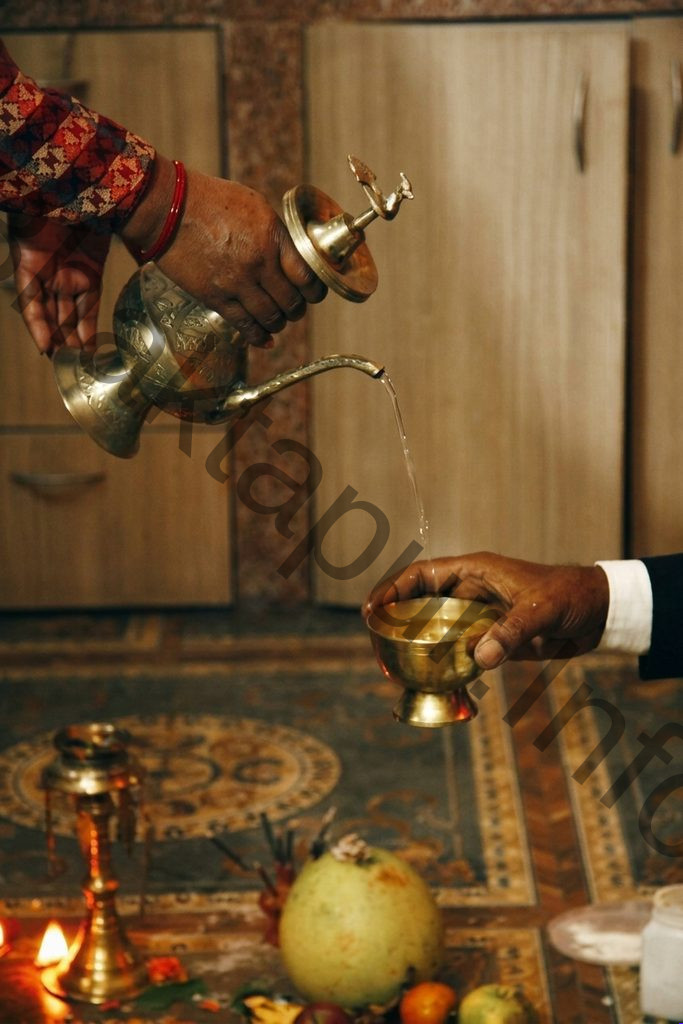
The Newars observe the custom of exchanging Sagun, a symbolic offering, on all auspicious occasions from birth to old age.
Sagun is also exchanged during important life events like Annaprashan (first solid food), birthdays, Chhewar (first haircut/tonsure), Bratabandha (initiation rite), Bel Bibaha (Ihi – symbolic marriage of a girl to a Bel fruit), Gupha ritual (seclusion and later Surya Darshan), weddings, and the Ratharohan ceremonies (celebrated at the ages of 77, 82, and 88/99, marking the transition into old age).Sagun is also important during festivals, especially Mha Puja (Govardhan Puja) and Bhai Tika. It is also presented to parents as a mark of respect on Aama-buwa ko Mukh Herne Aunshi (a day to honour one’s parents). Major religious occasions—such as Lakhbatti (lighting 100,000 lamps) or Saptaha (seven-day scripture recitation) –* Sagun is offered the day after the rituals are completed. The tradition is also observed when passing exams, starting a new job, getting a promotion, travelling abroad, moving into a new home or even surviving a major accident, which means escaping the jaws of death.
The basic purpose of exchanging Sagun is the belief that the divine trinity – Brahma, Vishnu and Maheshwar – and the thirty-three crore (330 million) deities and the Goddess (Shakti) are residing in our bodies and souls. So, if any evil spirit or malevolent planetary influence has taken hold within one’s body, it must depart. The recipient of the Sagun, meanwhile, attains a state of divinity and is protected from illness, sorrow, and misfortune. Wherever they may go or live they are always blessed with auspiciousness. So, one should accept Sagun‘s offer according to established customs wholeheartedly. One should avoid negative behavior, such as pretending to accept, doing it out of arrogance, or just touching the offering without really accepting it. One should receive the sagun (auspicious offering) as per the custom, with devotion. One should bow down to the elders, receive their blessings, and eat the offering fully, without leaving anything behind.