


In Bhaktapur, Nepal, one of the most revered Hindu rituals is Nag Panchami-Naagpanchami(Nepali:नागपञ्चमी), which honours the Naga (Serpent Gods), who are thought to be the guardians of fertility, prosperity, rains, and water sources. According to the lunar calendar, the event is held on the fifth day (Panchami) of the bright fortnight of the Nepali month of Shrawan (July–August). In addition to praying for plentiful rainfall and bountiful harvests, devotees engage in particular worship to seek protection from snakes, lightning, fire, and natural disasters.
Primary Celebration Spots in Bhaktapur
Thousands of devotees attend significant holy locations throughout Bhaktapur for the celebration, including:
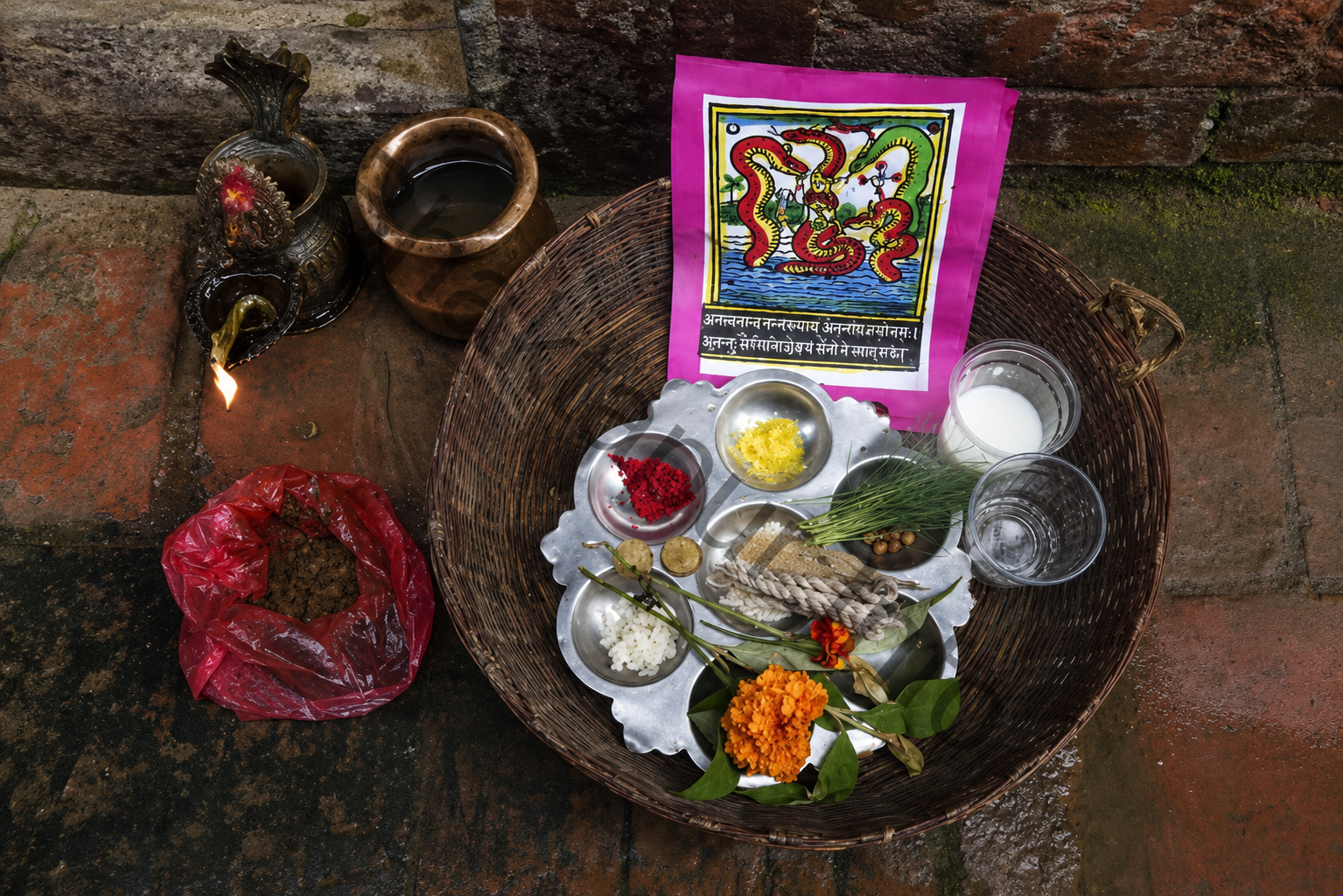
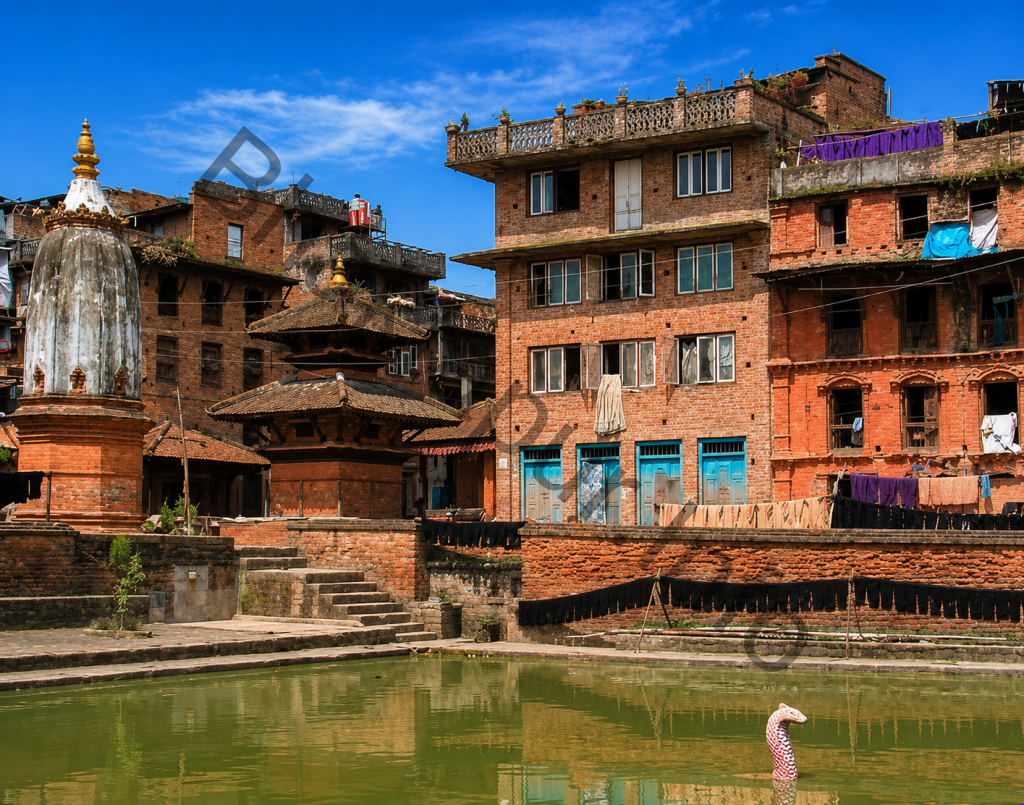
One of the major sites for Nag Panchami worship is Nag Pokhari (Nag Pukhu), Thalachhen, Bhaktapur, where followers offer rice, milk, flowers, and sacred grass.
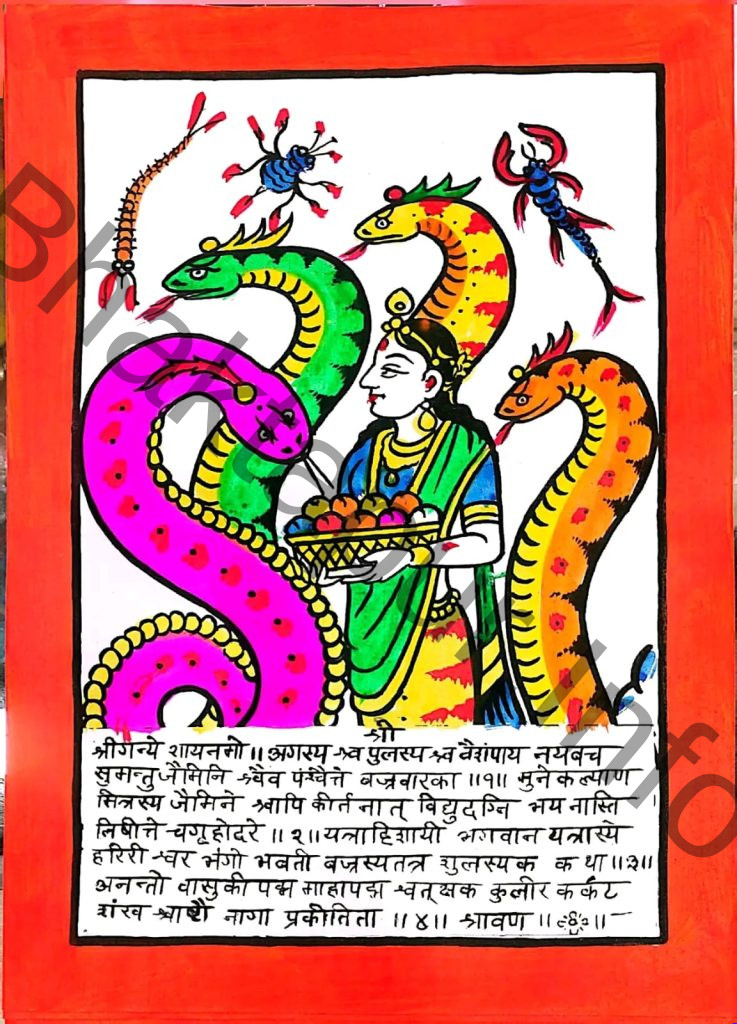
On this day, in Nepal, people worship snakes by sticking a handmade and printed poster of snakes above the main door of their house. This is done by a priest or the head of the house.
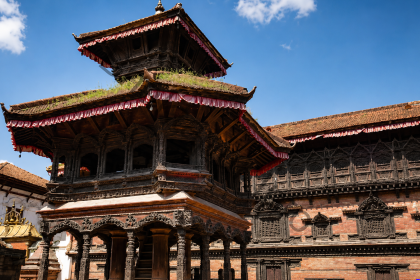
The Changu Narayan Temple is a popular place for pilgrims to perform special pujas. For a ceremonial holy bath that is thought to promote health, devotees also travel to the neighboring Shankha Daha.
At the TilMadhav Narayan Temple, worshippers offer prayers for blessings, prosperity for their families, and defence against snake-related threats.
Wakhupati Narayan Temple is another significant temple that is visited for prayers and special offerings on Nag Panchami.
Historical and Religious Importance
For ages, Nepal has observed Nag Panchami. Hindu legend states that the celebration honors Naga Devata, who protects rivers, ponds, wells, and subterranean water sources and regulates rains. According to ancient myths, serpent gods previously prevented rain from falling over Nepal until a wise king brought peace back. Since then, Nag Panchami has been celebrated as a time of appreciation and reverence for the gods of snakes.

The worship of Nagas is particularly significant in Bhaktapur, where traditional ponds, stone spouts, and water reservoirs are essential to communal life. The city’s strong ties to agriculture, the natural world, and Newar cultural customs are all reflected in the event.
Events and Customs
Families clean their homes’ entrances first thing in the morning and affix a holy picture of Nag Devata over the main door. This is thought to provide year-round protection for the home against fire, storms, lightning, snakes, and scorpions.
Then, with offerings like this, devotees visit temples and ponds.
- Milk
- The flower
- The sacred grass, dubo
- Rice as well as Akshata
- Incense
- Sweets
- Sweets cooked at home
Priests bless devotees, recite Vedic mantras, and conduct unique pujas. A lot of individuals participate in the celebration by feeding cows and donating to charities.
Bhaktapur’s Unique Customs
The massive gathering at Changu Narayan Temple, where devotees worship Lord Vishnu and go to Shankha Daha for a sacred bath thought to help prevent disease, is a unique custom. In search of tranquillity, wealth, and safety, thousands of pilgrims visit the temples of Til Madhav Narayan and Wakhupati Narayan.

The Value of Culture
There is more to Nag Panchami than just religious observance. It encourages reverence for the natural world and serves as a reminder of the value of maintaining water supplies and safeguarding wildlife. The celebration upholds traditional knowledge of sustainable water management while fostering community ties in Bhaktapur, where historic ponds and stone spouts are part of the city’s legacy.
Visitor Details
During Nag Panchami, visitors can take part in colorful ceremonies, devotional music, traditional Newar culture, and lively temple activities. Siddha Pokhari, Changu Narayan Temple, Nag Pokhari (Thalachhen), Til Madhav Narayan Temple, and Wakhupati Narayan Temple are the greatest locations to watch the festivities. The best chance to observe the major ceremonies and devotional offerings is to arrive early in the morning.