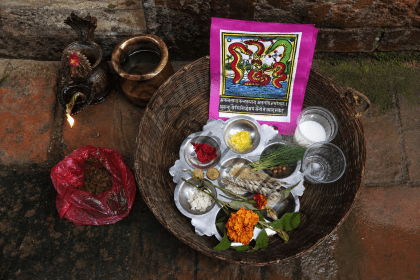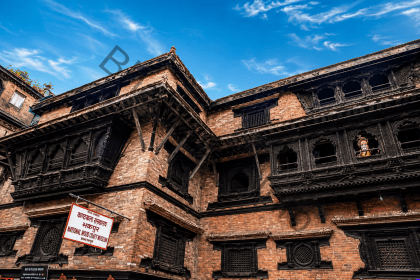


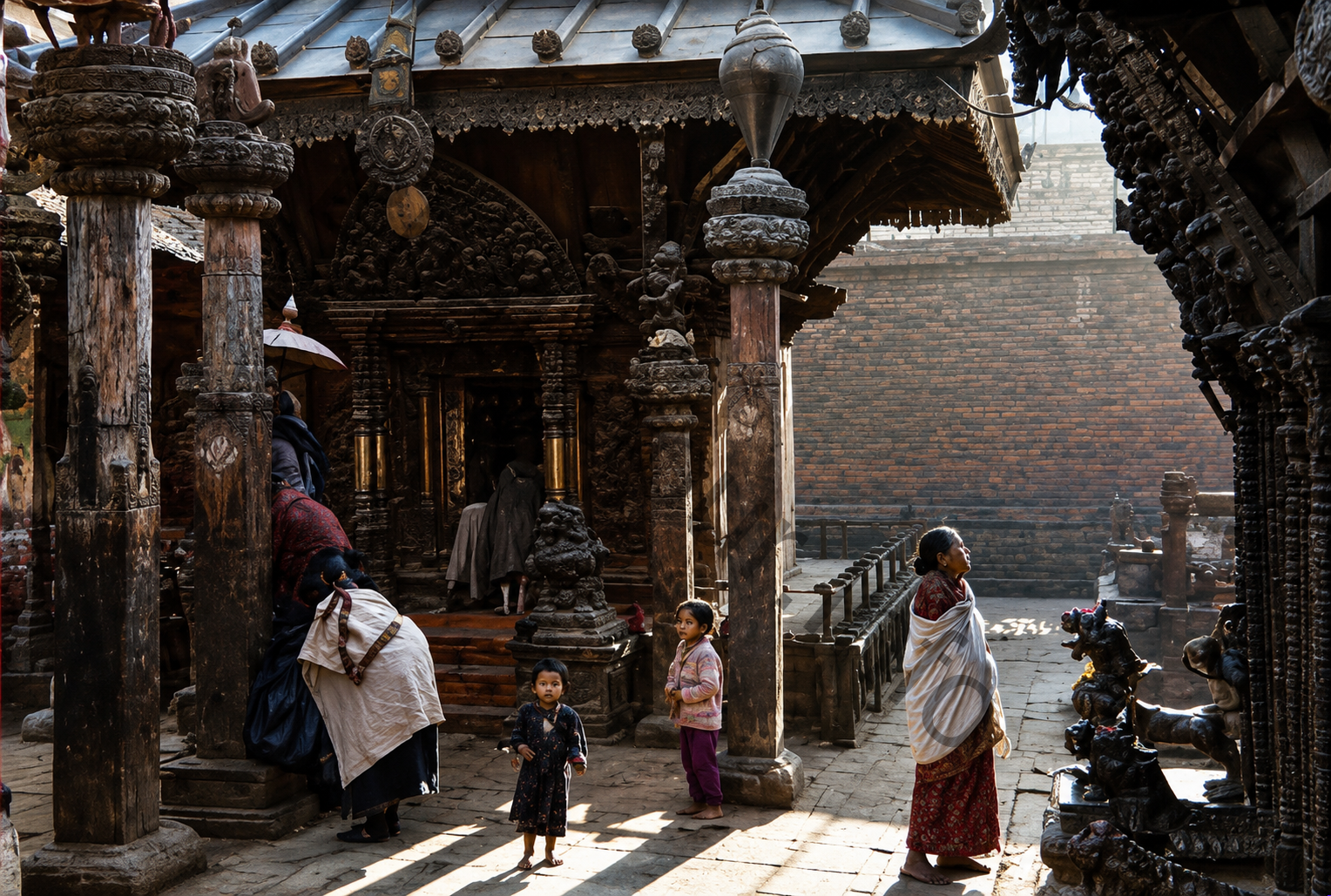

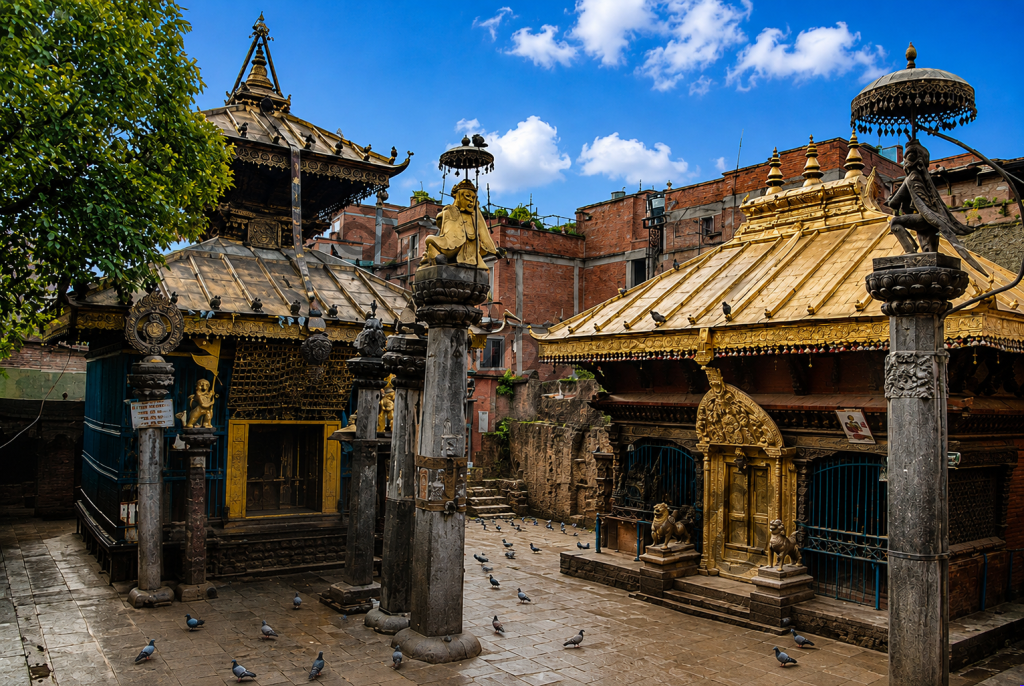
Wakupati Narayan Temple, located in Bhaktapur, is a lesser-known but historically significant Hindu temple. This stunning two-tiered pagoda temple is devoted to Lord Vishnu (Narayan) and is a significant site of worship for local devotees. It is situated in Suryamadhi, close to Dattatraya Square. It is thought to have been built during the Malla period, in 1667 AD.
Historical Significance
A devout farmer who frequently visited the historic Changu Narayan Temple is said to have been unable to continue his trek during the harvest season. He once found an image of Lord Vishnu inside a sack of grain (Waku in Newari). The name Wakupati Narayan, which translates to “Narayan found in a sack of paddy,” originated from the deity’s enshrinement at the current site.
Architectural Highlights
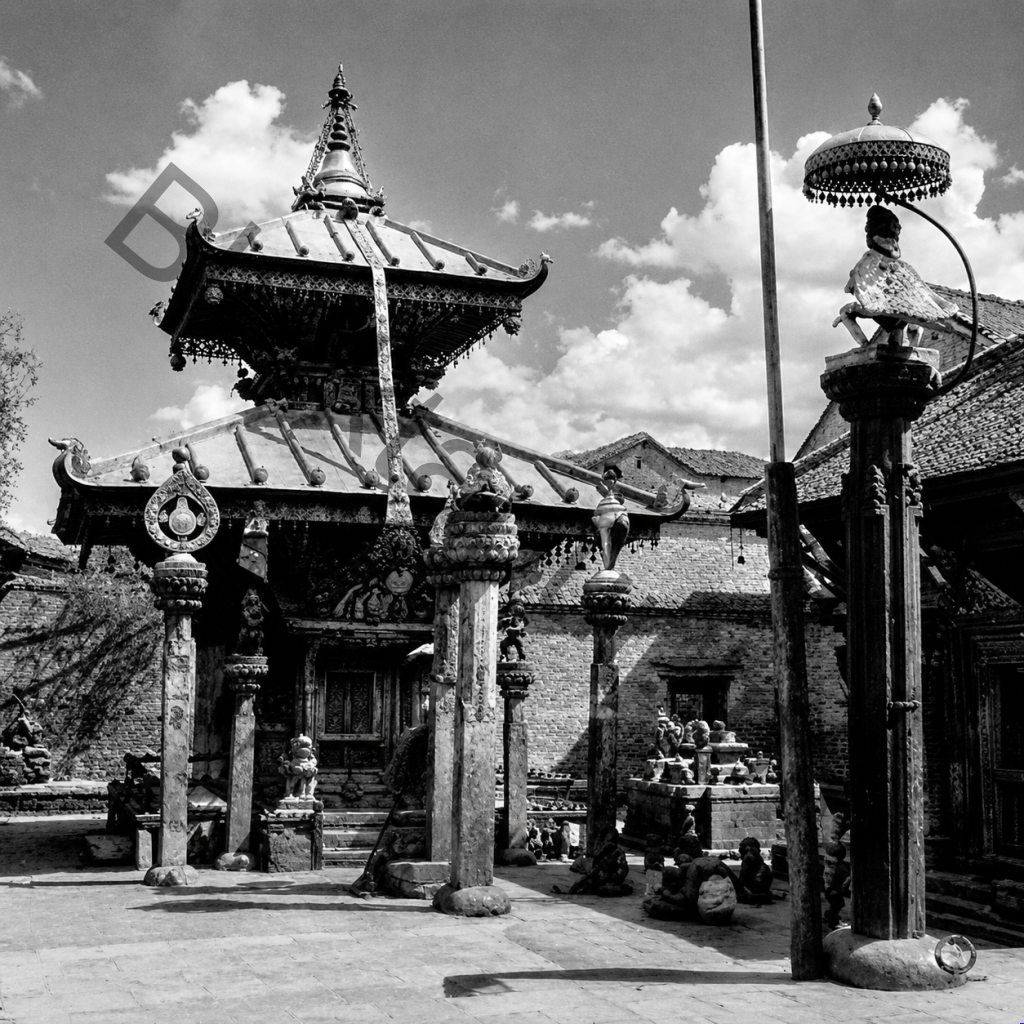
- Traditional two-storey Newari pagoda architecture.
- Beautiful carved wooden struts and gilded details.
- A peaceful stone-paved courtyard surrounded by historic shrines.
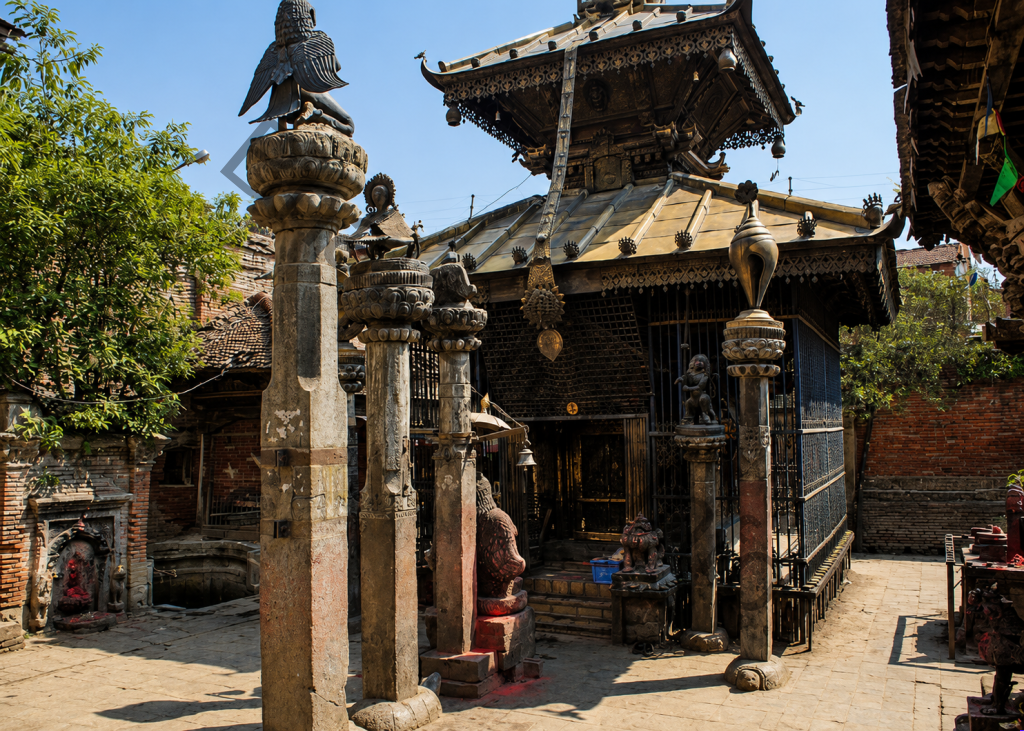
- A rare row of Garuda statues mounted on pillars supported by turtles—an uncommon feature in the Kathmandu Valley.
- Ancient stone water spout, sculptures of Lord Ganesha, Saraswati, and reliefs depicting the Dashavatara (Ten incarnations of Vishnu).
Religious Importance
Since many devotees who are unable to go to Changu Narayan offer their prayers here, the temple is frequently referred to as Wakupati Changu Narayan. Every morning and evening, devotees do Nitya Puja, or daily worship, and on Ekadashi, a lot of people come to seek the blessings of Lord Vishnu.
Local Belief
According to a distinctive local custom, back discomfort can be relieved by peacefully sitting in the temple courtyard. Regardless of how busy they are, many Bhaktapur locals still stop to sit there for a short while every time they visit the temple.

Location
The temple is a great place to stop while touring the city’s eastern heritage district because it is located in Suryamadhi, Bhaktapur, just a short stroll from Dattatraya Square.
Wakupati Narayan Temple is still a hidden architectural treasure that showcases the centuries-old religious customs, rich Newari workmanship, and vibrant cultural legacy of Bhaktapur. It provides tourists with a genuine and peaceful window into the spiritual life of ancient Bhaktapur, while being smaller and less frequented than the city’s well-known temples..