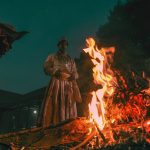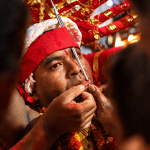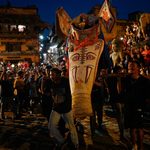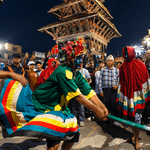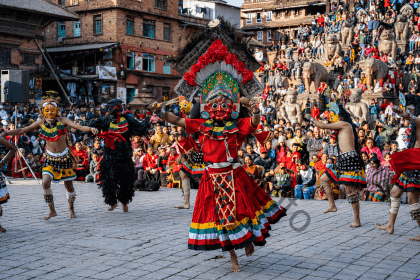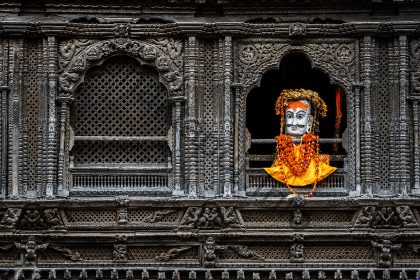

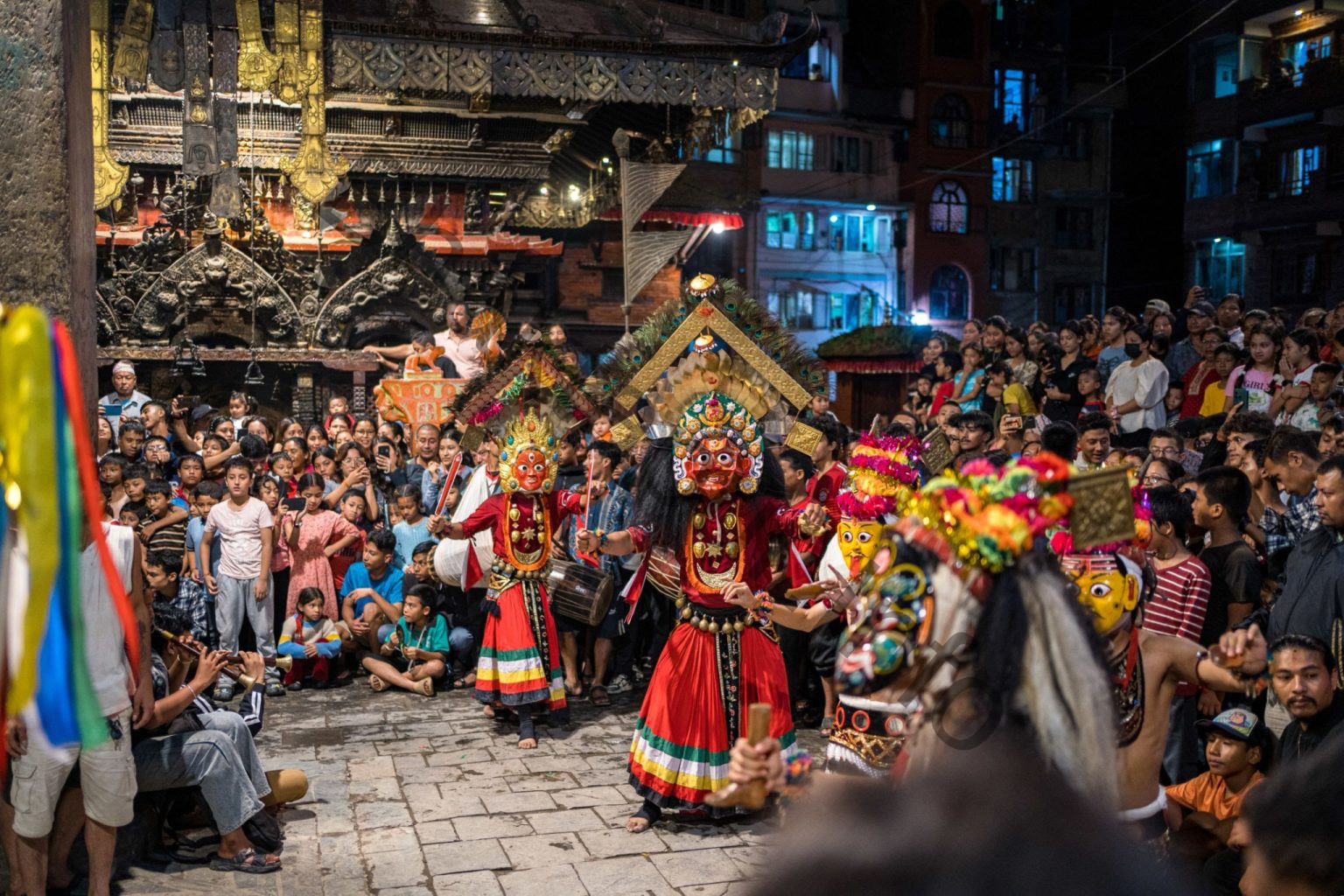

The Mahakali Naach (known locally as Mahakali Pyakhan) of Madhyapur Thimi is one of the most vibrant masked dance traditions in the Kathmandu Valley. Deeply rooted in the cultural tapestry of the Newar community in Bhaktapur, this sacred ritual performance blends Hindu mythology, Tantric Choreography, and community devotion into an extraordinary street display.
The Mythological Tale: Victory over Darkness
The narrative of Mahakali Naach originates from the Devi Mahatmya (Durga Saptashati), depicting the fierce battle between divine forces and demons that threatened cosmic order.
The dance dramatizes the struggle where the supreme mother goddess manifests in three distinct forms—Mahakali, Mahalaxmi, and Kumari—to defeat the Demons (Daityas) Chanda, Munda, and Mahishasura.
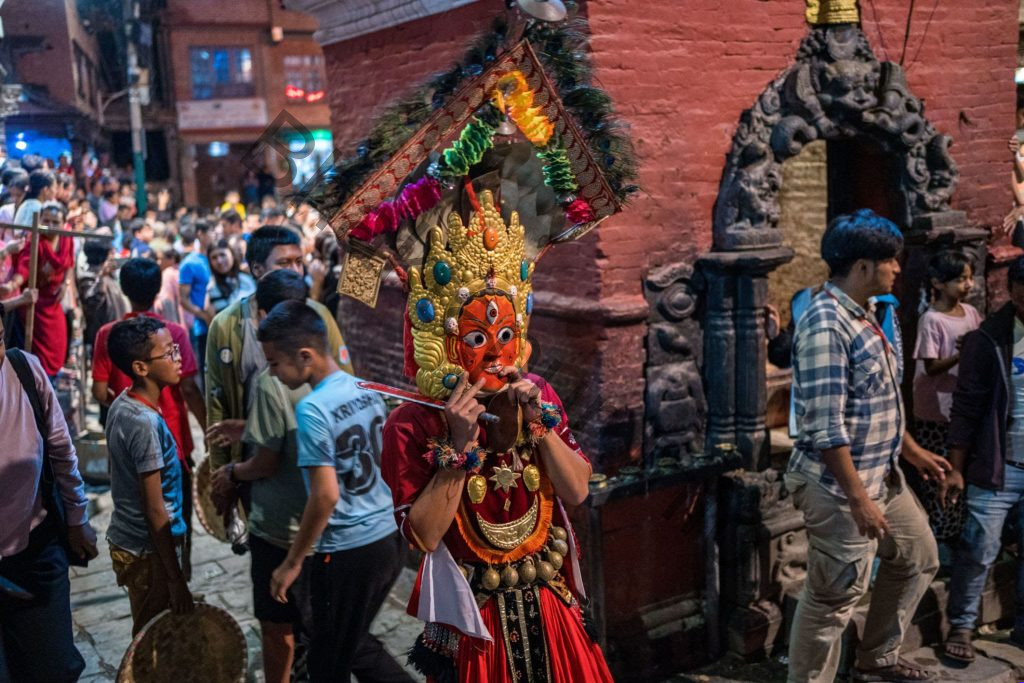
Each phase of the dance represents a stage of battle:

- The Divine Invocation: The goddesses enter with measured, rhythmic steps, establishing their presence and sacred energy.
- The Battle: Dancers depicting the demons challenge the deities, leading to intense martial sequences accompanied by fast-paced percussion.
- Triumph & Blessing: The goddesses subdue the demons, restoring peace, followed by ritual offerings and blessings bestowed upon the gathered community.
Key Characters and Roles
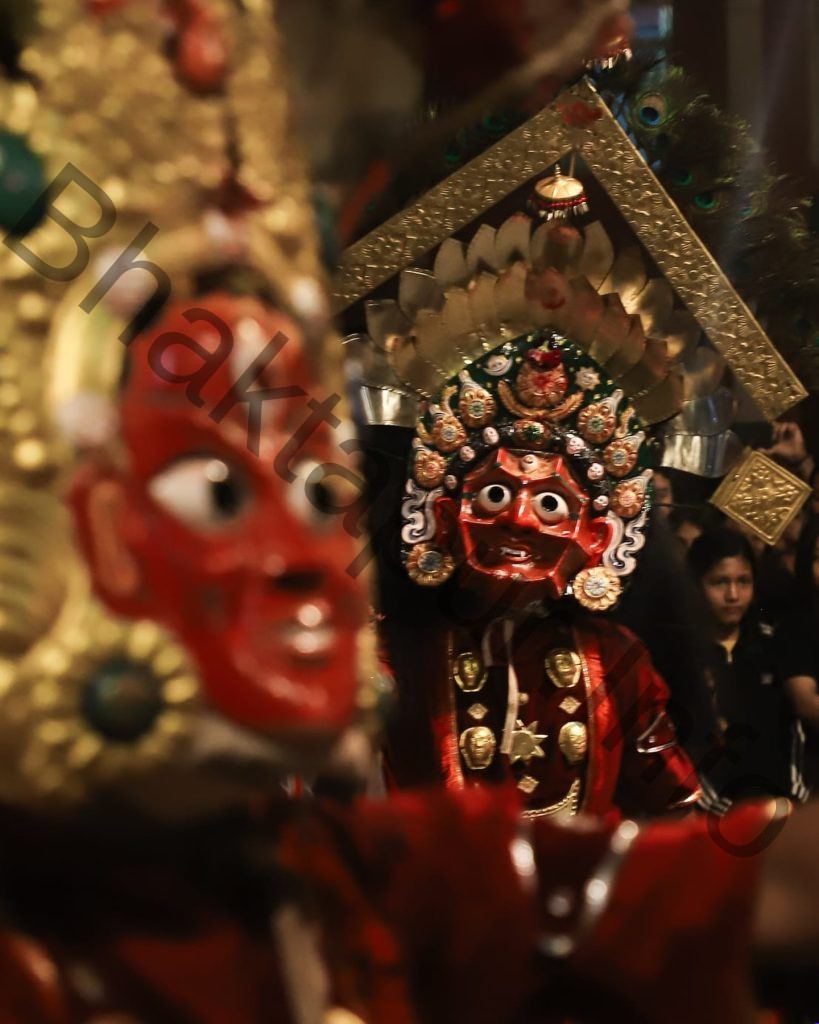
A full Mahakali Naach troop consists of key divine and mythical figures, each identified by distinct hand-carved wooden masks, elaborate costumes, and specific body movements:
| Character | Role & Symbolic Nature |
| Mahakali | The central figure, wearing a fierce red mask with prominent fangs, embodying supreme energy and destruction of evil. |
| Mahalaxmi & Kumari | Co-deities who assist Mahakali in battle, moving with synchronized elegance. |
| Betal | The skeletal attendant and vanguard of Goddess Mahakali who leads the procession and clears the path. |
| Khyak & Kawancha | Mythical spirits who add elements of humor and rhythm to ease the intensity of the divine battle. |
| Daitya (Demons) | Antagonists whose energetic footwork creates dynamic tension during combat scenes. |
Music, Rhythms, and Festival Timing
The performance is driven by traditional Newari musical instruments, including the Dhimay (drum), Bhusya (cymbals), and the Pongga (long trumpet). The beat shifts dynamically from delicate rhythmic counts during divine entrances to thunderous, rapid tempos during battle sequences.
Mahakali Naach is primarily performed during Gai Jatra, Sa:Paru (Gunhi Punhi) ,Gunla Month and extends through the Indra Jatra festival season in August and September. Dancers perform late into the night across major squares (dabu) and temple courtyards in Madhyapur Thimi, such as Layaku and Balkumari.
Cultural Preservation and Legacy
Beyond its visual grandeur, Mahakali Naach is a sacred ritual requiring weeks of disciplined preparation, physical training, and spiritual purification by local performers. In Madhyapur Thimi, local youth clubs and cultural committees actively train younger generations to ensure that the complex steps, drum beats, and mask-making craft are preserved for years to come.