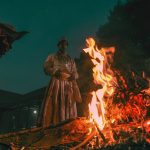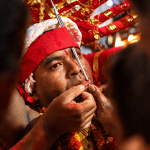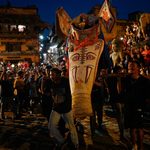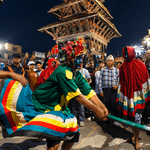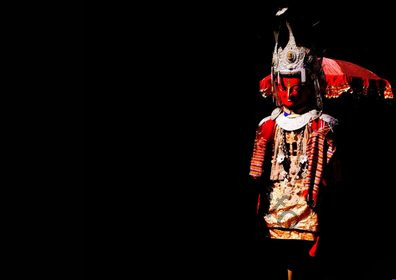

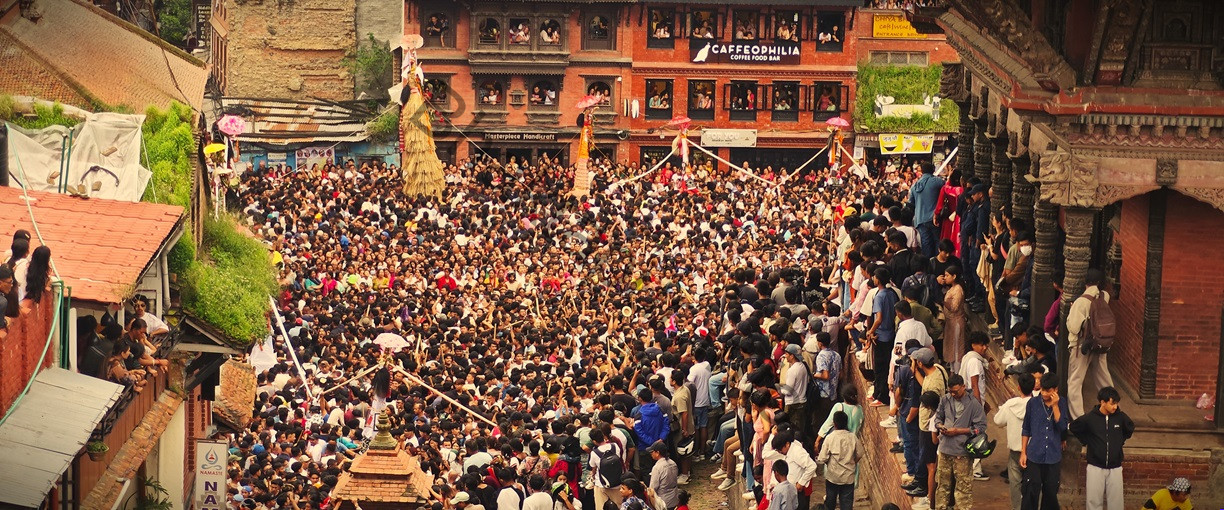

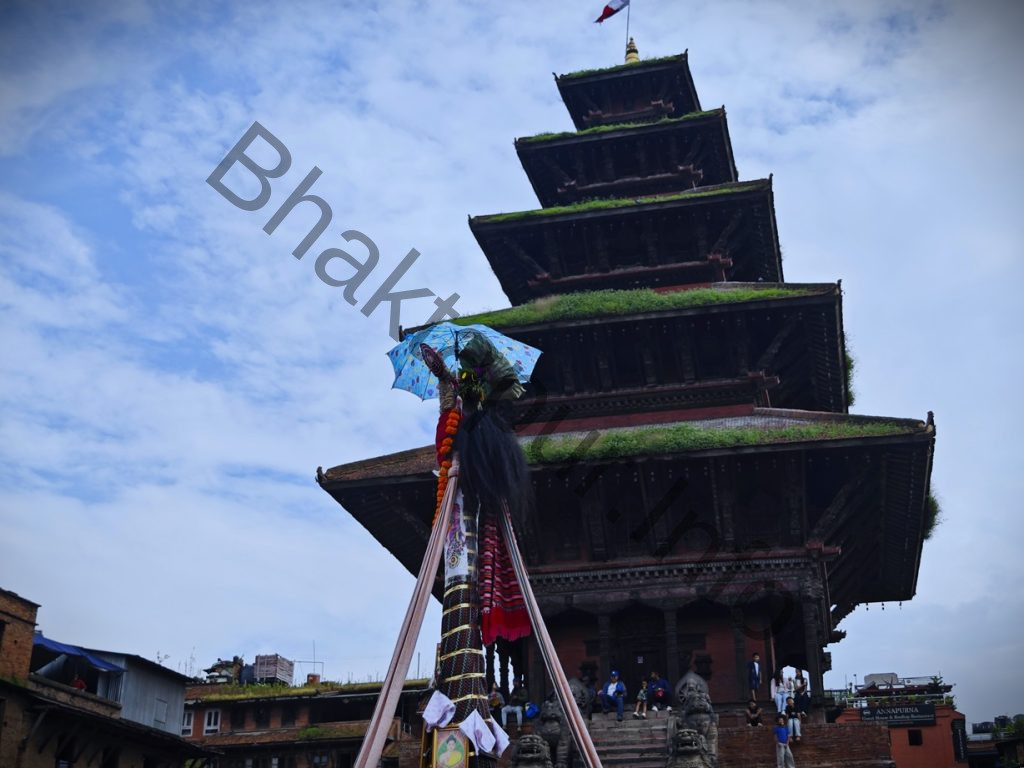
“Gaijatra “is a well-known traditional celebration in Nepal. A bamboo statue of a cow, a cow with a head, a youngster dressed as Mahadev Parvati, a cow made of clay and stone, a bull, etc. are all decorated across the city by the deceased’s family in remembrance of the deceased. During Bhaktapur‘s Gaijatra, people dance to the sound of the flute while pounding sticks and wearing traditional jewelry and clothes. They also say “Ghitanghisi Twag.” In the Gaijatra, a custom and way of life, certain families also practice the dances of Bhairav, Devi, Jangli, Hanuman, Lakhe, and Monkey.
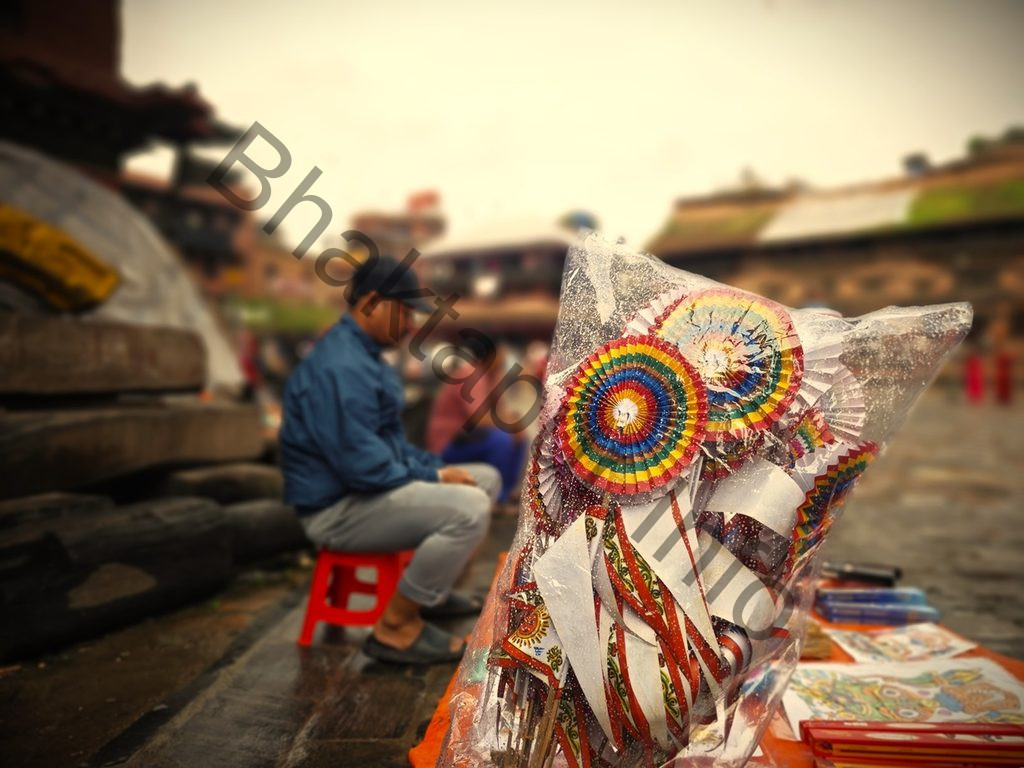
The traditional Ghintanghisi dance, which is performed with sticks, has become the Gaijatra of Bhaktapur‘s specialty, combined with satire on the political structure and current state of affairs. During the Gaijatra, the same number of Tahasan, a symbol of cows, are typically carried across the city to the sound of a drum, representing the number of Bhaktapur city inhabitants who have passed away in the previous year (from this year’s Gaijatra to the next year’s Gaijatra). Beginning at the residence of the deceased, the procession circles the city of Bhaktapur before coming to an end. A satirical Ghintanghisi precedes the classic Ghintanghisi.
The Gaijatra of Bhaktapur city is traditionally held for eight nights and nine days. Every year, the procession here begins on the day of Janai Purnima and continues until Krishna Ashtami. During this festival, various dances, plays, and comedy (farces) are performed in the town’s neighborhoods every evening. The attractive Ghintangghisi dance of Saparu is an important attraction and specialty of this festival. This Ghintanghisi dance, which is danced to the tunes, rhythm and rhythm of Dhaan, Lalakhi, and Baja, is a dance in which one person first dances with a Flail Lusi). This Ghintanghisi dance, which circumambulates the city along a designated route, continues throughout the day.
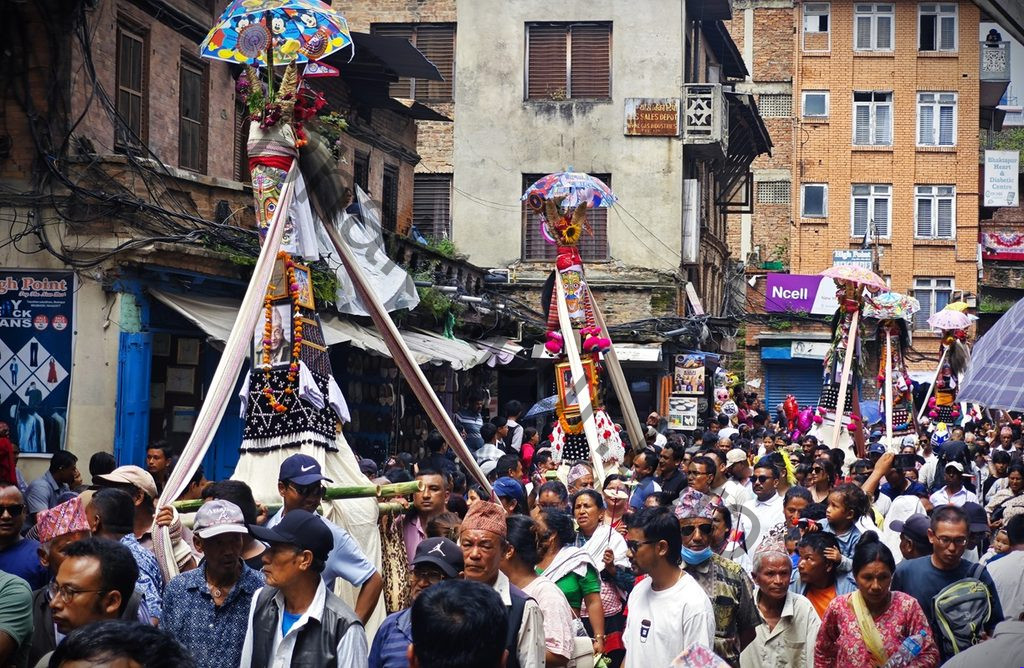
Young children dance the Sancha, while adults dance the Tahasa (Tahamacha). The Sancha and Tahamacha are created in the personas of men and women, respectively. In addition, a number of other dances are performed. On this day, Maka Pyakhan and Lakhe Pyakhan are especially performed. Ghintanghisi is also performed at domestic and international events. The performance features satirical cartoons, satirical images, and satirical situations. In this way, the Ghintanghisi dance is also a dramatic or satirical display of social and political satire. On the day of Sa:Paru, one is supposed to go around the tol nine times, consume nine different kinds of food, and dress in nine different outfits.

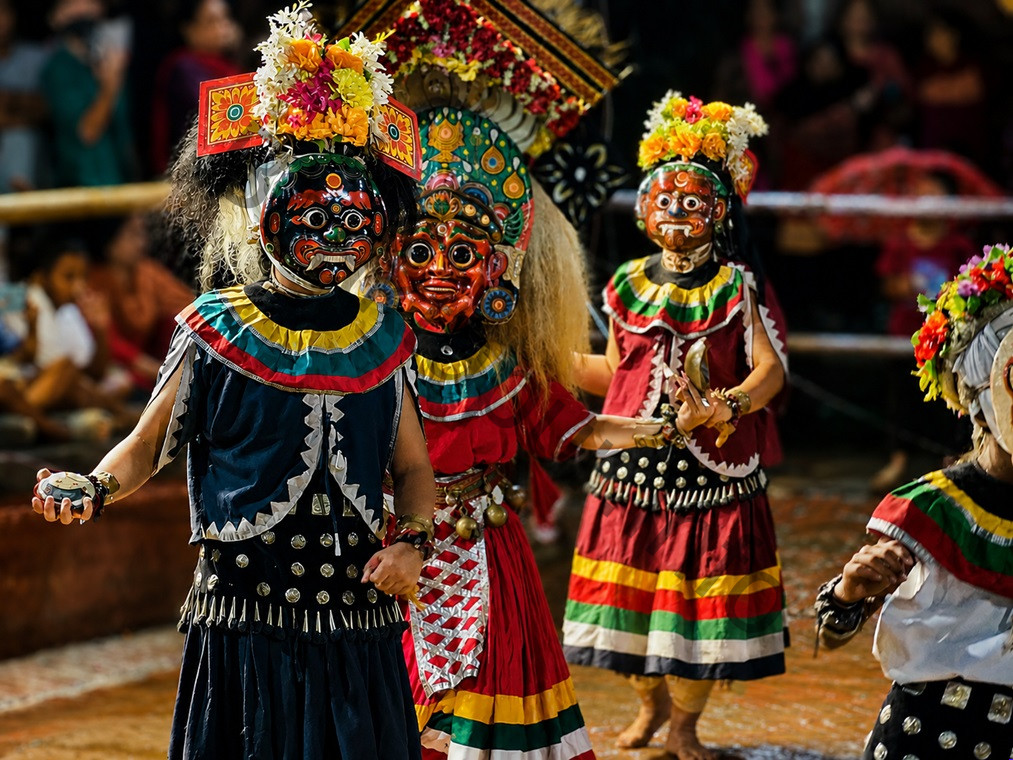
Additionally, there is a proverb. Foreign visitors have also been taking part in the Ghintanghisi dance in recent years. With sticks in their hands, tourists from various nations performed Ghintanghisi.
In addition to the Ghintanghisi dance, there are additional performances of the Hanuman, Lakhe, Jangali, and Mak Pyakham. It is customary for the celebration to come to an end when the straw Tahamcha and Bhairav procession leaves Lakulachhen in the evening.
It is customary that no further Tahamcha to be removed following the straw procession of Bhairav and Ajima.