

Kawan is an interesting mythical character, which is part of the traditional cultural and folklore heritage of the Newar community of the Kathmandu Valley. The rich imagination, storytelling traditions, indigenous beliefs and symbolic world of Newar society are reflected in characters such as Kawan.
An exploration of Kawan can offer an interesting viewpoint on how mythical figures are represented in Newar folklore, traditional performances, festivals and cultural stories.
Who is Kawan in Nepali Mythology?
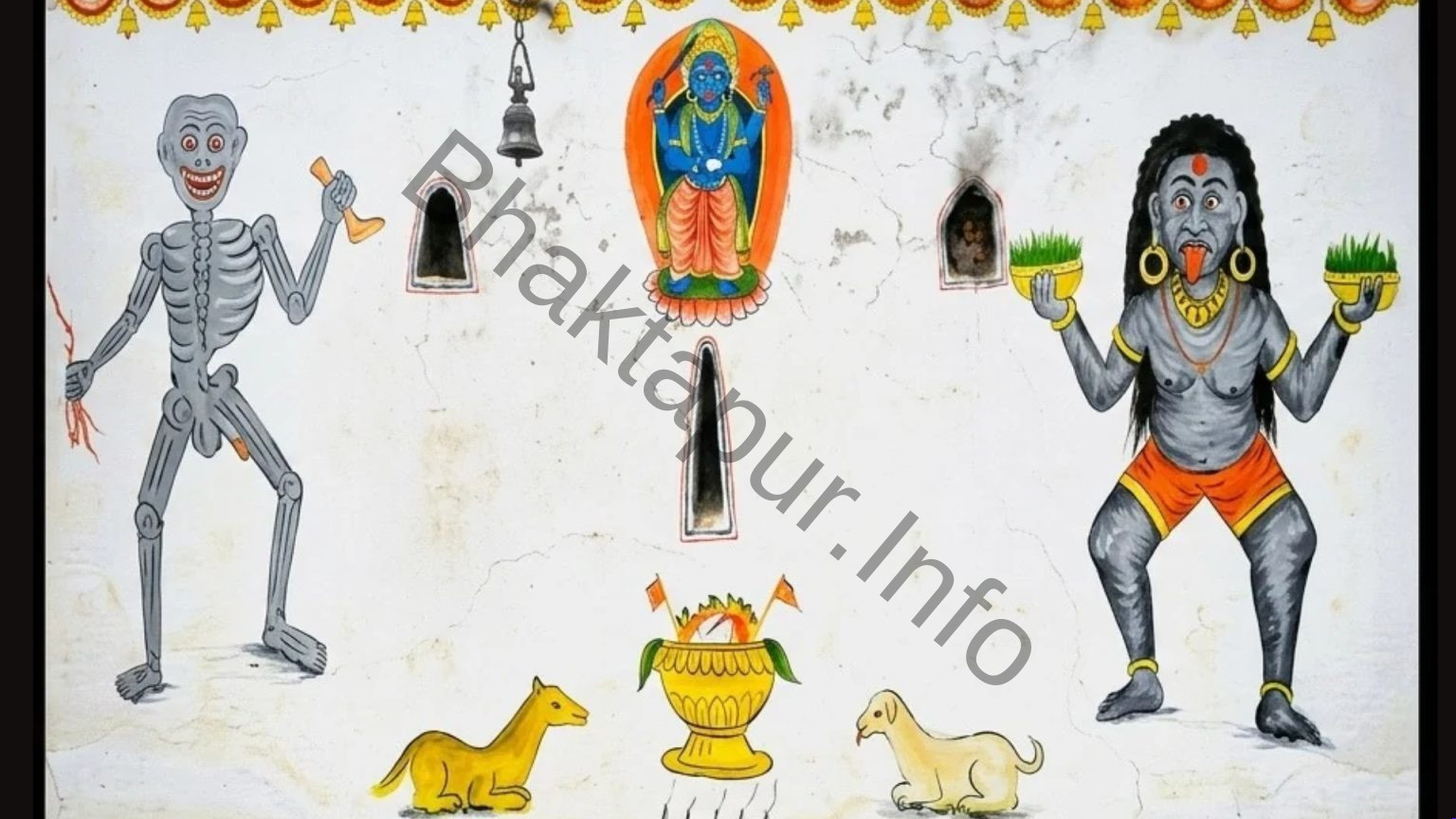
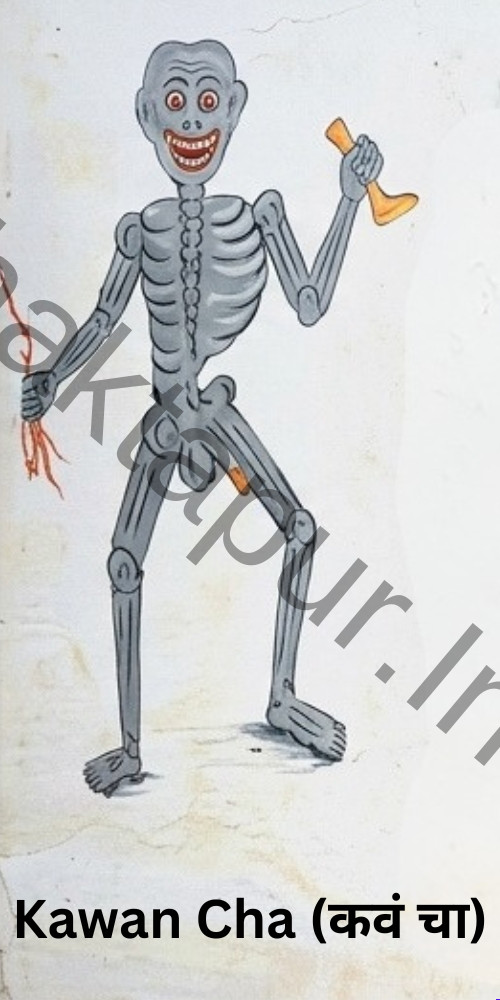
In Newar folklore, Kawan (कवं) or Kawancha (कवंचा) or Kawoh is a skeletal supernatural figure. It is related to death, bones, spirits, and the unseen world.
- Looks and features- Shown as a human skeleton or skeletal spirit.
- Stands for bones and the mysterious world of spirits.
- Traditionally associated with supernatural forces and evil spirits.
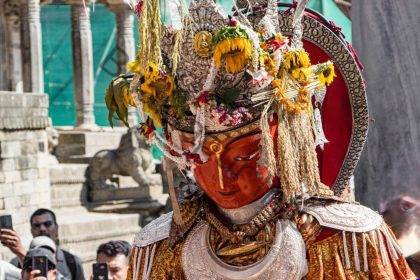
- Appears in Newar religious art, folklore, and masked dance.
- Kawan and Khyah Relationship
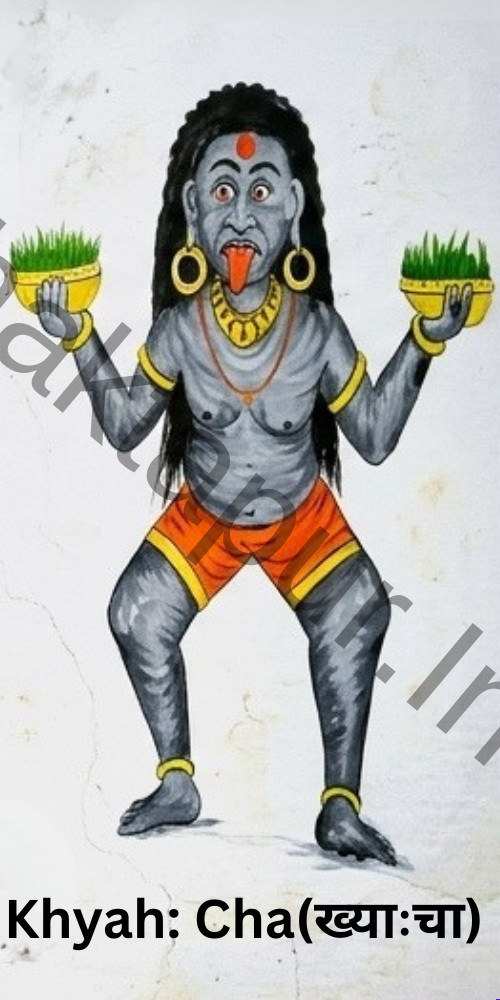
One of the more interesting features of Newar mythology is the traditional relationship between Kawan and Khyah (Khyāḥ).
One traditional origin narrative connects the two figures to Nāsaḥdyaḥ, the Newar deity associated with music and dance. In this narrative Khyah is flesh and Kawancha is bones.

- Cultural importance
Kawan and Khyah are seen together in certain Newar sacred dance dramas and traditional artistic representations. Their forms are opposites, and they represent the relationship between flesh and bones, life and death, and the visible and invisible worlds.