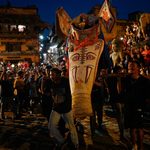


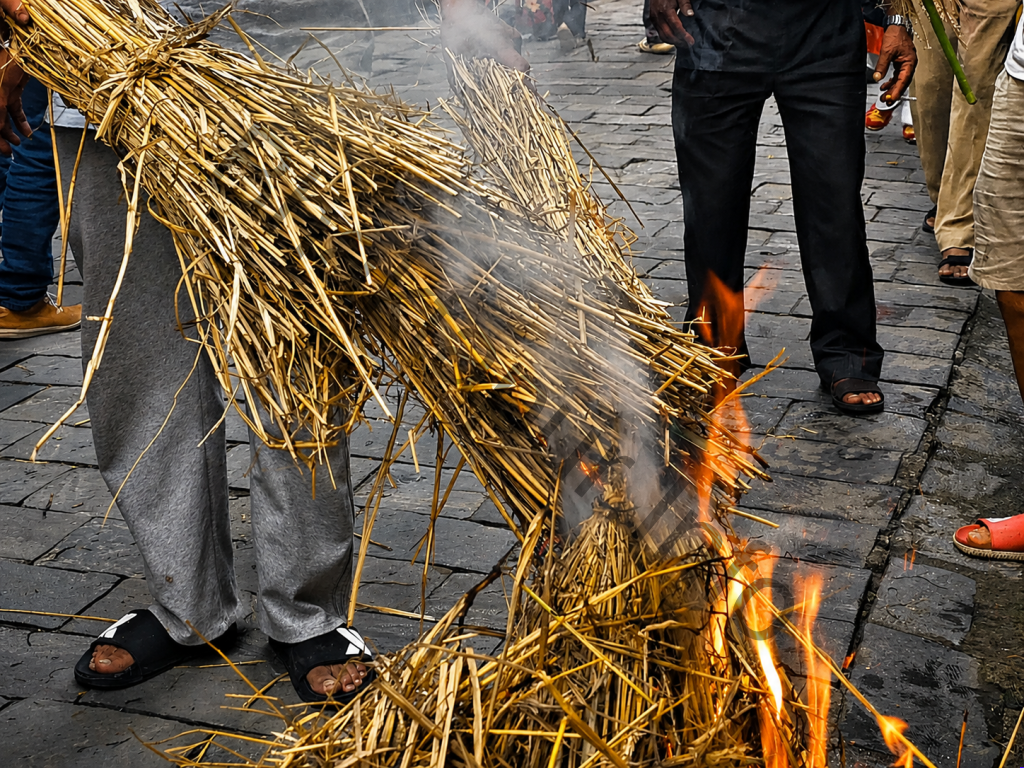
Even the common Newas celebrate the holiday as Ghantakarna while talking about this day, however it is now observed with the Gathemuga Chahre. Actually, it has nothing to do with Ghantakarna. Children and adults congregate in villages on this day to beg for money, block the road, and create a devil figure out of grasses or reeds that is left standing all day before being dragged outside and burnt at nite. In the Newar tradition, it is customary to drive ghosts and demons away in this manner. For this, several legends have been created. As a result, only the Newas celebrate this holiday. As a result, it is observed throughout the bulk of Newa-populated areas of Nepal.
A common belief states that if a demon reached the community, it would kill, devour, and torture the children. To hear the god’s name, people would hang big bells on their ears. In this manner, the tantrik contacted him when the demon began to cause a great deal of suffering. The Tantrik then transformed into a frog and gradually led the demon to a muddy pit. The tantrik, who assumed the shape of a frog, enticed the demon to a muddy area by promising to lead him to a place with plenty of food after everyone had chosen to kill it there. Everyone was able to slay the demon by throwing stones at him when he reached really deep mud, which made it difficult for him to move and caused him to begin burying himself. It is believed that the custom of creating an effigy of the demon and burning it on Sawan’s Krishna Chaturdashi, the day the demon was killed, is done in remembrance of the demon’s death.
However, the story was actually rather different. During the farming season, the Newas used to put in a lot of effort. The power of the Tantrics would rouse the ghosts and put them to work because the fields produced a lot but there weren’t enough labourers. Legend has it that the farmers who had to cultivate and plant during Baisakh Shukla Dwitiya and Akshaya Tritiya would summon Ghosts (Demons). It was thot that the ghosts would assist the farmers with their agricultural tasks if they were brought in this manner. After the farming labour was completed, the ghosts brought in in this manner had to be expelled because they could not be held indefinitely. On the Krishna Chaturdashi day of Sawan, the ghosts summoned in this manner were all gathered after the farming job was completed. In order to do this, a ghost composed entirely of reeds was created using the Tantric power and brought to the river to be cleaned. This custom persisted as Gathemuga .

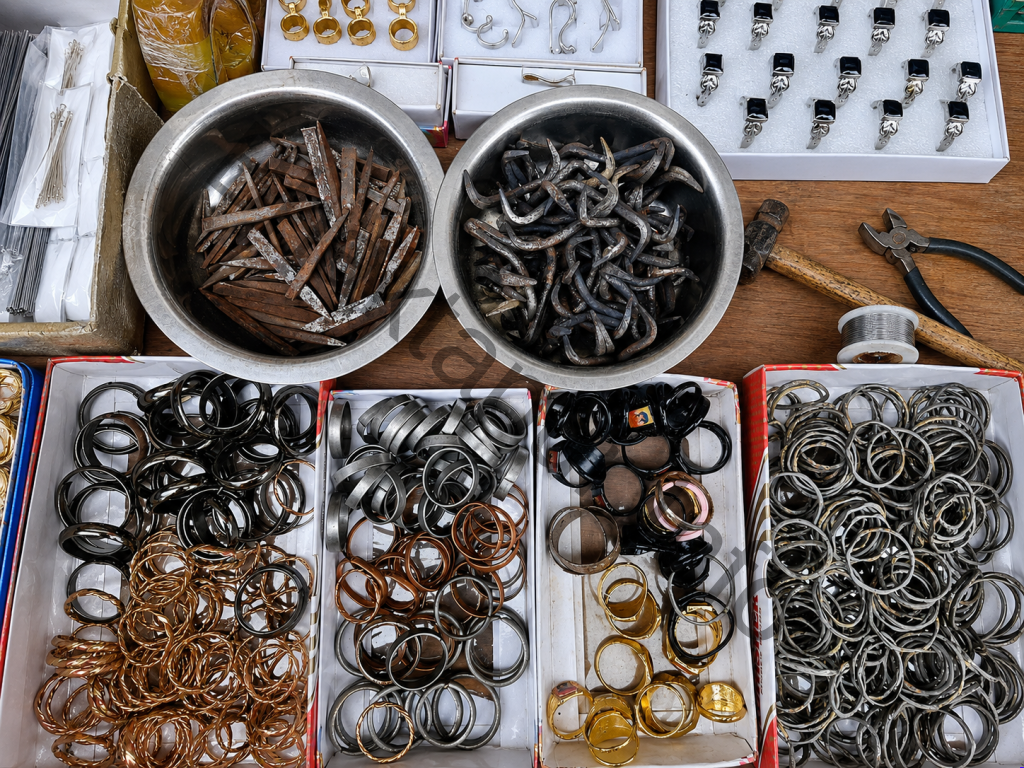
On this day, it is customary to clean the house in the morning and rid it of ghosts and demons, a practice known as Sinha Jya: Byankegu: (finishing the farmer’s job). Curd, Karkalo, Shu: swa (a type of flower), Bau swa (a type of flower), and Peach branches are traditionally placed in a tiny clay pot, lit with a fire, and carried to a double or quadrilateral route. To prevent the ghosts that have been driven out of the house from coming back, three iron legs and peacock feathers are buried at the front door. In order to keep ghosts out of their family members, they also wear iron rings.
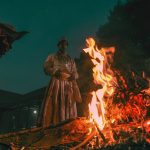
In areas where the Newa people predominate, this tradition is still followed despite the beliefs that gave rise to the celebration. Children, young people, and the elderly all congregate early in the morning to block the road with a grass and reed monster that has a triangle of reeds and a monster’s face on its body. The monster is left on the road for the entire day. An orphan named Aju is brought forward in the evening and begins to shout “Aju Jai” as others laugh, drag him down the road, and set him on fire. Aju also receives the money raised during the roadblock.
Children from home create cloth dolls on this day, tie them up, and declare that they will be destroyed. The fabric dolls are attached to the bell because it is thought that ghosts might reside within them. Turmeric powder was also ground and applied to the hands by Newar women. They use mehndi these days.
Nasa Dyo
Nasaḥ Dyo-Nasa Dyo नासः द्यो is a Newa god with tantric power. He helps people become skilled musicians and dancers. Without worshipping Nasadyo, no musical instrument may be played during a celebration or act of worship. Nasa Dyo is fully worshipped in a tantric fashion. This worship has a set day. It is not possible to perform this worship whenever one feels like it because of leisure or desire. Musical instruments were heard playing even prior to the worship of Gathamunga, or Nasa Dyo . The custom of donating and training in dance and musical instruments in order to win the competition began a long time ago after our cultural customs were altered by competitions. Nobody paid attention to our advice to refrain from playing musical instruments without worshipping Nasa Dyo .
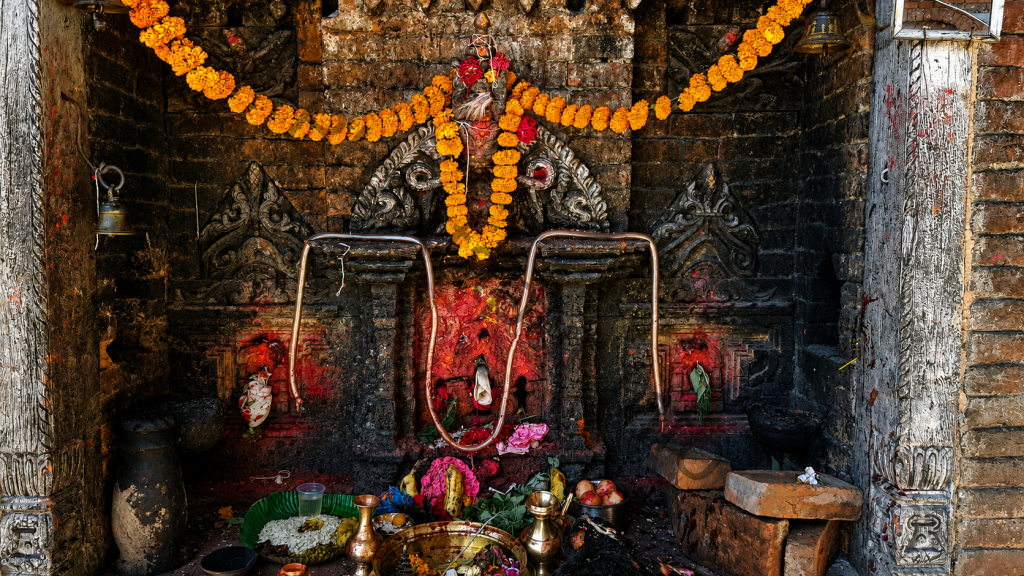
On the night of Gathemunga, the instrument is only removed and permitted to be played following the Cha Puja (Ritual Night Worship). Since the day of Sithinkha, the instrument has been kept closed. It is kept closed on the day of Sithi Nakha so one must labour in agriculture after worship. As a result, there is no time for musical performances or processions. Agriculture is the sole focus.

Nasa Dyo devotion is also known as Cha Puja because it is exclusively done at night. Between the conclusion of Shrawan’s Krishna Trayodashi and the start of Chaturdashi, Nasa Dyo is worshipped. Therefore, the beginning of creation likewise occurs at midnight between Trayodashi and Chaturdashi. Consequently, it is believed that creation began at the intersection of these two nights. The start of a new life in humans also happens at night.
The Nasa Dyo Puja in the Newa tradition is the most important day for those who play music and sing ragas or bhajans associated with the procession. On this day, instead of worshipping with various materials, a simple worship is offered along with Kisli. A puja plate with sixteen materials is not required for Nasa Dyo . When offering Kisli, a small clay salima ki, that is, rice, is placed on top of it, and a coin and a small betel nut are placed on it. The rice was made of pure Akshata. The rice was ground at home, separated from the brown rice, and placed in Kisli. But nowadays, only rice available in the market is placed in Kisli. Along with Nasa Dyo , Hema Dyo is also worshipped. Hema Dyo is the god of the tunes and melodies of ragas.
Many Tantric deities are also awakened on this night. Tantric deities should be worshipped all night on this day in order to awaken them, just as humans must eat every day in order to survive.
Witchcraft
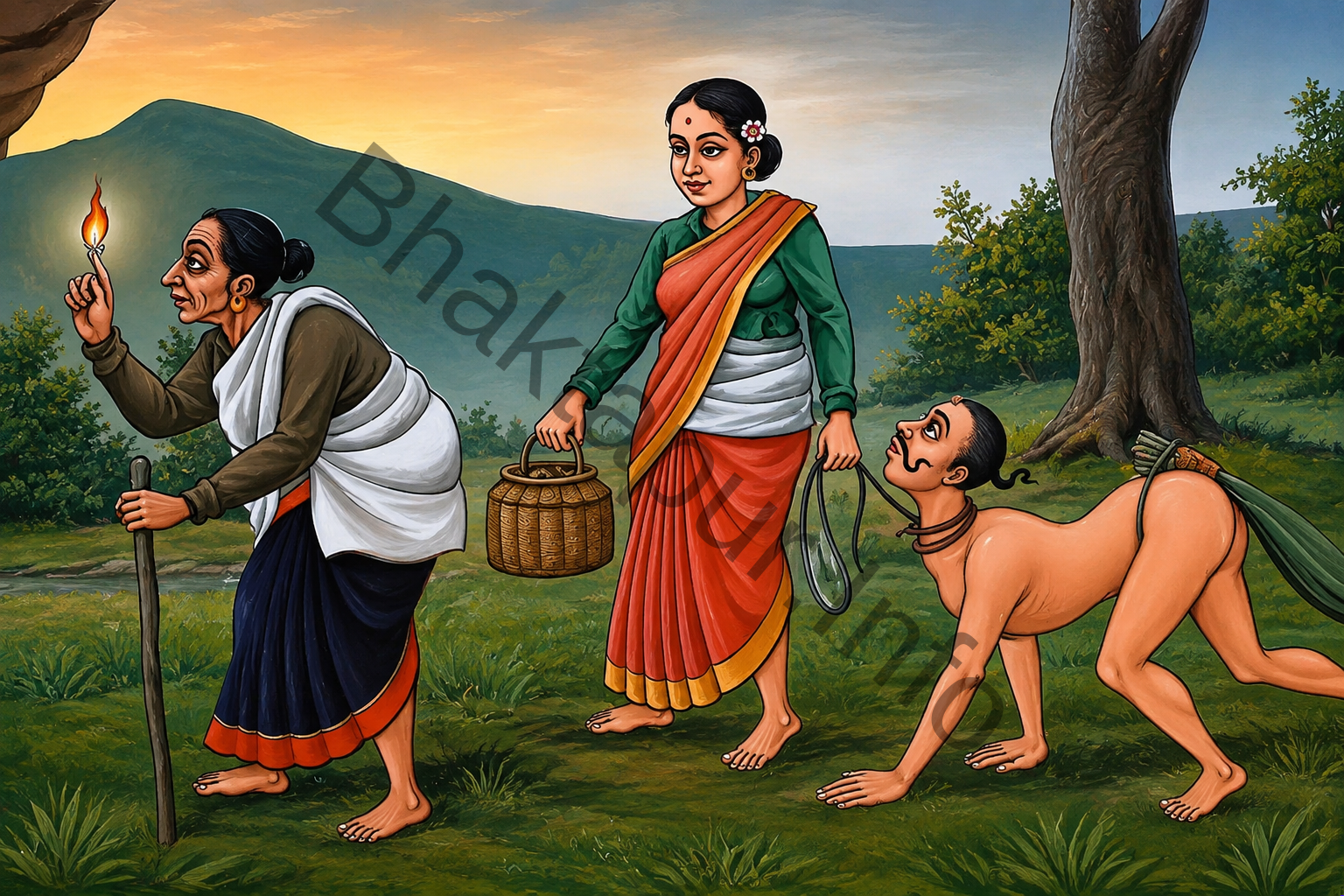
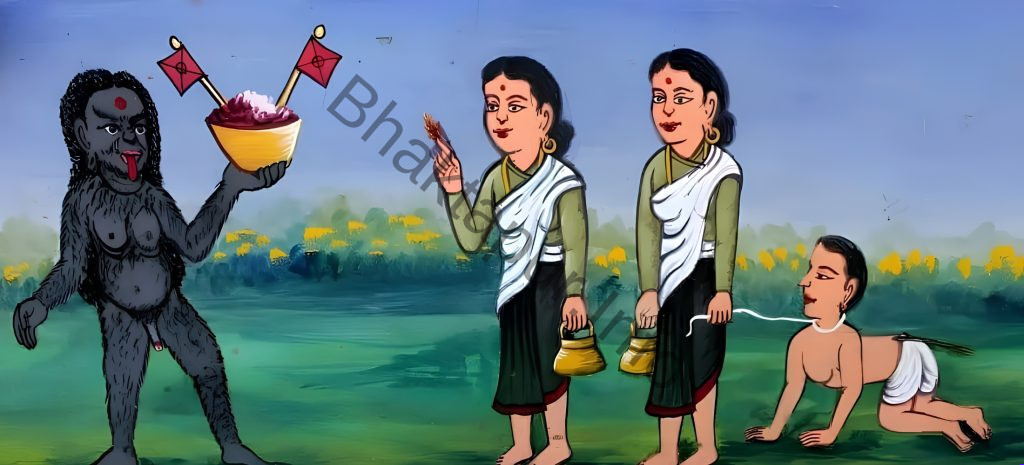
Another name for tonight is “the night of learning witchcraft.” After being awakened by the Tantrics to labor in the fields, witches, ghosts, and other spirits were transported to the wayside and set free. The ghosts and spirits released in this manner at midnight would be worshipped by those with bad intents, who would then take them with them. This kind of worship necessitated the use of special items as worship supplies. To begin with, a witch was required as a guru. Who would take her to a wayside distant from the village and light a lamp on her finger during the pitch-black night? The woman who desired to become a witch would bind her husband like a goat and carry him behind her while being transported in this manner.
The objects of religion were kept in bamboo utensils. Although this tool appeared to be made of regular bamboo, it was actually constructed of a unique kind of bamboo. The majority of the bamboo used to transport a deceased person is either washed away in the river or tossed on the riverbank. For those learning to practice witchcraft, the kaala (vessel for holding worship goods) carved from the bamboo used to convey the corpse is crucial. Carrying objects of religion in other containers is prohibited. In actuality, other pujas also make use of the kaala that is brought to the ghat in this manner. It was thought that if the puja items were utilized with a particular resolve and with the intention of achieving a goal, the goal would be achieved if this kind of kaala were employed to shield the objects of worship from malevolent intentions.
The festivals of the Newa people also begin with the Gathemuga Chahre.