

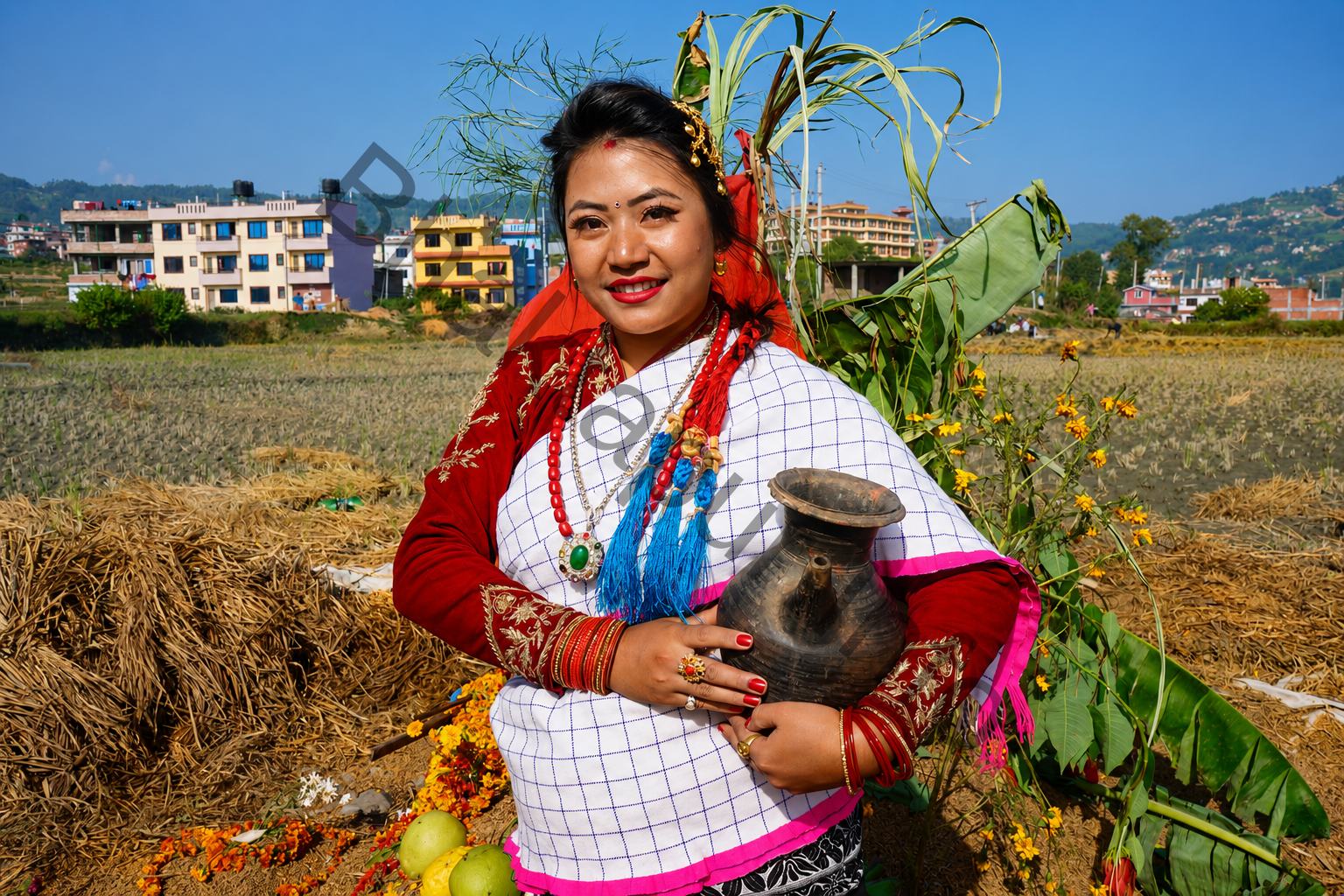

BuräJya (बुराँज्या): A Unique Newa Harvest Tradition of Bhaktapur
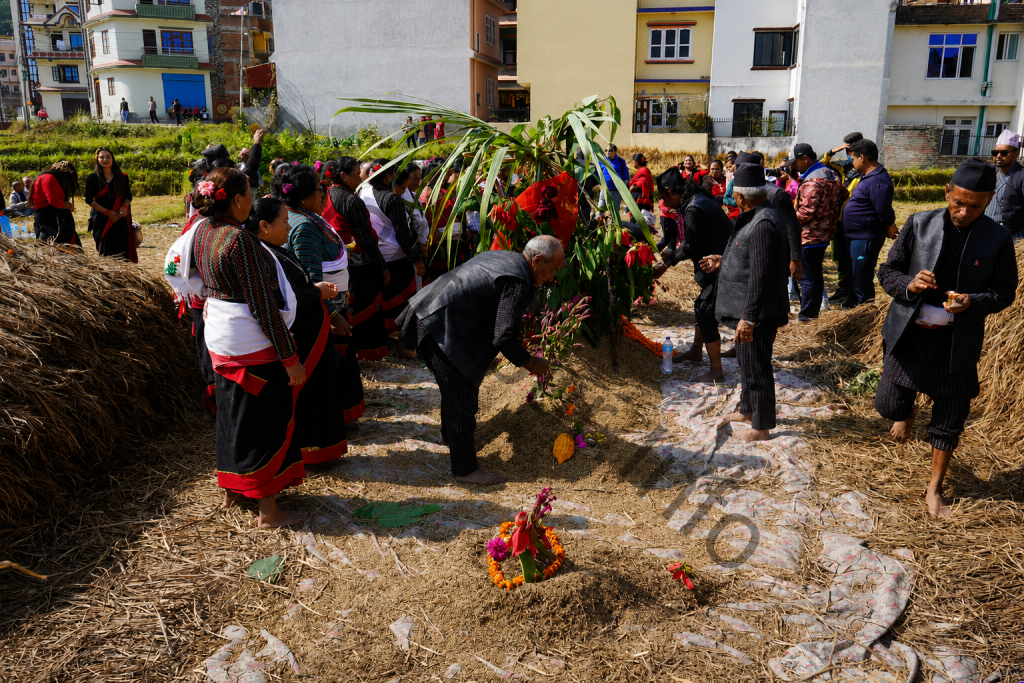
BuräJya (बुराँज्या) is a unique traditional ritual associated with the winnowing of earth-covered harvested crops, practiced by some Newa communities in Bhaktapur. This age-old custom reflects the resilience, wisdom, and agricultural heritage of the people of the historic city of Bhaktapur (Kwapa).
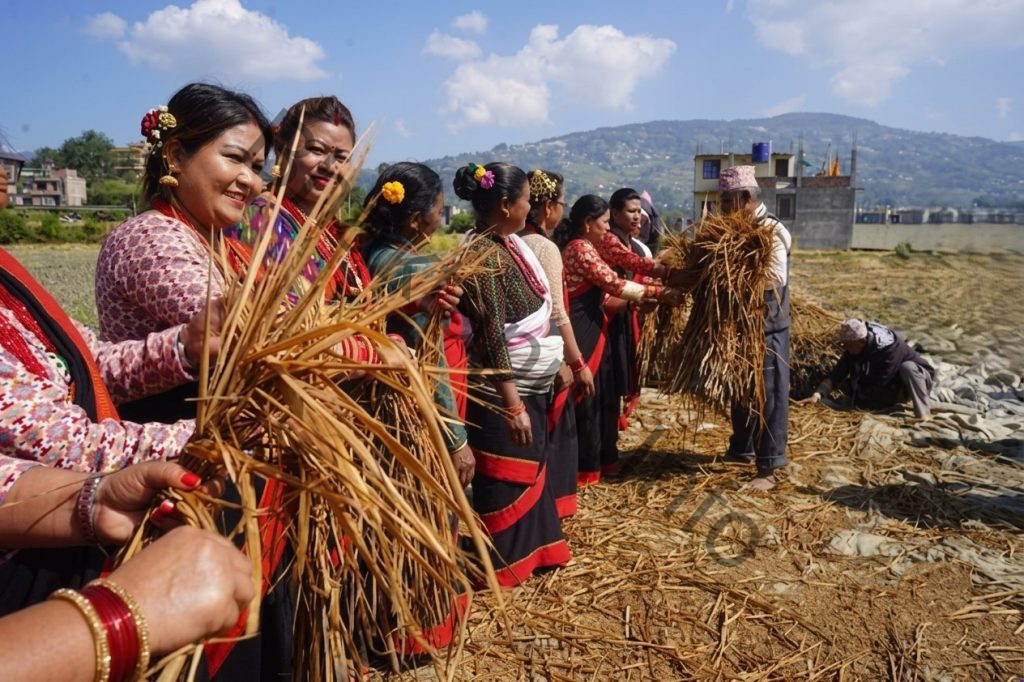
According to local legend, Bhaktapur endured several invasions throughout its history, including attacks by forces associated with the Mughal Empire, the army of Mukunda Sen of Palpa, and Tibetan troops. One popular folklore recounts that whenever an invasion threatened the fertile farmlands of Bhaktapur, the Malla kings instructed local farmers to harvest their crops immediately, spread them across the fields, and cover them with soil, hay, or straw. This clever strategy prevented invading armies from seizing the harvest as food supplies.
Once the conflict had ended, the farmers returned with great concern, fearing that the buried crops had spoiled and would no longer be fit for consumption. To their astonishment, although the grains had turned a dark brown after being covered with soil and hay, they had remained perfectly edible. Even more surprising, the grains developed a richer flavor and were considered more nutritious after being winnowed and cooked.
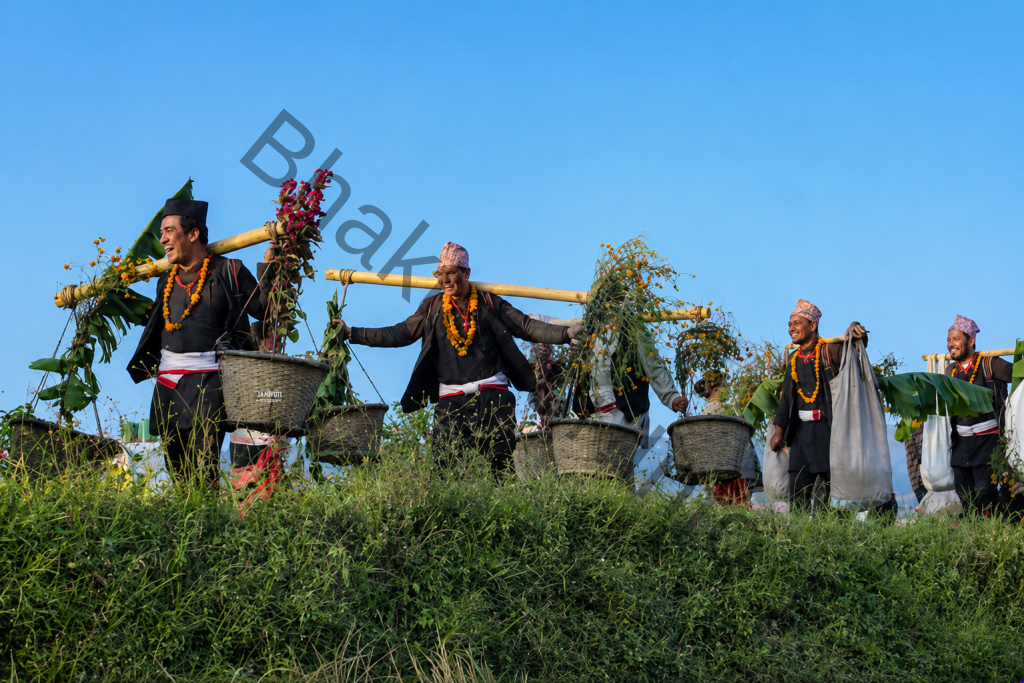
What had begun as a desperate wartime measure soon became a joyful discovery. The farmers celebrated this unexpected blessing, transforming a moment of hardship into a tradition of gratitude and resilience. Over generations, this practice evolved into the ritual now known as BuräJya (बुराँज्या).

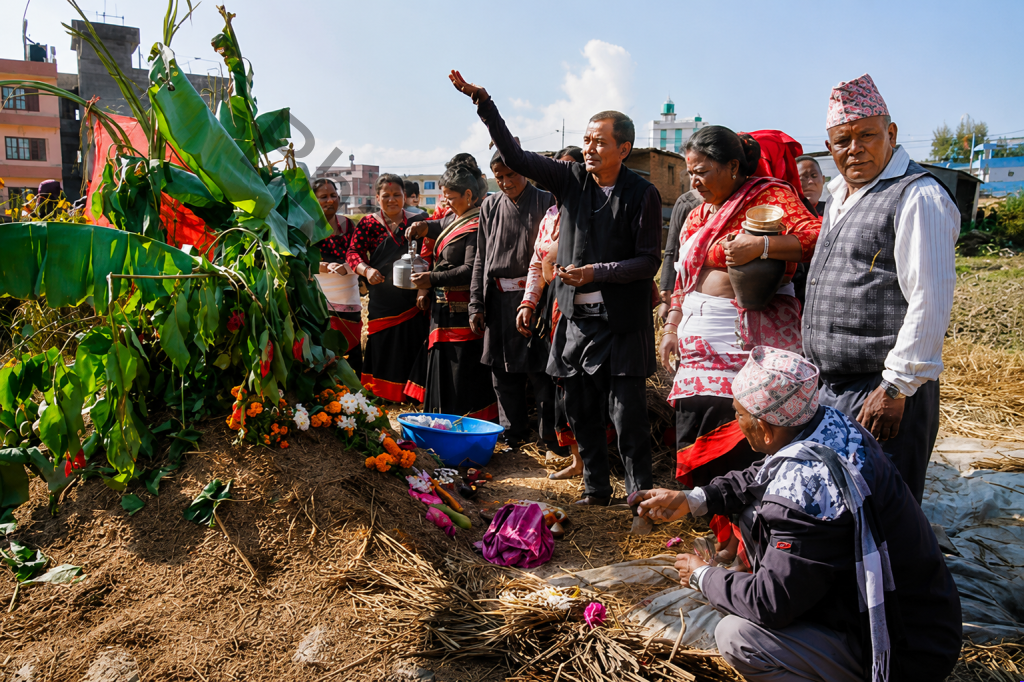
Nowdays , BuräJya (बुराँज्या) a remains an important cultural tradition among some Newa families in Bhaktapur. More than just an agricultural custom, it symbolizes the ingenuity, perseverance, and enduring spirit of the Newa people, preserving a remarkable piece of Bhaktapur‘s rich cultural heritage for future generations.
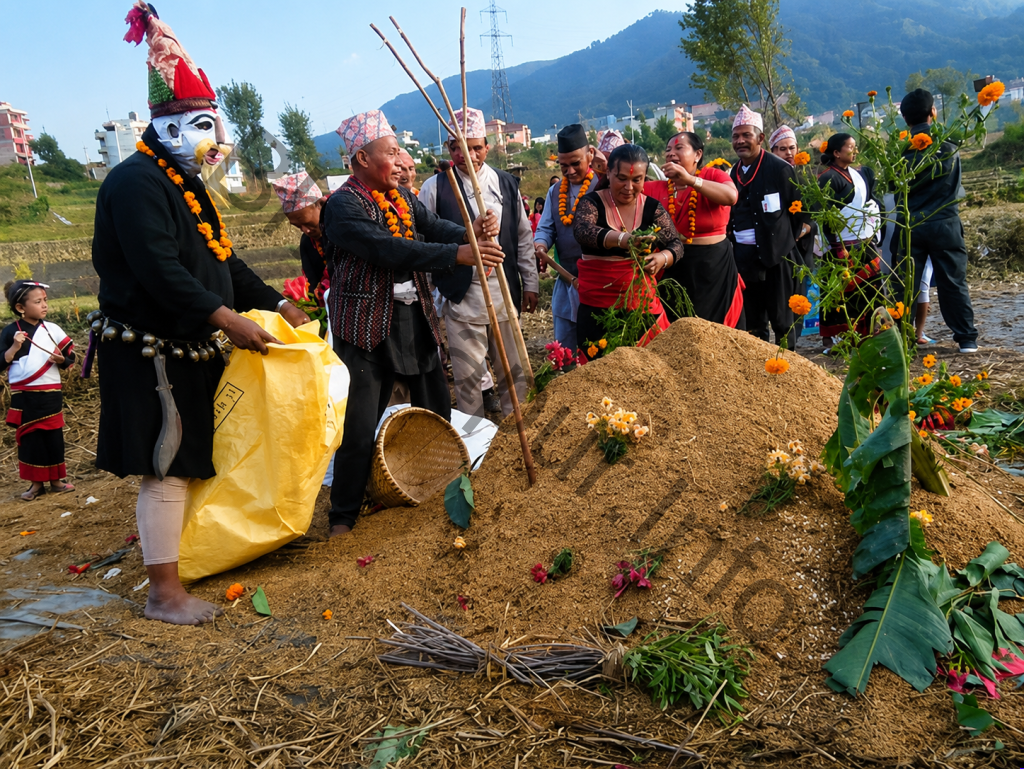
A brief discussion about Buranjya
1) Literal and emotional meaning of Buranjya
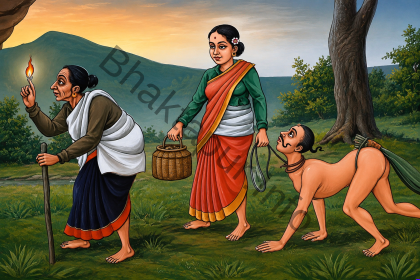
When examining the meaning of Buranjya, the word ‘Buranjya’ is used to refer to the worship performed by the head of the household or a sitter on the pile of black rice stored in the field so that the quantity of rice increases, that no matter how much is spent, it does not fail, and that the compassion of the Giver of Food remains. Some people consider Buranjya to be an original tradition of keeping Hakuwa.
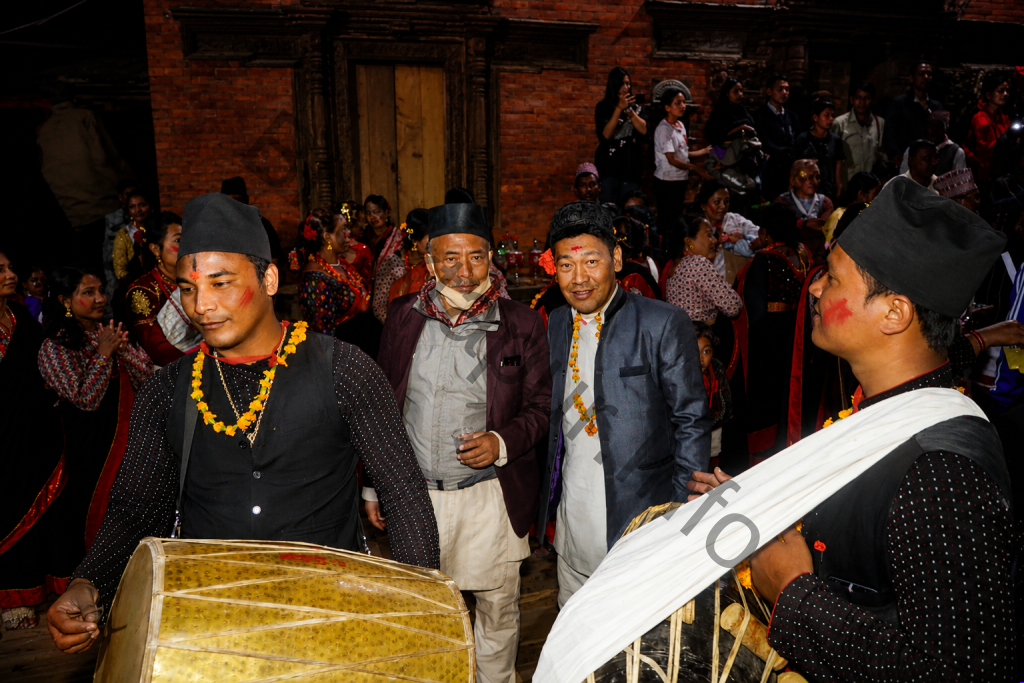
‘Bu’ means field. In Nepali, Rato Machhindranath is also called ‘Bung Dyo’. There are also people who believe that the word Buranjya comes from the word Bungdyo. The reason why songs of Machhindranath Karunamay are sung during paddy planting, paddy harvesting, and Buranjya is probably because Machhindranath Karunamay is considered the god of longevity. During the reign of Narendra Dev, there was a shortage of food due to lack of rain for a long time. At that time, on the advice of the Tantric Bandhudutta Bajracharya (Acharya), Machchhendranath was brought from Kamarupa Kamaksha to Nepal and installed in Patan. Since the rains brought abundant food and brought prosperity, it seems that the tradition of singing the song of Machchhendranath Karunamayya has come into being.
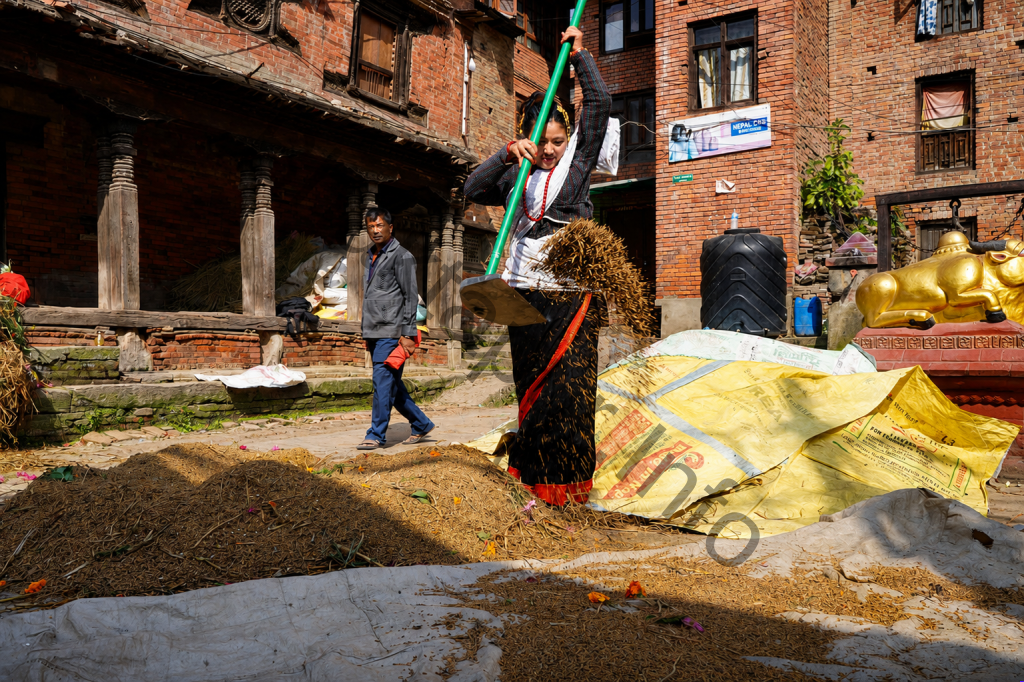
2) Meaning of the word Vakhasye
The meaning of the word Vakhasye is found to be interpreted by different people in their own way. Some have interpreted the word Vakhasye in this way – the word ‘Va’ means rice. The meaning of the word ‘khasye’ is that if the rice is eaten by the hand of the one who is merciful, a lot of rice will be collected. That is, ‘vakhasye’ means that the compassionate one will see the mercy of the one who is merciful and collect a lot of rice.