

During Yenya Punhi (Indra Jatra), Bhaktapur celebrates Mupatra Jatra (मूपात्र जात्रा, a unique traditional celebration. According to the lunar calendar, it is customarily observed for three days, from Ashwin Krishna Dwitiya to Chauthi.
Mupatra is who?
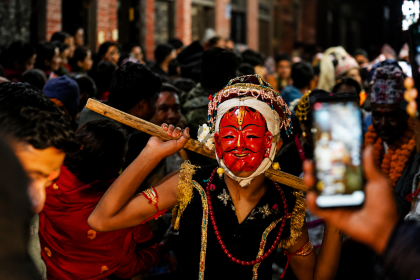
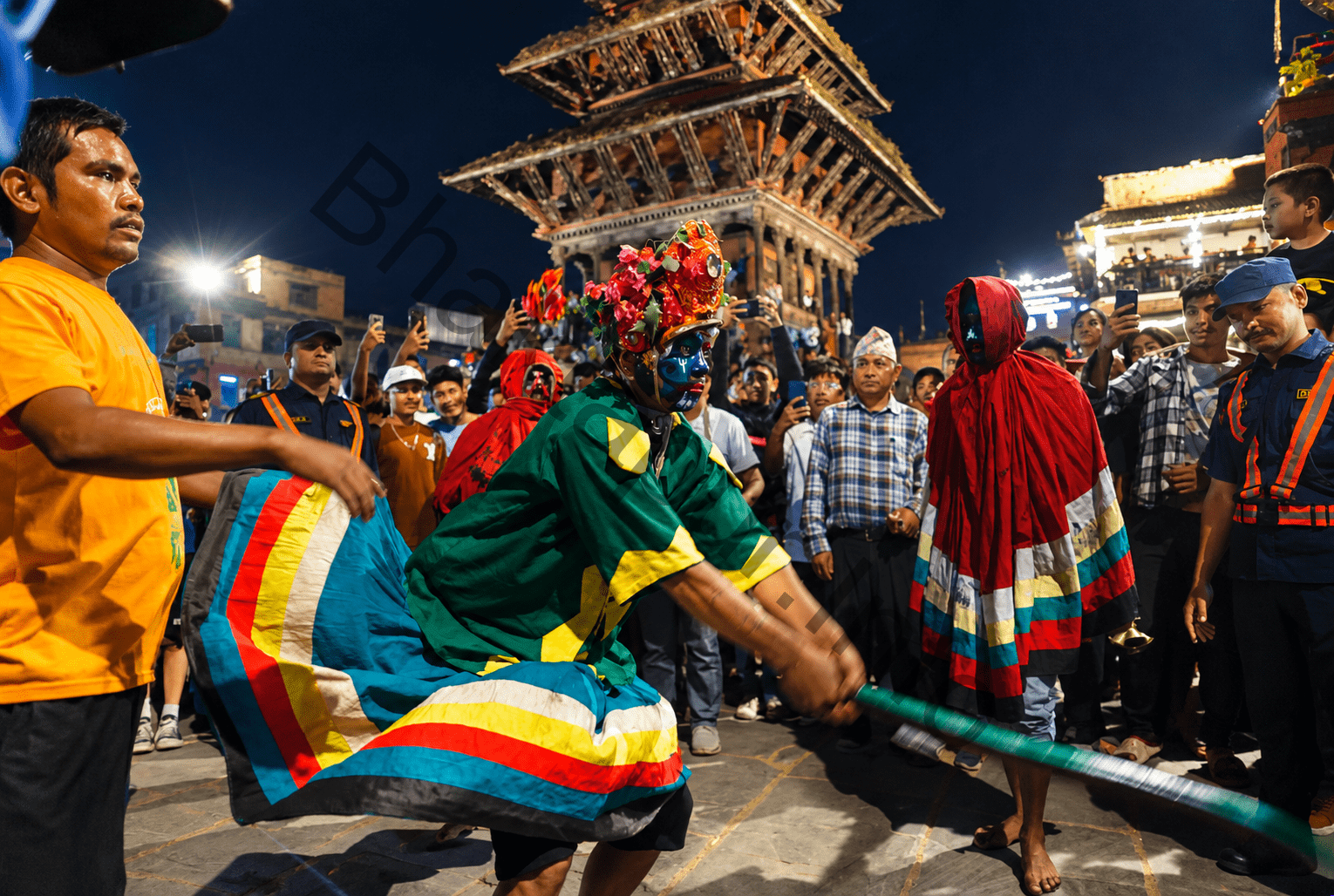
In the local tradition, the name Mupatra is typically seen as a prominent or strong demon persona. Three actors make an appearance during the procession: Mupatra, who serves as the primary character, and two aides known as Dhi:Cha (धिःचा).. They process through Bhaktapur’s ancient alleyways while brandishing swords, donning ornate demon costumes, and applying vibrant facial makeup.
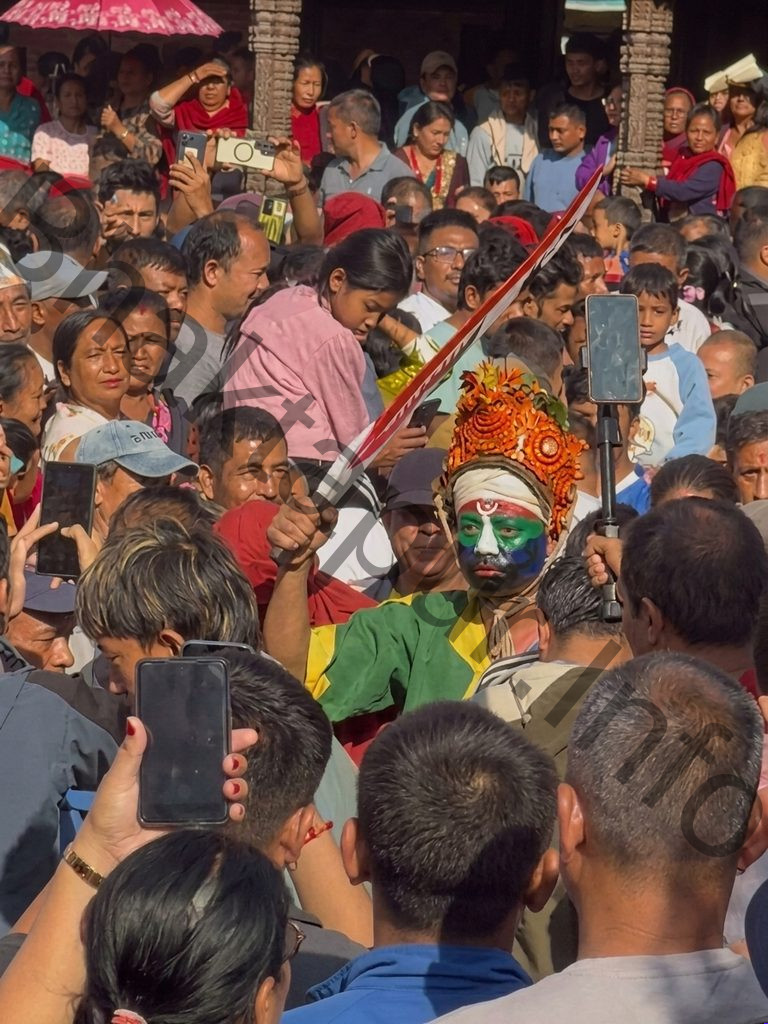
The three-day tradition
Day 1: Yamata & Sanla Ganesh
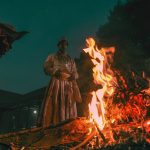
The Manandhar community lights Yamata, a traditional Akash Deep, as part of the festival’s ceremonies. The Mupatra procession comes after Sanla Ganesh from Tachapal is shown across the city.
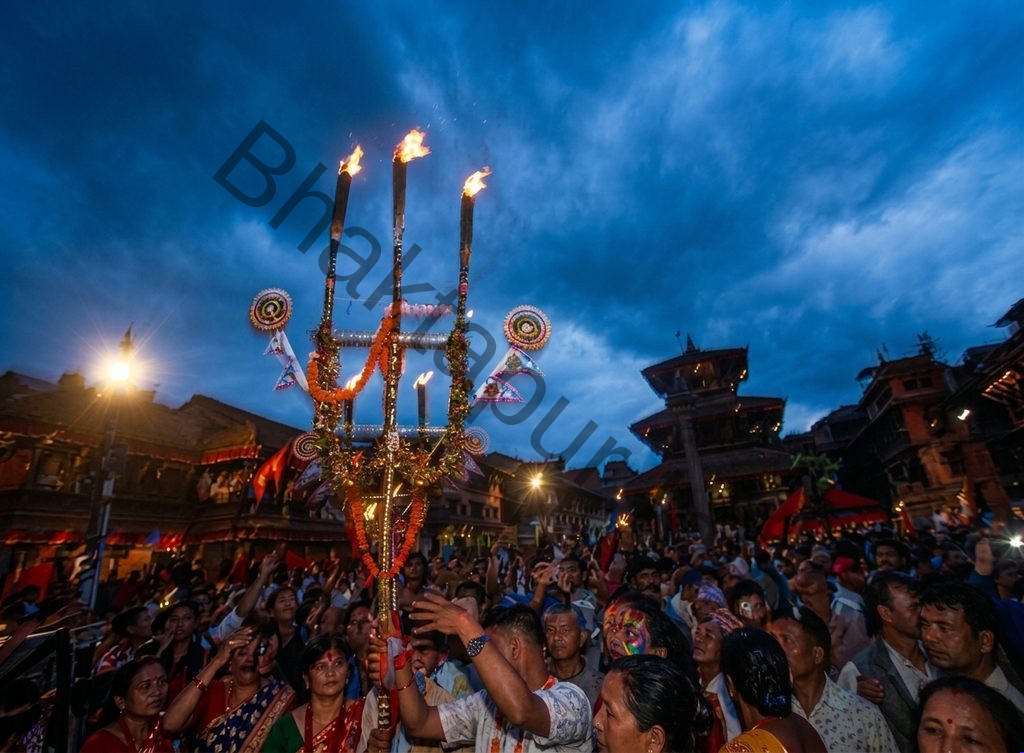
Day 2 – Chuma Ganesh & Mupatra
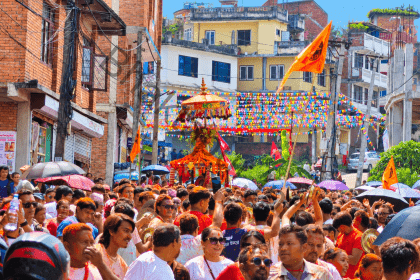
Yamata from Gomari (Golmadhi) and Chuma Ganesh from Chochhen take part in the parade. Mupatra and traditional music are played as the images are taken in various parts of the old city, such as the Durbar Square region.

Day 3: Mupatra, Pulukisi, and Bhairavnath
The last day is really spectacular. The renowned Pulukisi (blue elephant) parade follows ceremonies related to Akash Bhairav and Bhairavnath. Mupatra‘s procession proceeds in the customary order.
Yama : Dyo and Mupatra
Mupatra‘s contact with Yama: Dyo, who are typically located in various neighborhoods, is one unique ceremony. Mupatra hits the Yama:Dyo with his sword after circling it three times during the procession.
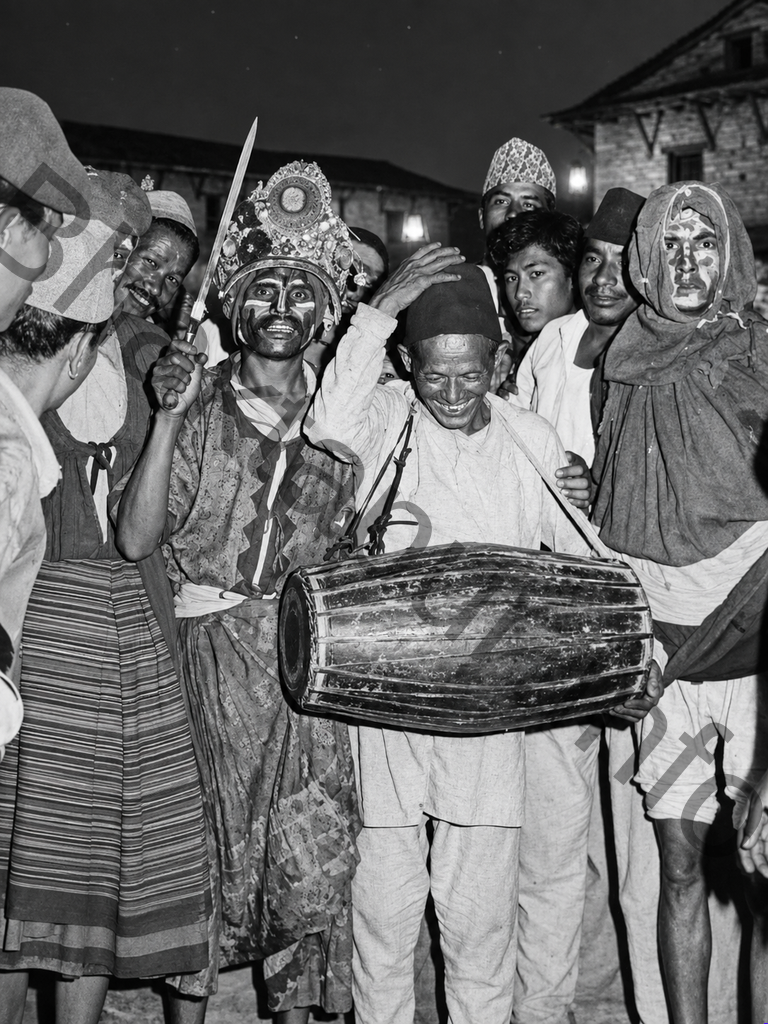
Pulukisi and Mupatra
The avoidance of direct contact between Mupatra and Pulukisi is one of Bhaktapur‘s most fascinating customs. According to local custom, Pulukisi stands in for Indra’s elephant, Airavata, while Mupatra is associated with the evil powers who oppose Indra. Thus, the way the processions are organized reflects their division.
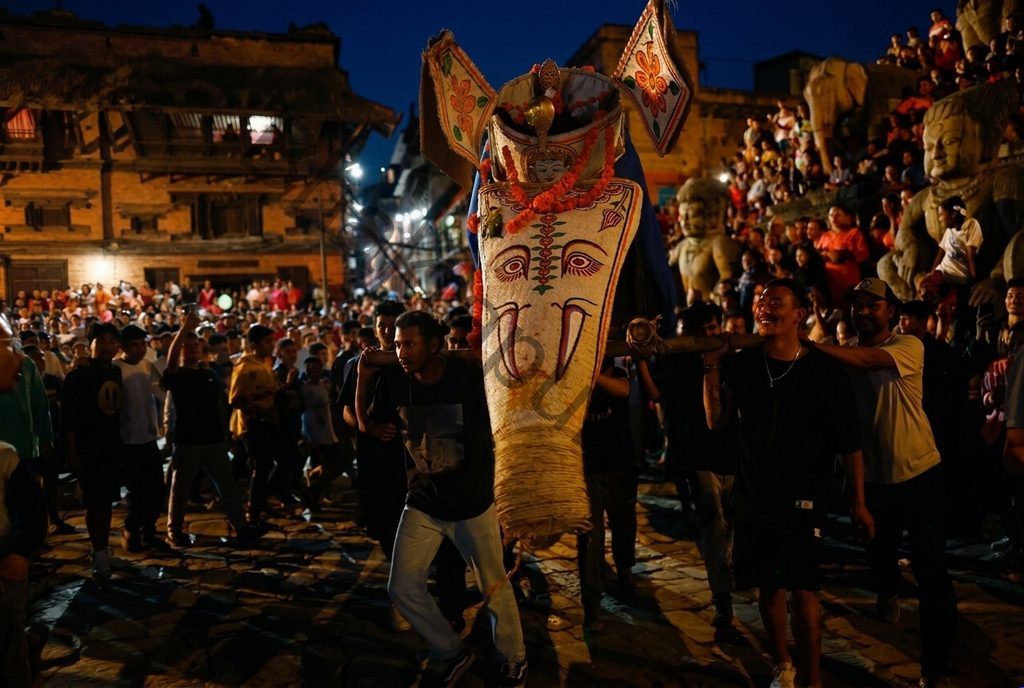
Cultural importance
Mupatra Jatra is more than just an impressive procession with masks. It blends the holy terrain of Bhaktapur‘s medieval neighborhoods with Newar mythology, ritual performance, traditional music, and community involvement. Additionally, it plays a significant role in the unique Indra Jatra tradition of Bhaktapur.