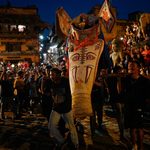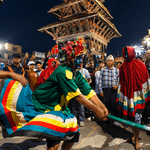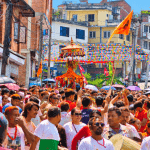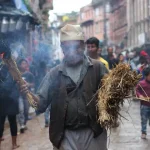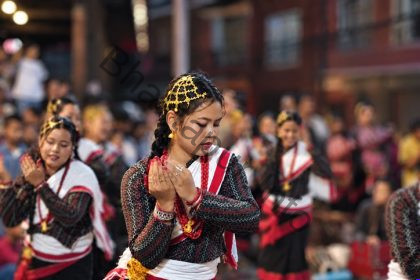

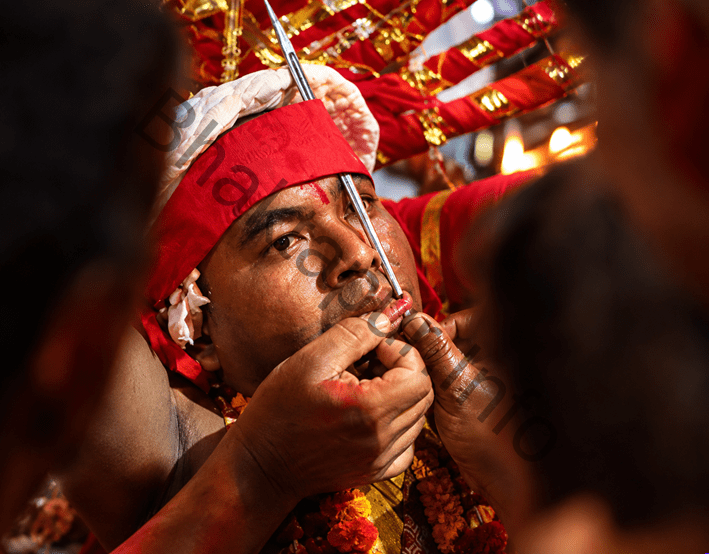
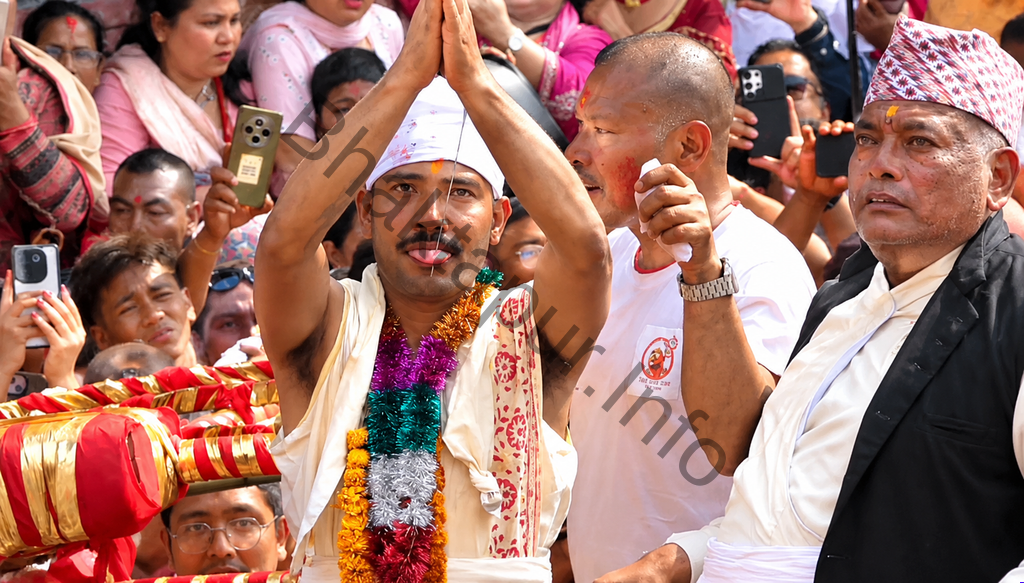
One of the unique traditional celebrations of the Newar community in Thimi is the Tongue-Piercing Festival (जिब्रो छेड्ने जात्रा) of Madhyapur Thimi , often referred to locals as **“Yenya Punhi Mye Pwaah Khanegu Jatra.(येंया पुन्ही म्ये प्वाः खनेगु जात्रा)“ The day following Indra Jatra, on the full moon day of Ashwin (Ashwin Shukla Purnima), it is observed.
Customs and Rituals
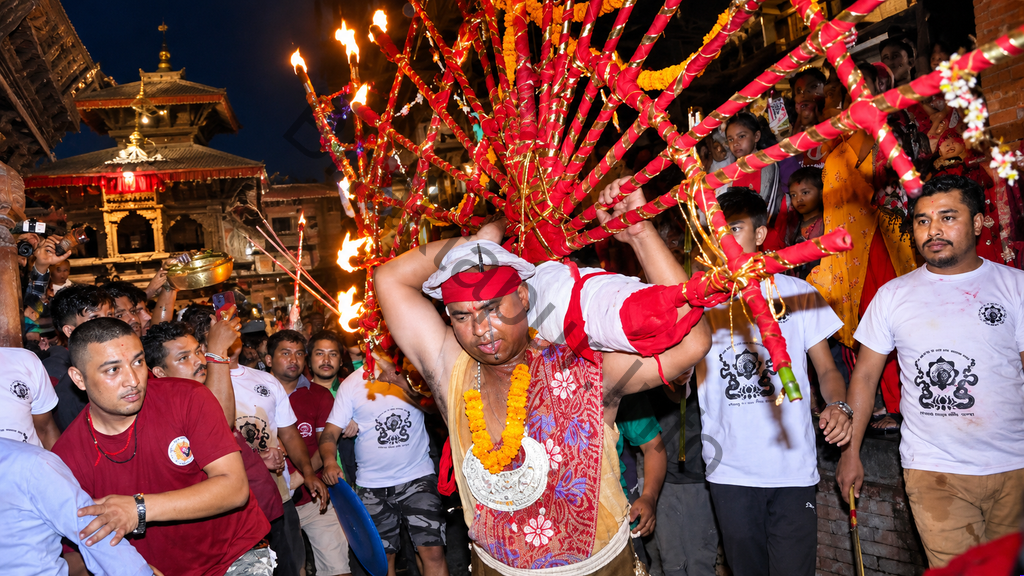
Before the tongue-piercing ceremony, a devotee who has taken a religious vow participates in special prayer at the Digu Bhairav Temple as part of the celebration. The tongue is then punctured with a large metal needle(). The participant leads a religious procession through the sacred locations and historic communities while carrying a traditional oil lamp on their shoulder.
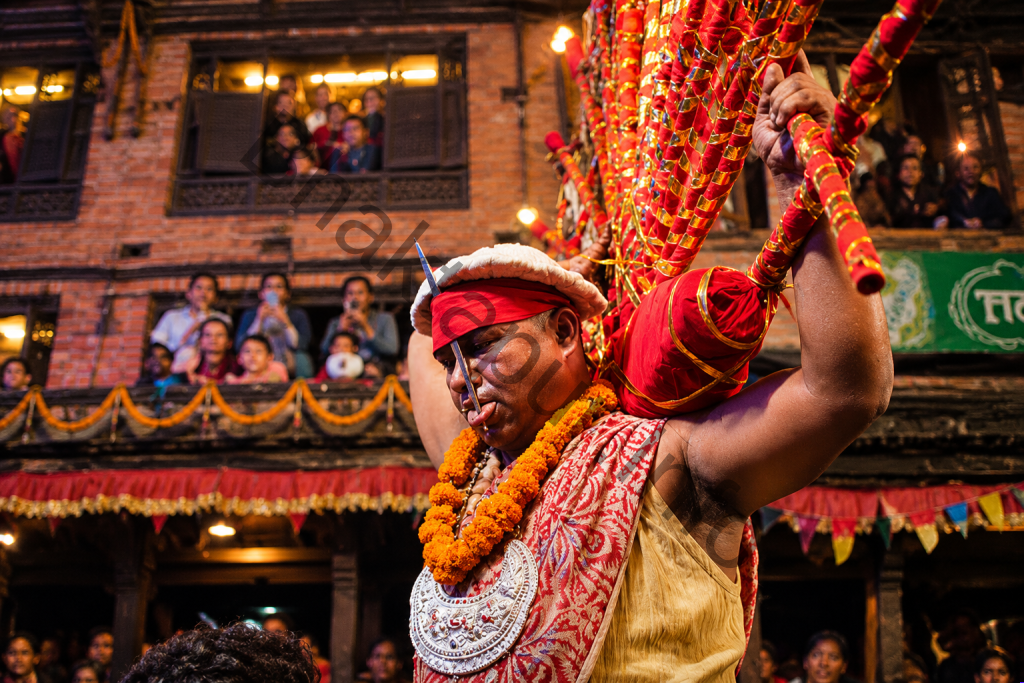
The traveler gives prayers in accordance with their religious pledge during stops at temples and shrines. A distinctive cultural show is produced by the tongue-piercing ceremony, traditional music, oil lamps, processions, and community involvement.
There is a tradition of carrying a Yamta—a trident-shaped light fixture made by wrapping cloth around a long bamboo pole—belonging to the Manandhar community to guide the way for the tongue-piercer after his tongue-piercing ceremony at night. This year, two Yamtas—one from Siwa Sayami Khala and another from the Manandhar Youth Group—accompanied , positioned both in front of and behind him.

Continuity of History
At one point, the custom was in danger of being extinct. Local cultural leaders were crucial to the practice’s resuscitation and upkeep. In order to help maintain the custom, Krishnanani Shrestha started taking part in the tongue-piercing ceremony multiple times in 2050 B.S. (1993/94 A.D.). The practice was thereafter carried on by Birendrabhakta Gaju Shrestha starting in 2074 B.S. (2017/18 A.D.).
As a significant manifestation of Thimi’s live cultural legacy, the event has garnered fresh attention in recent years.
Unlike the Bode Tongue-Piercing Festival
As part of the Biska Jatra celebrations, Madhyapur Thimi is also well-known for the Bode Tongue-Piercing Festival (बोडेको जिब्रो छेड्ने जात्रा) on Baisakh 2. The two celebrations are distinct customs.
The Bode festival is connected to the spring Biska Jatra festivities, whilst the Yenya Punhi Tongue-Piercing Festival (येंया पुन्ही म्ये प्वाः खनेगु जात्रा) occurs in the autumn festival season after Indra Jatra.
Another significant difference is that, in contrast to the Thimi Yenya Punhi practice, which may involve multiple participants, the Bode tradition typically involves a single major tongue-piercing participant.

Cultural Importance
There is much more to the Tongue-Piercing Festival (जिब्रो छेड्ने जात्रा) than just a demonstration of stamina. It stands for **religious faith, personal vows, reverence to deities, community involvement, and the preservation of Newar cultural traditions.
Madhyapur Thimi views the event as a significant example of living intangible cultural heritage that links the city’s ancient religious and cultural customs to modern generations.
Twelve people have made Bode’s 106-year-old tradition of tongue piercing possible thus far. Traditionally, a male with the Shrestha surname is chosen to pierce the tongue during the Biska Jatra.