


Dattatreya Temple, Bhaktapur: A Timeless Masterpiece of Newar Architecture and Spiritual Heritage
Introduction
Nestled in the historic Dattatreya Square (Tachapal Tol) of Bhaktapur, Nepal, the Dattatreya Temple is one of the finest examples of medieval Newar architecture and a treasured monument of Nepal’s rich cultural heritage. Believed to have been built in 1427 AD during the reign of King Yaksha Malla, this magnificent three-tiered pagoda temple is dedicated to Lord Dattatreya, the combined manifestation of the Hindu Trinity—Brahma, Vishnu, and Shiva. Renowned for its remarkable wooden craftsmanship, intricate carvings, and deep religious significance, the temple attracts thousands of pilgrims, historians, photographers, and cultural enthusiasts every year. Together with the surrounding monasteries, traditional Newari houses, museums, and artisan workshops, Dattatreya Temple forms one of Bhaktapur’s most captivating heritage destinations and is an integral part of the UNESCO World Heritage Site of the Kathmandu Valley.
History of Dattatreya Temple
The Dattatreya Temple was commissioned by King Yaksha Malla, the last ruler of the united Malla Kingdom before the Kathmandu Valley was divided into three kingdoms. Historical records suggest that construction began in the early 15th century and was completed in 1427 AD.
According to local tradition, the temple was built using the timber from a single gigantic tree, making it one of Nepal’s most fascinating architectural legends. While historians debate the literal accuracy of this story, it reflects the extraordinary craftsmanship and engineering skills of Newar artisans.
Over the centuries, the temple has survived numerous earthquakes, political changes, and natural disasters. Restoration and conservation efforts have helped preserve its remarkable beauty while maintaining its original artistic character.

Who is Lord Dattatreya?
Lord Dattatreya is one of the most revered deities in Hinduism and represents the unified form of Brahma, Vishnu, and Shiva, collectively known as the Trimurti.
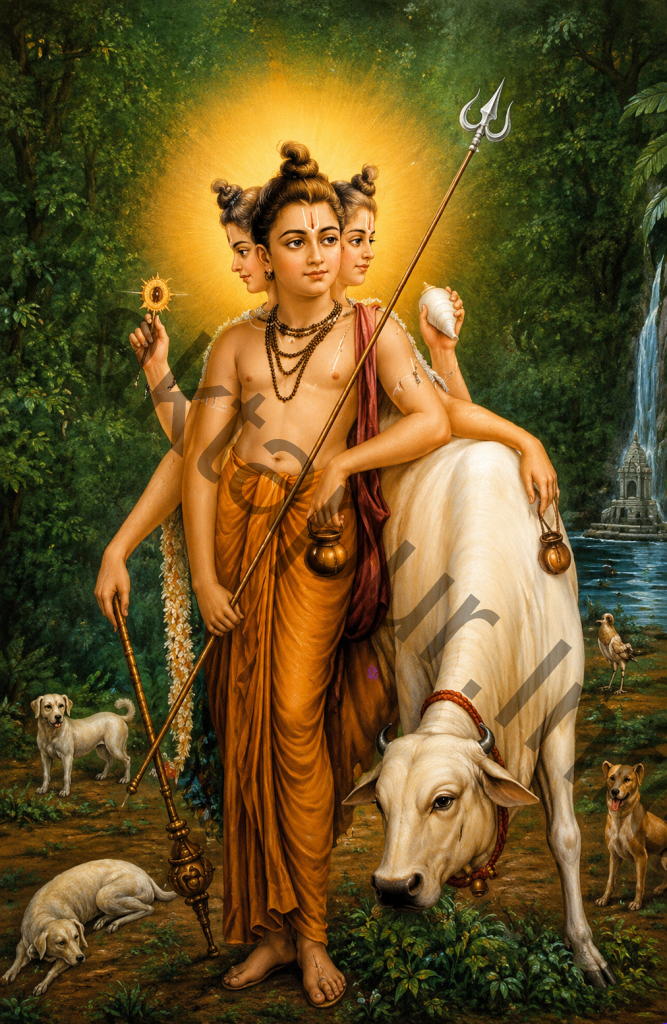
He was born to the great sage Atri Rishi and his virtuous wife Mata Anasuya, whose unwavering devotion and purity are celebrated throughout Hindu mythology.
Lord Dattatreya is traditionally depicted with:
- Three heads, representing Brahma, Vishnu, and Shiva.
- Six arms, holding:
- Shankha (Conch)
- Chakra (Discus)
- Gada (Mace)
- Padma (Lotus)
- Trishul (Trident)
- Kamandalu (Water Pot)
Although He embodies all three supreme deities, Lord Dattatreya is primarily worshipped as an incarnation of Lord Vishnu in Bhaktapur.
The Legend of Lord Dattatreya
One of Hindu mythology’s most inspiring legends tells the story of Lord Dattatreya’s birth.

The wives of the Trimurti—Saraswati, Lakshmi, and Parvati—once praised the extraordinary virtue and devotion of Mata Anasuya. Curious to test her purity, Brahma, Vishnu, and Shiva disguised themselves as wandering ascetics and visited Sage Atri’s hermitage while he was away.
They requested alms but demanded that Mata Anasuya serve them without wearing any clothing. Faced with an impossible situation, she prayed sincerely. Through the power of her spiritual devotion, she transformed the three gods into innocent infants and lovingly nursed them.
When the goddesses later arrived and sought forgiveness, Mata Anasuya restored the infants to their original divine forms. Deeply impressed, the Trimurti granted her a boon. She wished that all three gods would be born together as her son.
The gods fulfilled her wish by merging into one divine child—Lord Dattatreya, the eternal embodiment of wisdom, compassion, creation, preservation, and destruction.
Architecture of Dattatreya Temple
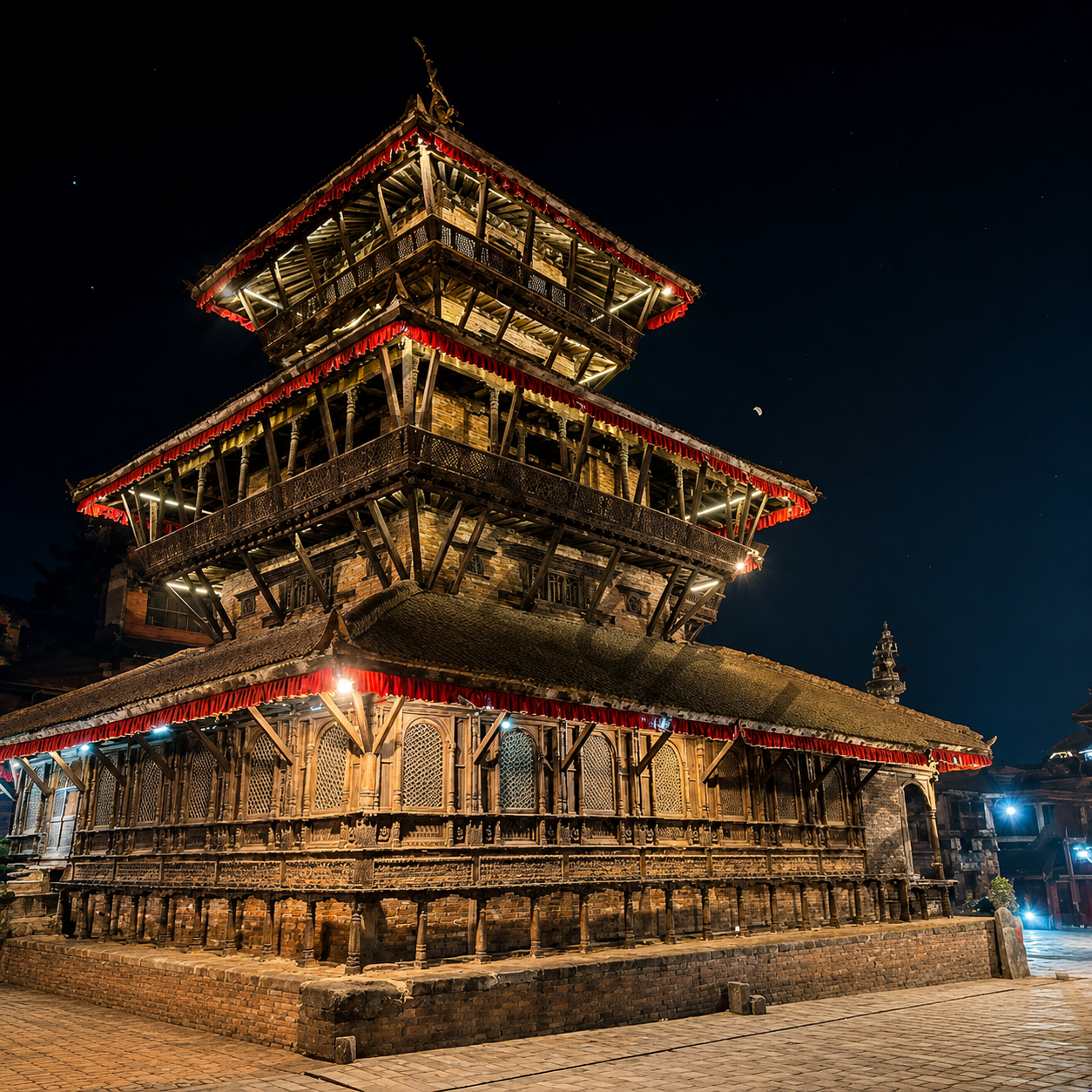
The Dattatreya Temple is considered one of Nepal’s greatest masterpieces of traditional Newar pagoda architecture.
Its distinctive features include:
- Three beautifully proportioned pagoda roofs.
- Intricately carved wooden windows and struts.
- Detailed toranas depicting Hindu deities.
- Traditional brick masonry.
- Richly decorated wooden balconies.
- Finely carved lattice windows.
- Exquisite stone sculptures.
- A unique structure that appears like two temples joined together.
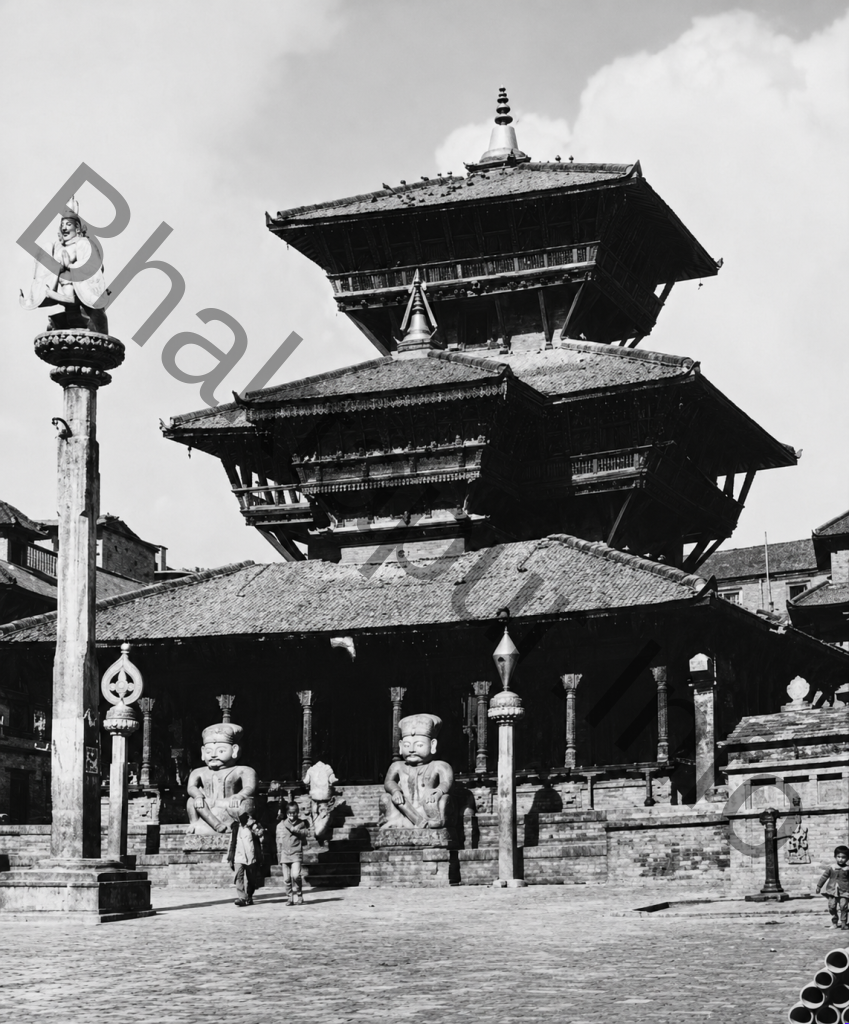
The temple showcases the remarkable artistry of Newar woodcarvers, whose skills remain admired around the world.
Religious Symbols Around the Temple
Since Lord Dattatreya is worshipped mainly as Lord Vishnu, several sacred symbols surround the temple.
Garuda Pillar
A tall stone pillar crowned with Garuda, the divine vehicle of Lord Vishnu, stands directly in front of the temple.
Shankha and Chakra
Separate pillars display the sacred Conch (Shankha) and Discus (Chakra), symbolizing Vishnu’s divine authority.
Trident (Trishul)
A large Trishul, representing Lord Shiva, stands outside the temple, emphasizing Lord Dattatreya’s identity as the combined form of the Trimurti.
Festivals and Religious Celebrations
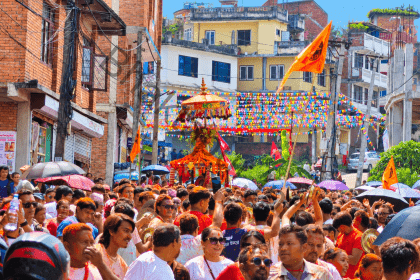
The temple remains an active place of worship throughout the year.
Major religious events include:
- Yomari Punhi (Yomari Purnima) – celebrated as the birth anniversary of Lord Dattatreya.
- Every Monday during the holy month of Shrawan.
- Every Wednesday during the month of Poush.
Thousands of devotees visit the temple during these occasions to offer prayers and receive blessings.
Kutuwas: Traditional Temple Guardians
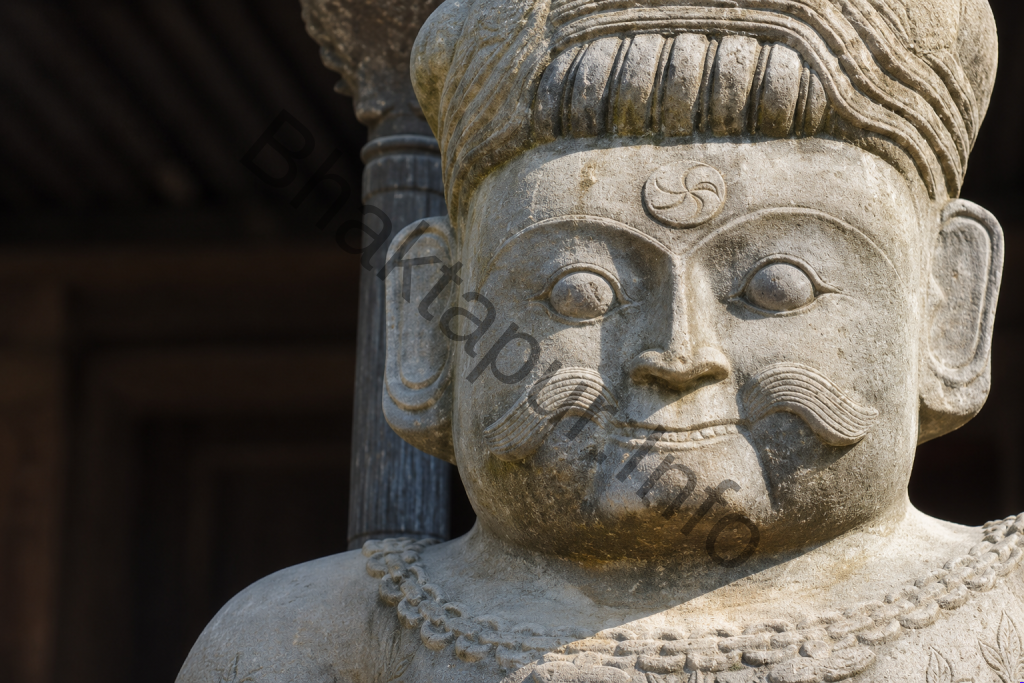
A unique aspect of Dattatreya Temple is the presence of two hereditary guardians known as Kutuwas.
These traditional caretakers have served for generations, protecting the temple, preserving rituals, assisting priests, and safeguarding its sacred traditions.
Dattatreya Square
The temple stands at the heart of Dattatreya Square, one of Bhaktapur’s most beautiful heritage courtyards.
Nearby attractions include:
- Bhimsen Temple
- Pujari Math (Wood Carving Museum)
- Brass and Bronze Museum
- Traditional Newari houses
- Wood carving workshops
- Local handicraft shops
- Traditional cafés and restaurants
The square remains a vibrant center of Newar culture and craftsmanship.
Cultural Importance
Dattatreya Temple is more than a religious monument—it is a living symbol of Bhaktapur’s artistic excellence, spiritual devotion, and cultural identity. The temple preserves centuries-old traditions of wood carving, stone sculpture, metalwork, music, festivals, and community rituals. It continues to inspire artisans and visitors from around the world while reflecting the enduring legacy of the Malla era and the Newar civilization.
Visiting Dattatreya Temple
Location: Dattatreya Square (Tachapal Tol), Bhaktapur, Nepal
Best Time to Visit:
- October to December
- February to April
- During Yomari Punhi and other traditional festivals
Photography:
The temple is one of the most photogenic heritage monuments in Nepal, offering stunning opportunities for architectural, cultural, and street photography.
Conclusion
The Dattatreya Temple is one of Bhaktapur’s most treasured historical and religious landmarks. With its legendary origin, magnificent pagoda architecture, exquisite wood carvings, and profound spiritual significance, it stands as a testament to the artistic brilliance of the Newar people and the vision of the Malla kings. Whether you are a pilgrim seeking blessings, a history enthusiast exploring Nepal’s medieval past, or a traveler captivated by timeless architecture, Dattatreya Temple offers an unforgettable journey into the heart of Bhaktapur’s living heritage.