


Overview of Dafa Bhajan
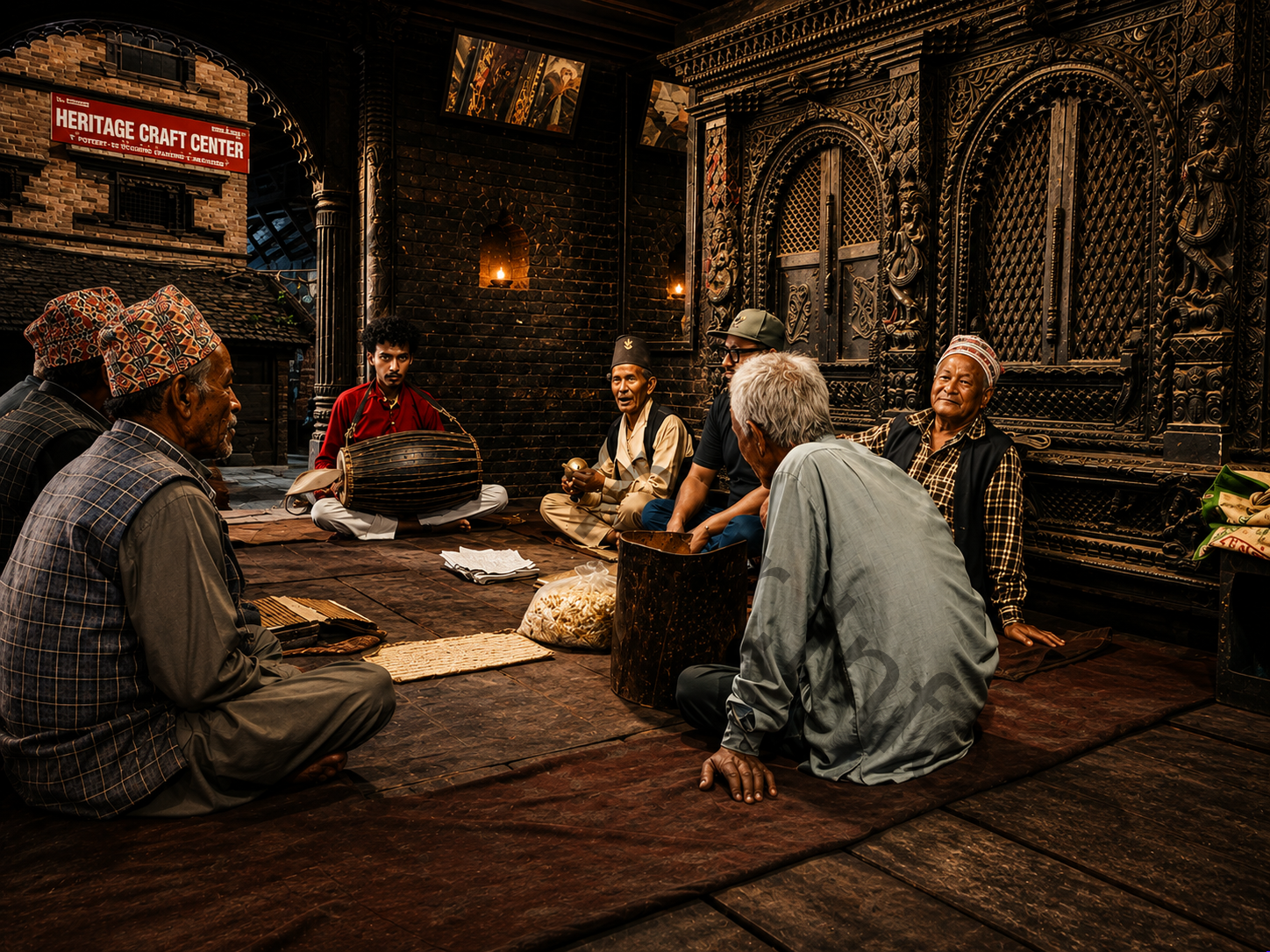
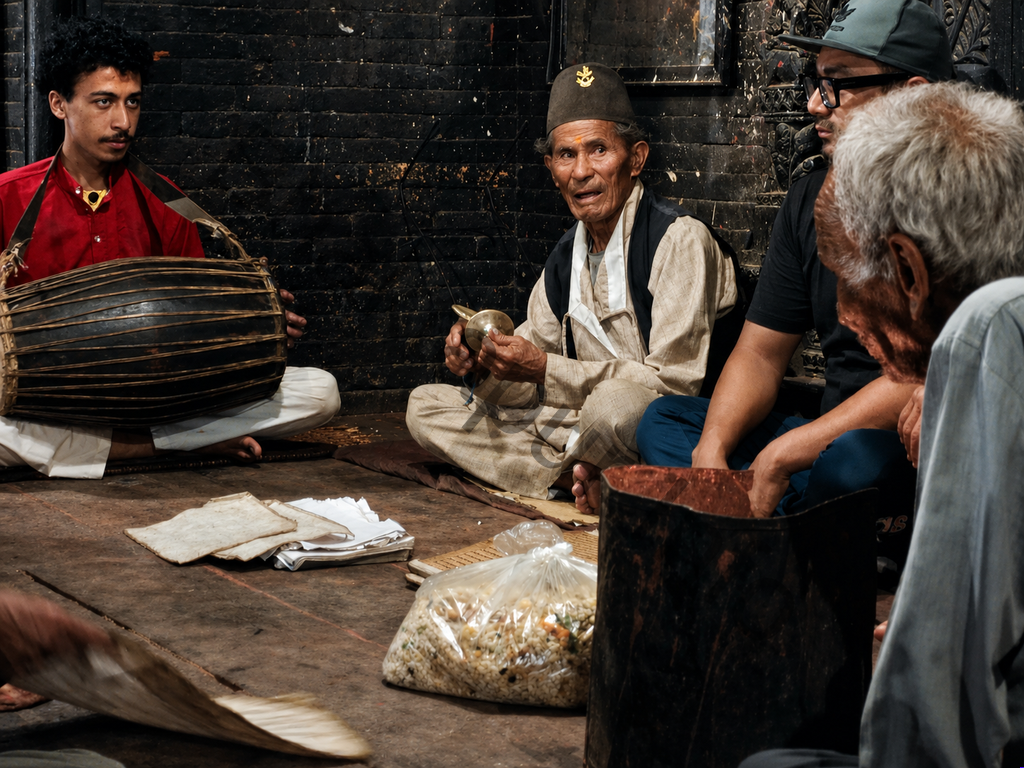
The Newar people have a long-standing and unique religious-cultural singing tradition called Dafa Bhajan (Dapha music (Nepal Bhasa: दाफा) ). Particularly among the Newar Buddhist and Hindu groups of the Kathmandu Valley, it is performed as religious rites, processions, festivals, and group singing. “Dafa” describes the custom of singing bhajans to a certain beat and melody while seated in rows or groups.
Key Features
- Classical Music: This hymn is based on a specific raga and rhythm.
- Instrumentation: Mainly played on the Khin and other traditional instruments.
- Language: It is also sung in Nepali (Newari), Maithili, Awadhi and Hindi.
- Seasons and Festivals: It is sung according to the gods and goddesses as well as various seasons and festivals.
Singing hymns, praises, devotional songs, and religious songs in the native tongue is known as Dafa Bhajan. Traditional instruments, including the Flute, Khin, Tah, Naykhin, and various percussion instruments, may be used. Dafa Bhajan is a living tradition of religious faith, song, language, culture, and community cohesion that has been passed down from generation to generation, in addition to being a form of entertainment.
Dafa Bhajan’s objective
- To convey a sense of spirituality and religious devotion
- To honor and revere the gods and goddesses, Dafa Bhajan is performed.
- Maintaining customs and culture
- contributes significantly to the transmission of traditional songs, rhythms, languages, musical instruments, and hymns to the next generation.
- Keeping the community cohesive
- Social ties are strengthened when members of a clan and community join together to sing hymns together.
- Bringing festivals and customs to life
- On the occasion of many religious festivals and rites, dhafa hymns enhance the cultural milieu.
- Disseminating spiritual and moral teachings
- Hymns offer lessons about religion, morality, discipline, compassion, and life values.
- Dafa hymns’ applications
In particular, Dafa hymns are performed in temples, bahas, choks, Dafa homes, and public spaces. They are carried out during religious ceremonies, festivals, worship, rituals, and other significant cultural events. Singing Dafa songs on a regular basis on specific days or periods is another custom in some groups.
In this sense, Dafa hymns are more than just the Newar community’s music; they constitute a significant cultural legacy that links religion, history, language, art, and communal life. Its maintenance, particularly in Bhaktapur, is crucial to the survival of the region’s cultural identity and long-standing customs.