

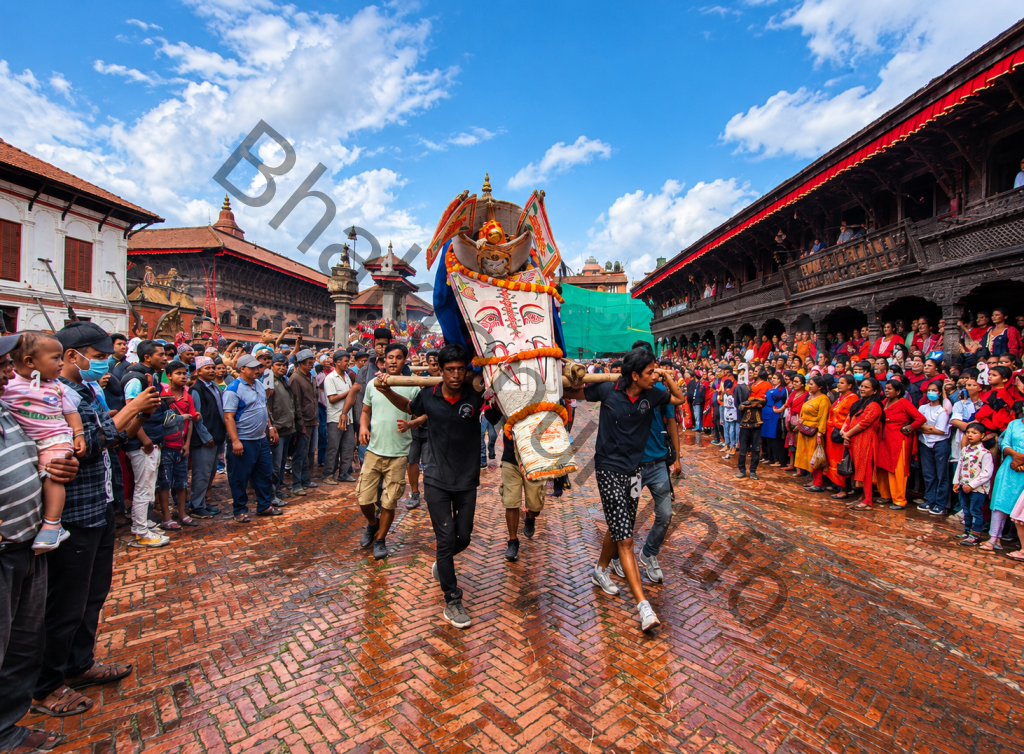
Pulukisi (पुलुकिसि) also known as Yenya Punhi (Indra Jatra) in Bhaktapur, is a traditional masked/animal dance connected to Yenya. It is a significant component of the city’s ongoing Newar celebration customs and symbolizes a legendary elephant. Particularly, Pulukisi (पुलुकिसि) performances in Bhaktapur are documented in historical and cultural sources.
What Pulukisi means
Since “Kisi” means elephant and “Pulu” means white in Nepalese Bhasa, Pulukisi literally translates to “White elephant.” The elephant is connected to Airavata, the celestial elephant of Indra, the Hindu deity of rain and heaven, in the larger Indra Jatra tradition.
But Bhaktapur has a unique Pulukisi heritage of its own. The local mythology is different from Kathmandu‘s, and sources detailing Bhaktapur’s Yenya tradition identify the elephant image as Blue instead of the more well-known white Pulukisi of Kathmandu.
Pulukisi in Yenya’s Bhaktapur
During Yenya: Punhi, traditional music and joyous people accompany performers costumed in elephant costumes as they stroll through the ancient streets. The show links mythology, ritual, music, dance, and community involvement, making it more than just entertainment.


Starts from Chapal Tole Nearby Pottery Square from here too Sa:Paru Bhiravnath Sa:Cha after entering Taumadhi Square and heading toward the along route of Pradakshina Marg (also known as a Parikrama Marg) by a documented Bhaktapur procession, illustrating how the event integrates with the city’s larger sacred environment.
An alternative narrative in Bhaktapur
Local mythology is a significant aspect of Pulukisi in Bhaktapur. A cultural account from Bhaktapur claims that the story is related to the hunt for Parijaat flowers and Basundhara, Indra’s mother. In this version, Jayant is assigned to gather the flowers instead of Indra, and he is apprehended while stealing flowers from a farmer’s field.
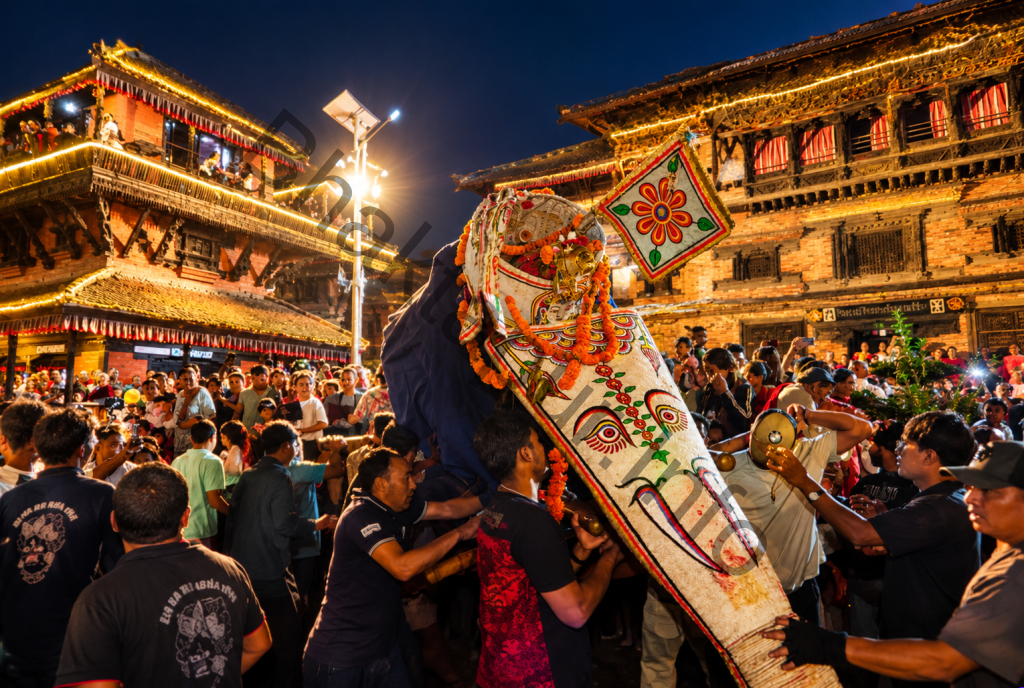
Because of this, Pulukisi in Bhaktapur has its own local story and cultural character, making it more than just a replica of the Indra Jatra tradition in Kathmandu.
Mupatra and Pulukisi in Bhaktapur
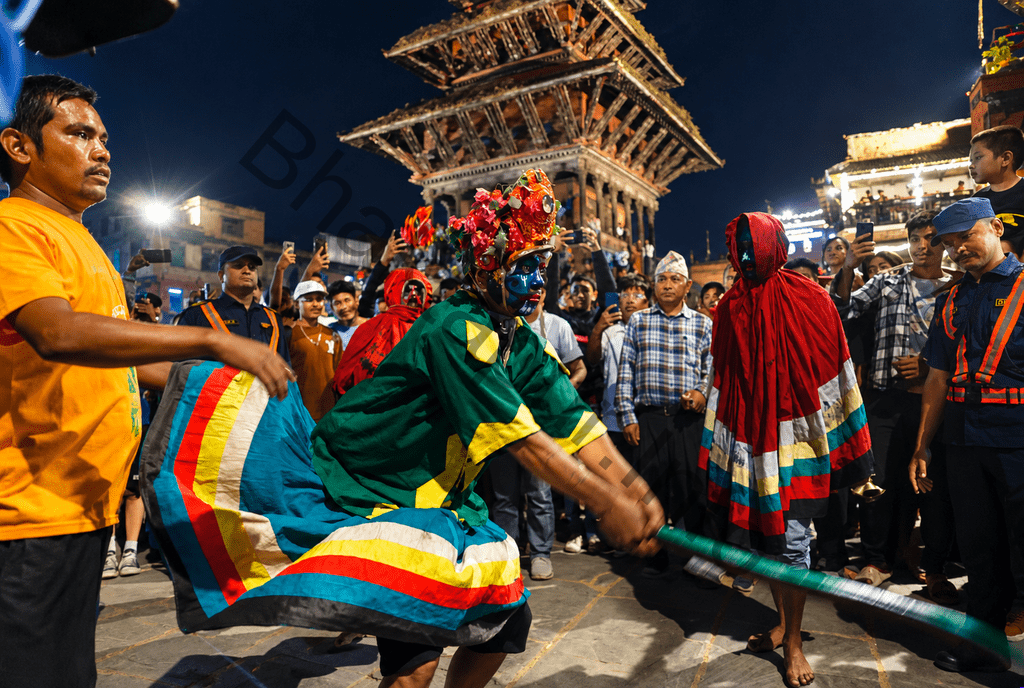
In Bhaktapur’s Indra Jatra tradition, Airavata, Indra’s elephant, is represented by Pulukisi, while a strong demon or king of demons is represented by Mupatra. The main character of the local tale is Jayanta, Indra’s son, who gets kidnaped by demons while looking for Parijaat flowers.
Why Pulukisi and Mupatra shouldn’t get together
The fact that Pulukisi and Mupatra are not supposed to cross paths during the parade is one of the most intriguing customs. According to local legend, the elephant may crush the demon if Pulukisi and Mupatra cross paths. As a result, the two processions’ routes and schedules are typically synchronized to avoid them crossing paths.

This creates a dramatic symbolic contrast:
Pulukisi → Airavata / divine force / rescue
Mupatra → demon / captivity / opposition
Jayanta → the captured prince
Yama:Dyo → symbol associated with Jayanta’s captivity
Pulukisi is carried across the city on the last day of Bhaktapur’s Indra Jatra, and Mupatra continues its ceremonial procession. One of the festival’s most significant dramatic outcomes is this.